

Hey there! As a supplier of artificial graphite particles, I often get asked if these little wonders can be used as a lubricant. Well, let's dive right into it and explore this question in detail.
First off, let's understand what artificial graphite particles are. Artificial graphite is made by heating carbonaceous materials to extremely high temperatures. This process gives it some unique properties that set it apart from natural graphite. Our artificial graphite particles come in various forms and grades, like the Artificial Graphite Particles for Cast Pipe, Low Sulfur and Low Ash Artificial Graphite Particles, and 96.5% Fixed Carbon 0.08% Sulfur Artificial Graphite Columnar Granules. Each type has its own set of characteristics that make it suitable for different applications.
Now, let's talk about lubrication. Lubricants are substances used to reduce friction between two surfaces in contact. They can prevent wear and tear, reduce heat generation, and improve the efficiency of machinery. So, can artificial graphite particles fit the bill?
One of the key properties of graphite that makes it a potential lubricant is its layered structure. Graphite consists of layers of carbon atoms arranged in a hexagonal lattice. These layers can slide over each other relatively easily, which means that when graphite is placed between two surfaces, it can act as a solid lubricant. The layers of graphite particles can separate the surfaces, reducing direct contact and thus friction.
Artificial graphite particles have some advantages over natural graphite when it comes to lubrication. For one, they can be engineered to have more consistent properties. We can control the size, shape, and purity of the particles during the manufacturing process. This means that we can produce artificial graphite particles that are better suited for specific lubrication needs. For example, in high - precision machinery, we can supply particles with a very narrow size distribution to ensure uniform lubrication.
Another advantage is the ability to customize the chemical composition. Our Low Sulfur and Low Ash Artificial Graphite Particles are great for applications where sulfur and ash content can cause problems. In some industrial processes, high sulfur content can lead to corrosion, and ash can contaminate the system. By using low - sulfur and low - ash artificial graphite particles, we can avoid these issues and provide a more reliable lubrication solution.
In high - temperature applications, artificial graphite particles shine. Graphite has excellent thermal stability, and artificial graphite can be designed to withstand even higher temperatures. When machinery operates at high temperatures, traditional lubricants may break down, but artificial graphite particles can maintain their lubricating properties. For instance, in metal - forming processes like casting, where the temperatures can be extremely high, Artificial Graphite Particles for Cast Pipe can be used to lubricate the molds and prevent the metal from sticking.
However, it's not all sunshine and rainbows. There are some challenges when using artificial graphite particles as lubricants. One issue is the dispersion of the particles. In some cases, the particles may agglomerate, which can lead to uneven lubrication. To overcome this, we can treat the particles to improve their dispersibility or use additives in the lubricant formulation.
Another consideration is the compatibility with other materials. In some systems, graphite may react with certain metals or chemicals. We need to carefully evaluate the application and ensure that the artificial graphite particles are compatible with all the components in the system.
Let's look at some real - world applications where artificial graphite particles are already being used as lubricants. In the automotive industry, they can be used in engine components to reduce friction and improve fuel efficiency. In the aerospace sector, where reliability and performance are crucial, artificial graphite particles can be used in high - speed bearings and gears.

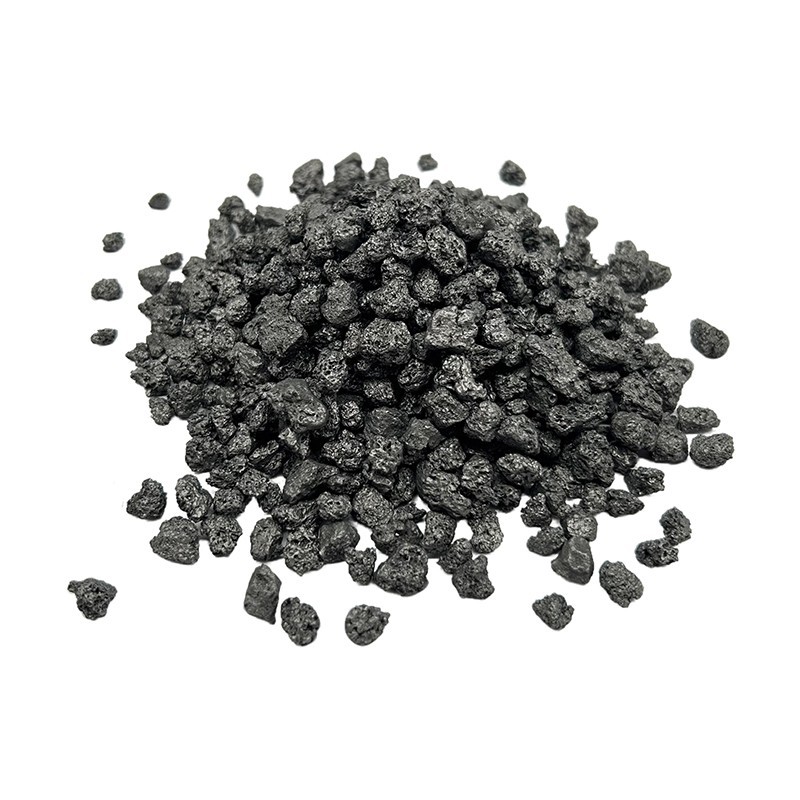
In the manufacturing of electronic devices, the 96.5% Fixed Carbon 0.08% Sulfur Artificial Graphite Columnar Granules can be used as a lubricant in precision machining processes. The high fixed - carbon content and low sulfur content ensure that there is minimal contamination during the manufacturing process.
So, to answer the question, yes, artificial graphite particles can definitely be used as a lubricant. They offer a range of benefits, from customizable properties to high - temperature stability. But like any lubricant, they need to be carefully selected and applied based on the specific requirements of the application.
If you're in the market for a reliable lubrication solution and think artificial graphite particles might be the answer, I'd love to have a chat with you. Whether you're in the automotive, aerospace, or any other industry, we can work together to find the right type of artificial graphite particles for your needs. Just reach out, and we can start the conversation about how our products can improve your operations.
References
- "Graphite: Properties and Applications" - A comprehensive book on the properties and various uses of graphite, including its role as a lubricant.
- "Advanced Materials for Lubrication" - Research papers and case studies on the use of advanced materials, such as artificial graphite, in lubrication applications.