

Graphitized Petroleum Coke
Graphitized petroleum coke (GPC) is a versatile carbon material derived from petroleum coke, a byproduct of oil refining. Through a process of heat treatment and graphitization, petroleum coke is transformed into GPC, which exhibits enhanced properties such as high electrical and thermal conductivity, low thermal expansion, and excellent chemical resistance.
Why Choose Us?
Strict Quality Control
Qitian Products ensure 100% of all graphite petroleum coke meet industry quality standards and passed final inspection and then are carefully packaged for delivery.
Stable Supply Capacity
We have our own production plant, with a daily shipment of up to 100 tons. We have advanced technicians to help us improve production technology and production efficiency.
Professional Management System
The company's system is very complete. From the early stage of customer docking to the later stage of product sales, we can use professional software management to improve efficiency.
24 Hours Service
We can provide the best export service and after-sales service. 24 hours on line for help.


Advantages of Graphitized Petroleum Coke
Unparalleled Carbon Purity
Graphitized Petroleum Coke boasts an extremely high carbon content, typically exceeding 98%. This exceptional purity ensures optimal carbon enrichment, making GPC an ideal choice for carbon addition in metallurgical processes. The high carbon content contributes to enhanced performance and desired results.
Consistent and Controlled Properties
GPC offers remarkable consistency in its physical and chemical properties, ensuring uniformity in carbon addition. Its manufacturing process involves carefully controlling parameters such as temperature and time, resulting in a product with consistent quality. This reliability enables precise carbon addition and predictable outcomes in industrial applications.
Excellent Electrical Conductivity
With its graphitic structure, GPC exhibits excellent electrical conductivity. This attribute is vital in applications where efficient electrical conduction is required, such as electric arc furnaces (EAF) and other high-temperature processes. The high electrical conductivity of GPC facilitates heat generation and enables smooth operations, optimizing overall energy efficiency.
Superior Thermal Conductivity
Graphitized Petroleum Coke possesses exceptional thermal conductivity, making it an invaluable carbon additive in metallurgical processes. Its high thermal conductivity enables efficient heat transfer, ensuring uniform temperature distribution within the system. This feature is particularly crucial in processes like steelmaking, where consistent and precise temperature control is vital for quality and productivity.
Reduced Impurities and Volatile Matter
GPC exhibits significantly lower impurities and volatile matter compared to other carbon additives. The manufacturing process involves carefully selecting and processing petroleum coke, resulting in a cleaner and purer end product. The reduced impurities minimize undesirable reactions and impurity-related issues during carbon addition, contributing to smoother operations and improved product quality.
Types of Graphitized Petroleum Coke


Needle coke
This grade of coke has a crystalline structure, making it a favorable material in the production of components such as electrodes. It’s manufactured from a low-sulfur FCC slurry processed in a specific type of coker.
Honeycomb coke
Honeycomb coke is considered an intermediate type. It consists of uniformly distributed ellipsoidal pores. It’s characterized by low electrical conductivity and low coefficient of thermal expansion.
Shot coke
This type is undesirable as it has an irregular structure that makes it very difficult to handle. As such, it’s unacceptable for most applications. When manufacturing petroleum coke, refiners control the feed of vacuum resid to avoid producing shot coke.
Sponge coke
Physically sponge coke can be described as porous. The individual spheres are not apparent and the coke itself has a continuous structure. While the electrical conductivity of this type of coke is low, its structure makes it appropriate for the production of anodes.
Application of Graphitized Petroleum Coke
Inoculant in the Production of Ductile Iron
GPC is often used as an inoculant in the production of ductile iron. It helps control the structure of the cast iron, promoting the formation of spherical graphite. This improves the mechanical properties of the final product.
Recarburizer in Steel Production
GPC serves as a recarburizer in the steelmaking process. It is added to molten steel to adjust the carbon content, ensuring that the steel meets the desired specifications. Controlling carbon levels is crucial for producing specific types of steel, such as high-carbon or alloy steel.
Additive for Ladle Refining
In ladle refining processes, GPC is used as an additive to modify the composition and properties of the molten steel. It helps refine the steel by removing impurities and adjusting the carbon and alloy content.
Carburizing Agent in Ferroalloy Production
GPC is employed as a carburizing agent in the production of ferroalloys. It aids in introducing carbon into the alloys during the smelting process, contributing to the desired alloy properties.
Improving Electrical Conductivity
The presence of graphite in GPC enhances the electrical conductivity of the steel. This is particularly beneficial in applications where electrical conductivity is a critical factor, such as in certain types of steel used in electrical components.
Enhancing Wear Resistance
GPC, with its graphitic structure, can contribute to improved wear resistance in certain steel applications. This makes it suitable for use in components that experience friction and wear.
How Is Graphitized Petroleum Coke Produced?
Petroleum Coke Production
Petroleum coke is a byproduct of the oil refining process. It is a carbonaceous solid derived from crude oil.High-quality raw petroleum coke with low levels of impurities is selected for further processing.
Calcination
The selected petroleum coke is subjected to a high-temperature process known as calcination. This involves heating the coke to temperatures ranging from 1200 to 1400 degrees Celsius in a rotary kiln or shaft kiln.Calcination removes volatile matter and moisture from the coke, leaving behind a porous, carbon-rich material.
Crushing and Sizing
The calcined coke is then crushed and screened to achieve the desired particle size. The sizing is crucial for the subsequent graphitization process.
Graphitization
The calcined coke is exposed to high temperatures (typically above 2500 degrees Celsius) in the presence of a catalyst or in a specialized graphitization furnace.During this process, the carbon atoms in the coke rearrange into a crystalline structure, transforming it into graphite.The graphitization process imparts specific properties to the material, including high thermal conductivity and excellent electrical conductivity.
Purification (Optional)
Depending on the intended use, the graphitized petroleum coke may undergo additional purification steps to further reduce impurities.
Final Processing
The final graphitized petroleum coke product is often ground into a fine powder, pelletized, or packaged in bulk depending on the requirements of end-users.
Graphitized petroleum coke has an exceptionally high carbon content, typically over 99%. This is due to the extensive thermal processing and purification during the graphitization process. The graphitization process, which involves heating the coke to extremely high temperatures (up to 3,000°C), helps to remove most of the ash and impurities present. The final graphitized coke has very low levels of inorganic impurities like ash, sulfur, and metals. The high-temperature graphitization process transforms the coke's crystalline structure into a highly ordered, graphite-like arrangement. This graphitic structure is responsible for many of the unique properties of graphitized petroleum coke. Due to its highly stable graphitic structure, graphitized petroleum coke is chemically inert and resistant to most acids, bases, and other reagents. This makes it suitable for use in various aggressive chemical environments. Graphitized petroleum coke has excellent thermal stability, maintaining its structural integrity and properties even at very high temperatures. This thermal stability is a key advantage for applications involving high-temperature processes. The graphitic structure of the coke provides excellent electrical conductivity, making it useful in applications that require good electrical properties. This includes uses as a conductive additive in various materials and products. This allows for efficient heat transfer and dissipation in applications where thermal management is critical. The combination of the high-temperature graphitization process and the inherent purity of the starting petroleum coke results in a final product with exceptional purity. This high purity is essential for many specialized applications, such as in the electronics and semiconductor industries.

Physical Properties of Graphitized Petroleum Coke

Graphitized petroleum coke has a highly ordered, crystalline structure with a well-developed graphite-like arrangement of carbon atoms. This crystalline structure is the result of the high-temperature graphitization process, which can reach temperatures up to 3,000°C. Graphitized petroleum coke has a relatively high density, typically ranging from 2.0 to 2.3 g/cm³, due to its compact and organized crystalline structure. This high density contributes to the material's mechanical strength and durability. The crystalline structure and high density of graphitized petroleum coke make it a relatively hard material, with a Mohs hardness typically between 5 and 6. This hardness is an important property for applications where abrasion resistance is required. Graphitized petroleum coke exhibits excellent thermal conductivity, with values typically ranging from 80 to 200 W/m·K, depending on the specific grade and properties. This high thermal conductivity is a result of the material's graphitic structure and makes it suitable for applications that require efficient heat transfer. The graphitic structure of graphitized petroleum coke also provides excellent electrical conductivity, with values typically ranging from 1,000 to 10,000 S/m. This high electrical conductivity is another key property that enables various applications, such as in the production of electrodes and conductive materials. Graphitized petroleum coke has a relatively low coefficient of thermal expansion, typically in the range of 2 to 5 × 10^-6 per °C. This low thermal expansion is advantageous in applications where dimensional stability is important, such as in refractory materials. The particle size and size distribution of graphitized petroleum coke can be tailored during the manufacturing process to meet specific application requirements. This allows for optimization of the material's performance in various end-use scenarios. Graphitized petroleum coke generally has a low specific surface area, typically in the range of 1 to 10 m²/g, due to its compact and organized crystalline structure. The specific surface area can be adjusted through various processing techniques to suit different applications.
Features of Graphitized Petroleum Coke(GPC)
● High carbon: High purity 98.5-99.5%.
● Low sulfur: 0.01% to 0.05% Low sulfur, stable distribution, can effectively reduce the adverse effect of sulfur on the alloy during the spheroidization and inoculation process, and save costs.
● Low nitrogen: Nitrogen content 50 PPM~300 PPM (0.005%-0.03%).
● High carbon recovery rate: 92-98%.
● Fast absorption: Easy to dissolve iron.
● High graphite core and a high degree of graphitization: It can reduce the shrinkage tendency of molten iron and improve the mechanical properties of castings.
● Even if pig iron is not added: It may increase the amount of scrap steel and reduce the demand for pig iron. The genetic influence of pig iron castings is well avoided.
● Stable vaporization, good absorption rate, obvious heating effect: No slag. It can effectively protect and extend the life of the furnace and reduce the consumption of the furnace lining.
Price Affecting Factors of Graphitized Petroleum Coke
The production cost is the main reason for the unstable price of graphitized petroleum coke recarburizer. It should be known that the production of graphitized petroleum coke recarburizer requires the use of a graphitization furnace that consumes a lot of power. During certain periods, electricity prices will rise or fall. The production cost of graphitized petroleum coke recarburizer makes the price of graphitized petroleum coke recarburizer less stable.
The price of raw materials is also the main reason for the unstable price of graphitized petroleum coke recarburizer. When producing graphitized petroleum coke recarburizer, semi-coke, and natural graphite are sometimes required. These raw materials will change with the seasonality of the market.
Another factor that cannot be ignored is the change in supply and demand. The amount of recarburizer in the foundry field accounts for less than 5% of the total petroleum coke. When the supply and demand of other major application industries change, the price of recarburizer will also change accordingly. Therefore, it is impossible for the steelmaking and foundry industries to maintain relatively stable prices.
The Difference Between Graphitized Petroleum Coke and Calcined Petroleum Coke
Production process
Graphitized petroleum coke: Graphitized petroleum coke means that petroleum coke has been graphitized. So what is the graphitization process? Graphitization is the change in the internal structure of petroleum coke when it undergoes a high temperature of about 3000 degrees. The molecules change from randomly arranged carbon crystals to regularly arranged carbon crystals. This process is called graphitization. Compared with calcined petroleum coke, graphitized petroleum coke mainly has lower sulfur content and higher carbon content, which can be as high as 99%.
Calcined petroleum coke: Calcined petroleum coke is the product of high-temperature calcination of petroleum coke. The temperature is mainly controlled at about 1300 degrees. Most of the water and volatile matter in the petroleum coke can be removed through calcination. The fixed carbon content of calcined petroleum coke is generally more than 98.5%.
Application
Graphitized petroleum coke and calcined petroleum coke are mainly used in steel plant smelting and casting manufacturing industries. However, due to different production processes, graphitized petroleum coke has the advantages of low sulfur, low nitrogen, and high carbon. Graphitized petroleum coke is more suitable for gray cast iron. Casting and ductile iron with strict sulfur requirements.
Appearance
Calcined petroleum coke: From the appearance, calcined petroleum coke is black lumpy particles with irregular shapes and different sizes, with strong metallic luster and transparent carbon particle pores;
Graphitized petroleum coke: In addition to the appearance of calcined petroleum coke, graphitized petroleum coke is darker and brighter in color and has a stronger metallic luster than calcined petroleum coke, and can be printed directly on paper smoothly. Make traces.
Our Factory
The company now has 2 modern production workshops and 2 large storage workshops, which can meet the needs of large-scale production and fast logistics. The annual production volume has reached 100,000 tons. After years of hard work, we have worked closely with many domestic companies and exported to many countries and regions. In the future, the company will continue to adhere to the business philosophy of "quality-oriented, honesty and trustworthiness", continuously improve product quality and service level, carry out extensive cooperation and exchanges with domestic and foreign companies, and jointly promote the development of the carbon industry.

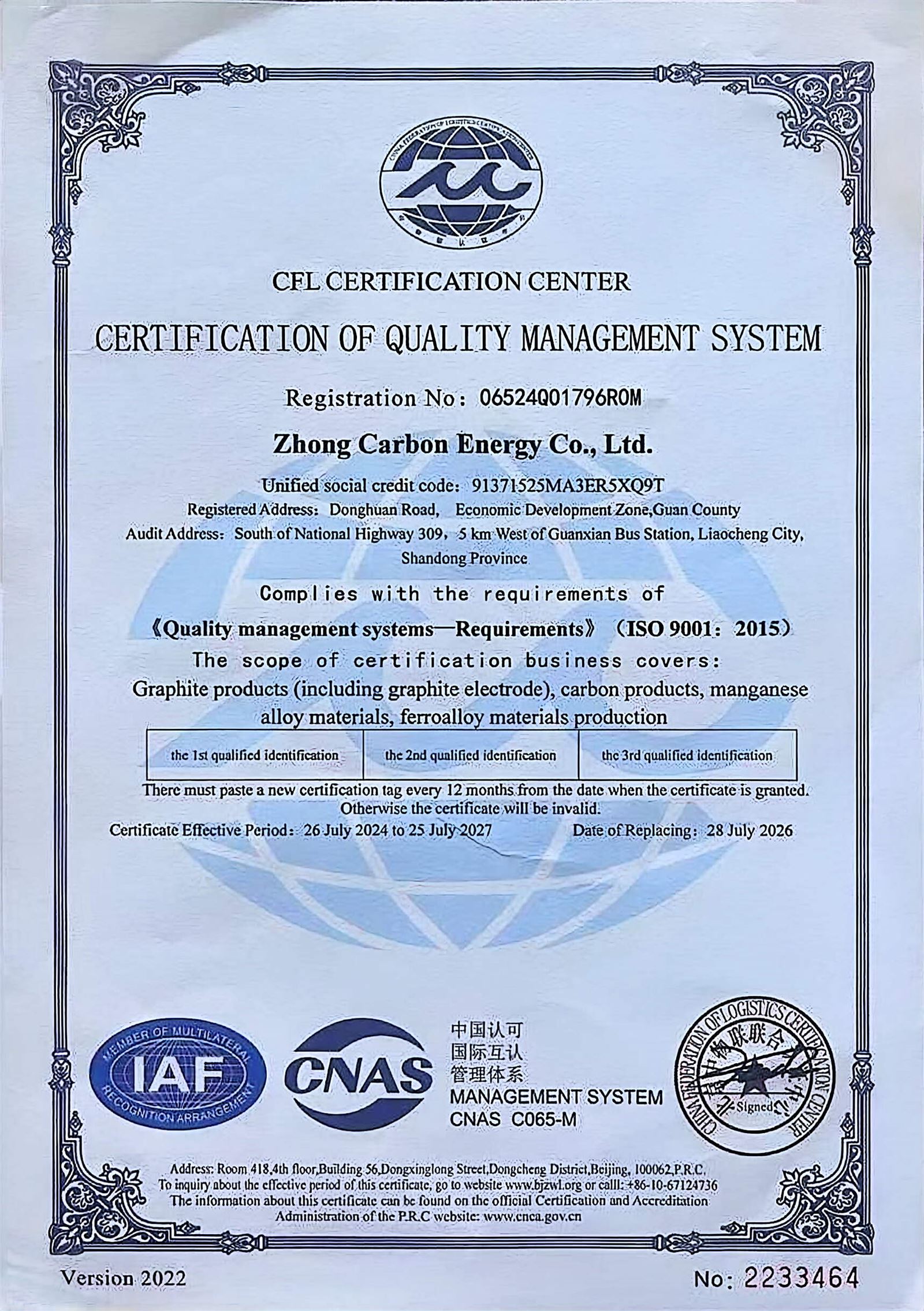
Our Certifications
FAQ
Q: What is graphitized petroleum coke used for?
Q: What does petroleum coke do?
Q: Is petroleum coke flammable?
Q: How do you use petroleum coke?
Q: What is the raw material of petroleum coke?
Q: What are the chemicals in petroleum coke?
Q: What is petroleum coke essential to manufacturing?
Q: What can you do with petroleum coke satisfactory?
Q: Can you make steel with petroleum coke satisfactory?
Q: What temperature does petroleum coke burn at?
Q: What is the main difference between regular petroleum coke and graphitized petroleum coke?
Q: What is the typical carbon content of graphitized petroleum coke?
Q: How does the thermal conductivity of graphitized petroleum coke compare to regular petroleum coke?
Q: What is the Mohs hardness range of graphitized petroleum coke?
Q: How does the electrical conductivity of graphitized petroleum coke differ from regular petroleum coke?
Q: What is the typical range of the coefficient of thermal expansion for graphitized petroleum coke?
Q: How does the particle size and distribution of graphitized petroleum coke differ from regular petroleum coke?
Q: What is the typical range of specific surface area for graphitized petroleum coke?
Q: What are some common industrial applications of graphitized petroleum coke?
Q: How does the graphitization process affect the purity of the final coke product?
As one of the most professional graphitized petroleum coke manufacturers and suppliers in China, we're featured by quality products and good price. Please rest assured to buy graphitized petroleum coke for sale here from our factory.
graphitized petroleum coke evolving graphitized petroleum coke, graphitized petroleum coke wholesale, graphitized petroleum coke american market