

Graphite Petroleum Coke Carburizer
Graphite petroleum coke carburizer is an important carbon material. Its production process mainly includes the steps of calcination, crushing and screening of petroleum coke, and graphitization treatment. It inherits the basic characteristics of petroleum coke and obtains higher carbon content and better physical properties through graphitization treatment.
Why Choose Us?
Strict Quality Control
Qitian Products ensure 100% of all graphite petroleum coke meet industry quality standards and passed final inspection and then are carefully packaged for delivery.
Stable Supply Capacity
We have our own production plant, with a daily shipment of up to 100 tons. We have advanced technicians to help us improve production technology and production efficiency.
Professional Management System
The company's system is very complete. From the early stage of customer docking to the later stage of product sales, we can use professional software management to improve efficiency.
24 Hours Service
We can provide the best export service and after-sales service. 24 hours on line for help.


Advantages of Graphite Petroleum Coke Carburizer
High Carbon Content
GPC typically has a high carbon content ranging from 98% to 99.5% or even higher. This high carbon content makes GPC an excellent source of carbon for carburizing purposes. It ensures a sufficient supply of carbon during the carburization process, leading to desired carbon levels in the treated material.
Low Impurity Content
GPC is processed to have low levels of impurities, including sulfur, volatile matter, and metals. This low impurity content is crucial for carburizing applications as it helps minimize the presence of unwanted impurities in the treated material. It ensures a cleaner carburization process and reduces the risk of adverse effects caused by impurities.
Controlled Particle Size Distribution
GPC can be produced with a specific particle size distribution, tailored to meet the requirements of different carburizing processes. The controlled particle size distribution allows for improved handling and dispersion of GPC in the material being carburized, ensuring uniform carbon distribution and consistent carburization results.
High Thermal Stability
GPC exhibits high thermal stability, making it suitable for carburization at high temperatures. It can withstand the intense heat of the carburization process without significant degradation, ensuring reliable and consistent carbon transfer to the treated material.
Good Electrical Conductivity
GPC possesses good electrical conductivity due to its graphitic structure. This property can be advantageous in certain carburizing processes that involve electric heating or require the use of electrical current for carburization. The electrical conductivity of GPC facilitates efficient heat transfer and promotes uniform carburization.
Consistent Quality
GPC production processes can be carefully controlled, leading to consistent quality from batch to batch. This consistency ensures predictable carburization results and helps maintain desired carbon levels in the treated material, promoting process control and reproducibility.
Cost-Effective
GPC is often cost-effective compared to other carbon sources, such as synthetic graphite or metallurgical coke. Its availability, combined with its desirable carbon and purity characteristics, makes it a cost-efficient option for carburizing applications.

At present, the carburizing agent is generally suitable for electric furnace melting. There are also a few carburizing agents with a particularly fast absorption rate for cupola furnaces. For electric furnace melting, the carburizing agent should be placed in the furnace together with scrap steel and other charging materials in small doses. You can choose to add it to the surface of the molten iron, but you should avoid feeding large quantities into the molten iron to prevent excessive oxidation and the lack of carbon replenishment effect and insufficient carbon content of the casting. The amount of recarburizer is based on other raw materials. Depending on the proportion and carbon content, the characteristics of the recarburizer itself select pure carbon-containing graphitized substances to reduce excessive impurities in pig iron. The proper choice of recarburizer can reduce the production cost of castings. Complex technology and good raw materials are the foundation to ensure the quality of graphitized petroleum coke recarburizers. At the same time, better graphitized petroleum coke recarburizers can play a better effect in steelmaking and casting. Of course, one cent of the price The principle of one point is still very popular. At present, the market price of good graphitized petroleum coke recarburizer is also relatively expensive, which also makes graphitized petroleum coke recarburizer only used in some superior varieties.
Production Process of Graphite Petroleum Coke Recarburizer
Petroleum Coke Preparation
The process begins with the preparation of petroleum coke, which is a carbon-rich material derived from the refining of crude oil. Petroleum coke is usually produced through the delayed coking or fluid coking process. In these processes, high-quality petroleum feedstocks are subjected to high temperatures in the absence of oxygen, leading to the formation of petroleum coke.
Calcination
The petroleum coke is then subjected to a process called calcination, which involves heating the coke at high temperatures (typically around 1200 to 1400 degrees Celsius) in a controlled environment. Calcination removes impurities, moisture, and volatile components from the petroleum coke, resulting in a more pure carbon material.
Crushing and Sizing
After calcination, the petroleum coke is crushed into smaller particles to achieve the desired size distribution. The coke may undergo multiple stages of crushing and screening to obtain the appropriate size range for further processing.
Blending (Optional)
Depending on the desired properties and specifications of the graphitized petroleum coke, different batches of coke may be blended together to achieve the desired carbon content and other characteristics.
Graphitization
The crushed and sized petroleum coke is then subjected to a high-temperature graphitization process. This process involves heating the coke at temperatures above 2500 degrees Celsius in the presence of a catalyst or a graphitization promoter. The high temperature causes the carbon atoms in the coke to rearrange into a crystalline graphite structure, transforming the coke into graphitized petroleum coke.
Final Processing
Once the graphitization process is complete, the graphitized petroleum coke may undergo additional processing steps, such as screening, sieving, and packaging, to ensure it meets the required specifications for its intended application. The coke may also be subjected to post-treatment processes, such as surface treatment or purification, to enhance its properties further.
What Are the Factors Affecting the Absorption Rate of Graphite Petroleum Coke Carburizer?
The particle size of graphite petroleum coke carburizer
If the size of graphite petroleum coke carburizer are different, the dissolution-diffusion rate and oxidation loss rate are also different, and the absorption rate of graphite petroleum coke carburizer depends on the comprehensive effect of dissolution-diffusion rate and oxidation loss rate of carburizer. Therefore, in general, if the graphite petroleum coke carburizer particles size are smaller, the dissolution rate is faster, and the loss rate is larger. If graphite petroleum coke carburizer particle size are larger,will have a lower dissolution rate and smaller oxidation loss rate.
The amount of graphite petroleum coke carburizer have been added
The added quantity of graphite petroleum coke carburizer is one of the factors affecting the absorption rate of carburization. At a certain temperature and the same chemical composition, the saturated concentration of carbon in molten iron is constant. At a certain saturation, the more graphite petroleum coke carburizer are added, the longer time needed for the dissolution and diffusion, corresponding will have greater loss and lower the absorptivity
Temperature
From the point of view of kinetics and thermodynamics, the oxidation of molten ironl is related to the equilibrium temperature of C-Si-O system. The equilibrium temperature varies with the target Carbon and Silicon content. When the molten iron is higher than the equilibrium temperature, carbon oxidation first occurs, and Carbon and Oxygen form CO and CO2, thus the carbon oxidation loss in molten iron increases. When the carburization temperature is above the equilibrium temperature, the absorption rate of the graphite petroleum coke carburizer decreases, when it’s at the equilibrium temperature, the absorption rate of the graphite petroleum coke carburizer is the highest.
The influence of molten iron stirring
Stirring is beneficial to the dissolution and diffusion of carbon content, and also can reduces the burning loss of the graphite petroleum coke carburizer which floated on the surface. therefore, before the graphite petroleum coke carburizer is completely dissolved,the longer the stirring time is; the higher absorptivity is . however, if the stirring time is too long, it not only has a great influence on the service life of the furnace, but also after the graphite petroleum coke carburizer is dissolved, stirring will aggravate the loss of carbon content in molten iron. Therefore, the proper stirring time of molten iron should ensure the complete dissolution of the graphite petroleum coke carburizer.
The chemical composition of molten iron
The chemical composition of molten iron will also affect the absorption rate of graphite petroleum coke carburizer. When the initial carbon content of molten iron is higher, the absorption rate of graphite petroleum coke carburizer is slower, the absorption amount is smaller, and the burning loss is large. When the initial carbon content of molten iron is low, the situation is just the opposite. Silicon and sulfur in molten iron hinder the absorption of carbon and reduce the absorptivity of graphite petroleum coke carburizer, while manganese contributes to the absorption of carbon and improves the absorptivity of graphite petroleum coke carburizer.
Melting process
The operation methods and process steps in the whole melting process have a great influence on the absorptivity of graphite petroleum coke carburizer. The adding sequence and time of graphite petroleum coke carburizer will affect the melting and absorption rate too. The weight of carburizer added is different from the proportion of electric furnace melting, which will also affect its absorption rate.
Size of electric furnace.
For electric furnaces below 0.5T, when the amount of steel scrap exceeds 50, a large amount of graphite petroleum coke carburizer need to be added. If the furnace is small, the absorptivity of graphite petroleum coke carburizer will also be affected. With the increase of smelting time, when steel scrap is used in electric furnace below 0.5T, the selection of steel briquette or pressing cake with high strength can not only improve the smelting speed, but also improve the absorption rate of graphite petroleum coke carburizer.
The Role of Graphite Petroleum Coke Carburizer in Steel Production
Increase carbon content
Petroleum coke carburizer contains higher carbon content. Adding an appropriate amount of petroleum coke carburizer during the steel smelting process can increase the carbon content in the molten steel. Thereby improving the strength, hardness, wear resistance and fatigue resistance of steel.
Improve chemical composition
The main component of petroleum coke carburizer is carbon, and it also contains a small amount of sulfur, phosphorus and other elements. During the steel smelting process, these elements can be added to the steel as alloying elements. Increase the number and purity of steel inclusions, thereby improving the brittleness and ductility of steel.
Improve absorption rate
The smaller the particle size of the petroleum coke carburizer, the faster its oxidation loss rate and dissolution and diffusion rate, and vice versa. In steel production, choosing the appropriate particle size of petroleum coke carburizer can increase its absorption rate, allowing more carbon elements to be absorbed by the steel. Thereby improving the quality and production of steel.
Stabilize the production process
In the steel production process, if too much petroleum coke carburizer is used, the carbon content in the molten steel will be too high, which will affect the performance of the steel. Therefore, controlling the amount of petroleum coke carburizer added is the key to ensuring the stability of steel production and the quality of steel products.
Our Factory
The company now has 2 modern production workshops and 2 large storage workshops, which can meet the needs of large-scale production and fast logistics. The annual production volume has reached 100,000 tons. After years of hard work, we have worked closely with many domestic companies and exported to many countries and regions. In the future, the company will continue to adhere to the business philosophy of "quality-oriented, honesty and trustworthiness", continuously improve product quality and service level, carry out extensive cooperation and exchanges with domestic and foreign companies, and jointly promote the development of the carbon industry.

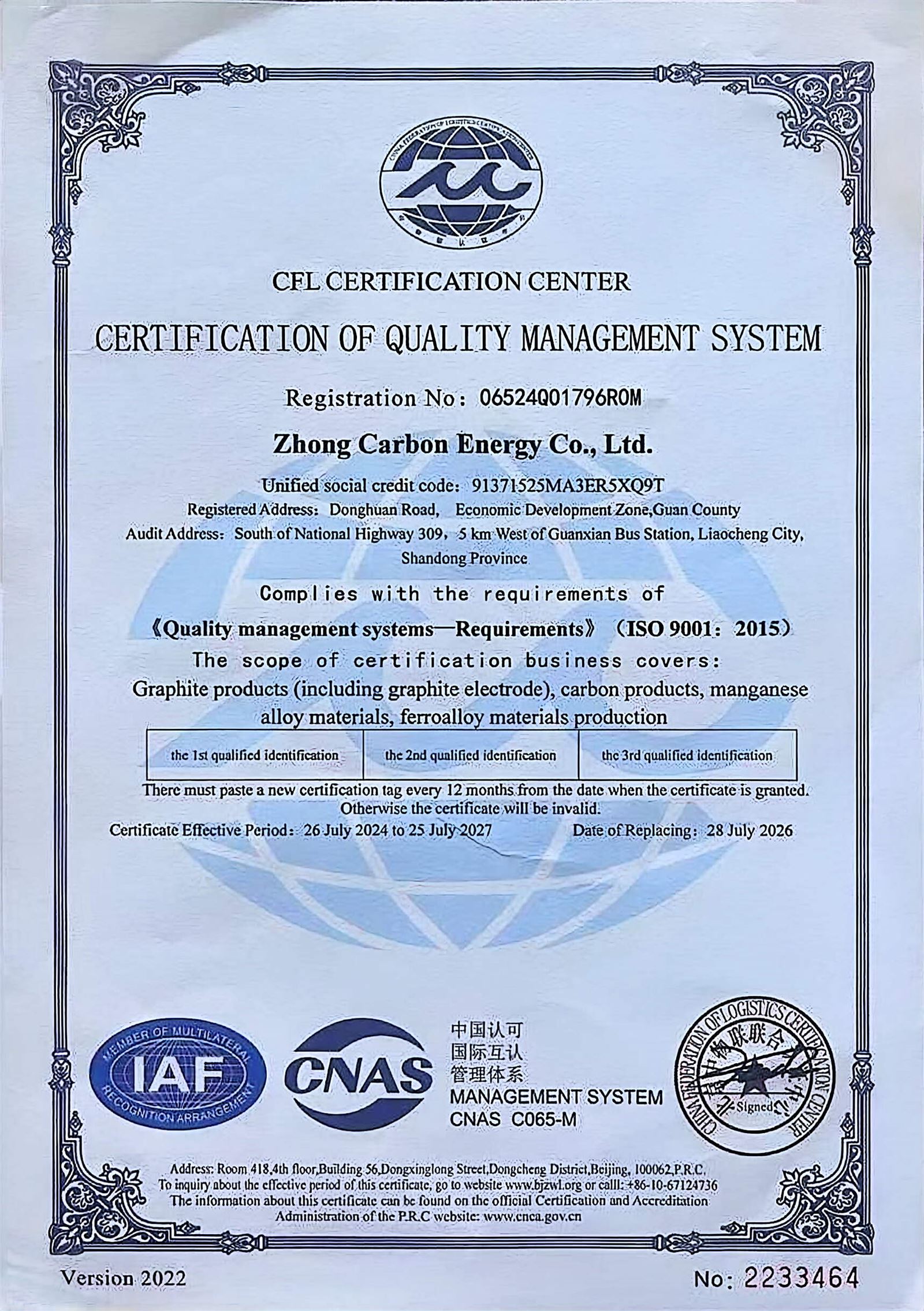
Our Certifications
FAQ
Q: What is graphite petroleum coke used for?
Q: What is the difference between graphite petroleum coke and calcined petroleum coke?
Q: What is graphite petroleum coke carburizer?
Q: What are the key properties of graphite petroleum coke carburizer?
Highly crystalline and graphitic structure
Excellent thermal and electrical conductivity
High purity with low levels of impurities (ash, sulfur, etc.)
High mechanical strength and abrasion resistance
Q: How does the production process for graphite petroleum coke carburizer differ from regular calcined petroleum coke?
Q: What are the key advantages of using graphite petroleum coke carburizer compared to other carburizing agents?
Q: What are the chemicals in petroleum coke?
Q: What is the raw material of petroleum coke?
Q: Is petroleum coke dust explosive?
Q: What is the ignition temperature of petroleum coke?
Q: How do you make graphite from petroleum coke?
Q: What temperature is petroleum coke calcined at?
Q: What is the primary purpose of using graphite petroleum coke carburizer?
Q: What are the key physical and chemical properties of graphite petroleum coke carburizer?
Q: How does the production process for graphite petroleum coke carburizer differ from regular calcined petroleum coke?
Q: What are the key advantages of using graphite petroleum coke carburizer in steel and metal heat treatment processes?
Q: How does the cost of graphite petroleum coke carburizer compare to other carburizing agents?
Q: Are there any environmental or health considerations when using graphite petroleum coke carburizer?
Q: What are the main applications of graphite petroleum coke carburizer beyond heat treatment processes?
Q: How does the particle size distribution of graphite petroleum coke carburizer affect its performance in carburizing processes?
As one of the most professional graphite petroleum coke carburizer manufacturers and suppliers in China, we're featured by quality products and good price. Please rest assured to buy graphite petroleum coke carburizer for sale here from our factory.
carburizer for foundry, graphite petroleum coke additive, graphite additive for carburizing