

Calcined Petroleum Coke
Calcined Petroleum Coke (CPC) is a form of highly electrically conductive, densed Carbon with very low specific Electrical Resistance, and having fixed Carbon of approximately 99.5%. CPC is used extensively as Anode in Alumina Smelters, as Soderberg's Electrode for Ferroalloy Industries, and in the manufacturing of Graphite/ Graphite Electrodes, and Thermal Paste for Ferro Alloys & allied industries in Submerged Arc Furnaces. CPC is also used in various Steel Industries for - Melting of Steel , Recurburisation and for making Special Steels & Alloys.
Why Choose Us?
Strict Quality Control
Qitian Products ensure 100% of all graphite petroleum coke meet industry quality standards and passed final inspection and then are carefully packaged for delivery.
Stable Supply Capacity
We have our own production plant, with a daily shipment of up to 100 tons. We have advanced technicians to help us improve production technology and production efficiency.
Professional Management System
The company's system is very complete. From the early stage of customer docking to the later stage of product sales, we can use professional software management to improve efficiency.
24 Hours Service
We can provide the best export service and after-sales service. 24 hours on line for help.


Advantages of Calcined Petroleum Coke
High Fixed Carbon Content: CPC contains a high level of fixed carbon, providing reliable carbon elements and enhancing the carbon content of the furnace charge.
Low Sulfur and Nitrogen Content: Typically low in sulfur and nitrogen, CPC helps reduce impurities in metallic materials, improving the purity of the finished steel.
High Heat Value and Energy Density: Its high fixed carbon content results in a high heat value and energy density, releasing more heat during smelting, thereby elevating furnace temperature and accelerating reactions.
Stable Chemical Properties: CPC exhibits stable chemical properties and doesn't readily decompose or volatilize at high temperatures, maintaining a stable chemical environment in the furnace.
Slag Control: Used as an additive, CPC can regulate slag properties, optimizing slag flow and reducing viscosity during the steelmaking process.
Homogeneity: As a homogeneous granular material, CPC is easy to mix and incorporate into steelmaking materials, enhancing material homogeneity and consistency within the furnace.
Types of Calcined Petroleum Coke


Calcined Petroleum Coke Powder
Calcined Petroleum Coke Powder is a finely ground form of Calcined Petroleum Coke, obtained through further processing of calcined petroleum coke. This powder form offers a number of advantages and characteristics, making it suitable for use in a variety of industries. The product boasts a high carbon content. Calcined Petroleum Coke Powder typically contains a high percentage of carbon, making it an excellent carbon source for industrial applications requiring high carbon purity.
High Carbon Low Sulfur Calcined Petroleum Coke
High-carbon and low-sulfur calcined petroleum coke products are a type of solid material in the form of graphite, obtained by processing high-quality crude oil. It offers a number of advantages, including a high calorific value, high thermal stability, low volatile matter, low ash content and low sulfur content. It is an ideal material for use as a refractory or carbon product.
High Sulfur Calcined Petroleum Coke
High Sulfur Calcined Petroleum Coke (CPC) is a carbon material with a relatively high sulfur content, typically exceeding 3%. Despite its higher sulfur content compared to low sulfur CPC, it still offers certain advantages and characteristics that make it suitable for specific applications in various industries. High Sulfur Calcined Petroleum Coke is often more cost-effective compared to low sulfur Calcined Petroleum Coke due to its lower production costs. This makes it an attractive option for applications where cost considerations outweigh the need for ultra-low sulfur content.
Fixed Carbon 98% Calcined Petroleum Coke
Calcined Petroleum Coke, a high-quality carbon material manufactured to exacting specifications, is a fixed carbon content of 98%. The product's high fixed carbon content, low sulfur level, uniform particle size distribution, and chemical inertness make it a preferred option in a number of industries, including aluminum smelting, steel production, graphite electrode manufacturing, and refractory materials.
Application of Calcined Petroleum Coke
Calcined petroleum coke uses in the metallurgical field
Calcined petroleum coke is widely used in the metallurgical field, mainly for the production of aluminum electrolysis, silicon, ferromanganese and other metal products. In aluminum electrolysis production, calcined petroleum coke as an electrode material has extremely high electrical conductivity, corrosion resistance and high temperature resistance, which can effectively reduce the energy consumption of the electrolytic cell and reduce oxidation costs; in the production of silicon and ferromanganese, it participates in the preparation process as a reducing agent to improve the efficiency and quality of the entire production process.
Calcined petroleum coke uses in the manufacturing field
Calcined petroleum coke is widely used in the manufacturing field, such as the manufacture of building materials such as carbon felt, artificial stone, patterned bricks, and the manufacture of high-energy density materials such as graphite electrodes, carbon materials, and carbon fibers. Among them, graphite electrodes are an indispensable and important material in the modern power and energy industries. The electrical conductivity and high-temperature stability of calcined petroleum coke make it one of the ideal materials for the manufacture of graphite electrodes.
Calcined petroleum coke uses in the chemical industry
Calcined petroleum coke is widely used in the chemical industry and can be used as a photocatalyst, adsorbent, catalyst in water treatment, gas separation, chemical reactions and other fields. Calcined petroleum coke can also be used as an aerator for hydrogen and natural gas, and is used in petrochemicals, chemical fibers, catalysts and other fields.
Changes in the Physical and Chemical Properties of Calcined Petroleum Coke
To Remove the Volatile Matter of Petroleum Coke
Complicated physical and chemical changes appear in the process of calcining petroleum coke. When it is under 200C, petroleum coke gets heated and water comes out, which is mainly physical changes. While removing the volatile matter, decompostion and polymerization happen as chemical changes. Starting from 200~300C , the combustible gases, also known as voltile matter, are burning out. The higher the temperature is, the larger amount of volatile matter comes out. At 500~700C, the removing amount peaks. When the temperature gets even higher, the removing amount gets less sharply. Till above 1100 , the removing process stops and the volatile matter is lessened to below 0.5%.
The Change in Real Density of Petroleum Coke
The Real Density of petroleum coke is raised from 1.42-1.61g/cm3to 2.00~2.12g/cm3 atter the calcining process. As the temperature changes, the real density changes accordingly, which means that the real density directly rflets how and at what temperature the petroleum coke is being calcined. Because the voltile matter is removed and decomposition and polymerization happen, the structure is remodeling, the volume becomes smaller, and the real density gets higher. Because the real density can show how the coke is densified and regularized so that it can mark the quality of calcined petroleum coke and the calcining process. Generally speaking, at the same temperature, the higher the real density is, the more easily the calcined petroleum coke gets graphitized.
The Change in Oxidation Resistance of petroleum coke
As the temperature rises, imurites are gradually removed, and the chemical activity gets down. Meanwhile, the hydrocarbon escaped in the calcining process forms a shining pyrolysis carbon film with steady chemical property, thus the oxidation resistance of calcined petroleum coke is improved.
The Change in Volume of Petroleum Coke
All kinds of petroleum coke will get contracted after being calcined, while the degree of contraction is diferent. The petroleum coke with more volatile matter and bigger escaping amount will be contracted into a smaller volume. For instance, its contraction rate can be over 20%. Generally the physicochemical changes are dependent on the property of petroleum coke and the calcining temperature. The highest temperature of calcining will be at around 1250C, and the carbon atoms in petroleum coke are of ordered arrangement in two-dimensional space.
Future Challenges in Calcined Petroleum Coke
Environmental Regulations
Stricter environmental regulations aimed at reducing greenhouse gas emissions and air pollutants pose a significant challenge to CPC production. The calcination process is energy-intensive and generates CO2 emissions. Future regulations may require the industry to adopt cleaner technologies or carbon capture and storage (CCS) solutions to mitigate the environmental impact.
Resource Availability
The availability of suitable GPC feedstock is a critical factor for CPC production. Changes in crude oil quality, shifts in refining processes, and fluctuations in the oil industry can impact the supply of high-quality GPC. Ensuring a consistent and adequate supply of GPC will be a crucial challenge for CPC producers.
Technological Innovations
The aluminum industry is continually seeking ways to improve efficiency and reduce costs. Innovations in anode production, such as the development of more durable or alternative anode materials, could reduce the reliance on CPC. CPC producers must invest in research and development to enhance the quality and performance of their products to remain competitive.
Sustainability Initiatives
The drive towards sustainability is reshaping industries worldwide. The aluminum industry, a significant consumer of CPC, is under pressure to adopt sustainable practices. CPC producers will need to align with these initiatives by improving the sustainability of their operations, such as reducing energy consumption, minimizing waste, and optimizing resource utilization.
Market Dynamics
Global economic conditions, trade policies, and shifts in demand for aluminum can influence the CPC market. Producers must navigate these dynamics by diversifying their markets, enhancing supply chain resilience, and maintaining flexibility in production capacities.
The Purpose to Calcine Petroleum Coke
To Remove the Volatile Matter and Water in the Raw Material
There is a certain amount of voltile matter and 3%-10% water in petroleum coke. By burning out the volatile matter and water, the content of fixed carbon will be raised, the following processes of smashing, sieving and grinding etc. will be better done, and the product quality will be higher.
To Increase the Real Density and Mechanical Strength
Because the voltile matter is burned out in the calcining process, petroleum coke gets a smaller volume, better real density, mechanical strength, and heat endurance. Calcining the petroleum coke completely helps ensure the quality of carbon products.
To Improve the Conductivity
After being calcined, the molecular structure of petroleum coke is changed, and the electrical resistivity is lowered, thus conductivity is raised. Generally a better calcining process results in better conductivity, which is important for carbon products.
To Raise the Oxidation Resistance
As the temperature rises during the calcining process, pyrolysis and polymerization begin, and hydrogen, oxygen and sulfur are burning out. The chemical activity gets down, and the physicochemical property becomes steady so that the oxidation resistance is raised.
How to Use Calcined Petroleum Coke in Titanium Dioxide Production?
Calcined petroleum coke is primarily used in the chlorination stage of the chloride process for titanium dioxide (TiO2) production, serving as a reducing agent and energy source at high temperatures.
Petroleum coke is mixed with ore and reacts with chlorine gas at high temperatures to produce crude TiCl4, which contains various impurities. This process is a critical step in the chloride method for producing titanium dioxide, where petroleum coke plays an indispensable role. Its strong reducibility effectively converts the titanium in the ore into titanium chloride, laying the foundation for subsequent oxidation and refining processes.
In the oxidation stage, the refined TiCl4 obtained from the chlorination section needs to react with oxygen at high temperatures to form titanium dioxide and chlorine gas. Although petroleum coke does not directly participate in the chemical reactions in this phase, its role in the earlier chlorination stage significantly impacts the efficiency and quality of the entire oxidation process.
In the post-treatment stage, the main activities include cooling, separating, dechlorinating, and surface treating the produced titanium dioxide. At this stage, the direct role of petroleum coke has diminished, but the reaction basis it provides in the initial phase is still crucial for the smooth progress of the overall production process.
The unique structure and properties of calcined petroleum coke also make its application in titanium dioxide production more extensive. For example, by adjusting the calcination conditions, one can optimize the pore structure and reactivity of petroleum coke, further improving the production efficiency and product quality of titanium dioxide. Additionally, calcined petroleum coke can serve as an electrically conductive material or heat transfer material during the titanium dioxide production process, enhancing equipment lifespan and safety.
The Calcination Process of Calcined Petroleum Coke
Preheating
The green petroleum coke is first preheated to a temperature of around 200-400°C. This step helps to remove any volatile matter and moisture present in the coke.
Calcination
The preheated coke is then transferred to a rotary kiln or calciner, where it is subjected to high temperatures, typically in the range of 1200-1400°C. During this stage, the coke undergoes a series of physical and chemical transformations, including the following:
Removal of remaining volatile matter: Residual hydrocarbons and other volatile compounds are driven off, leaving behind a predominantly carbon-rich material.
Dehydrogenation: Hydrogen atoms are removed from the coke's molecular structure, further increasing the carbon content.
Graphitization: The coke's carbon atoms undergo structural rearrangement, forming a highly crystalline and graphitic structure.
Cooling
After the high-temperature calcination, the coke is rapidly cooled to preserve its desired properties and prevent any further undesirable transformations. This cooling step is typically carried out in a controlled atmosphere to prevent re-oxidation of the coke.
Screening and Crushing
The calcined coke may undergo additional processing, such as screening and crushing, to achieve the desired particle size distribution for specific applications.
Our Factory
The company now has 2 modern production workshops and 2 large storage workshops, which can meet the needs of large-scale production and fast logistics. The annual production volume has reached 100,000 tons. After years of hard work, we have worked closely with many domestic companies and exported to many countries and regions. In the future, the company will continue to adhere to the business philosophy of "quality-oriented, honesty and trustworthiness", continuously improve product quality and service level, carry out extensive cooperation and exchanges with domestic and foreign companies, and jointly promote the development of the carbon industry.

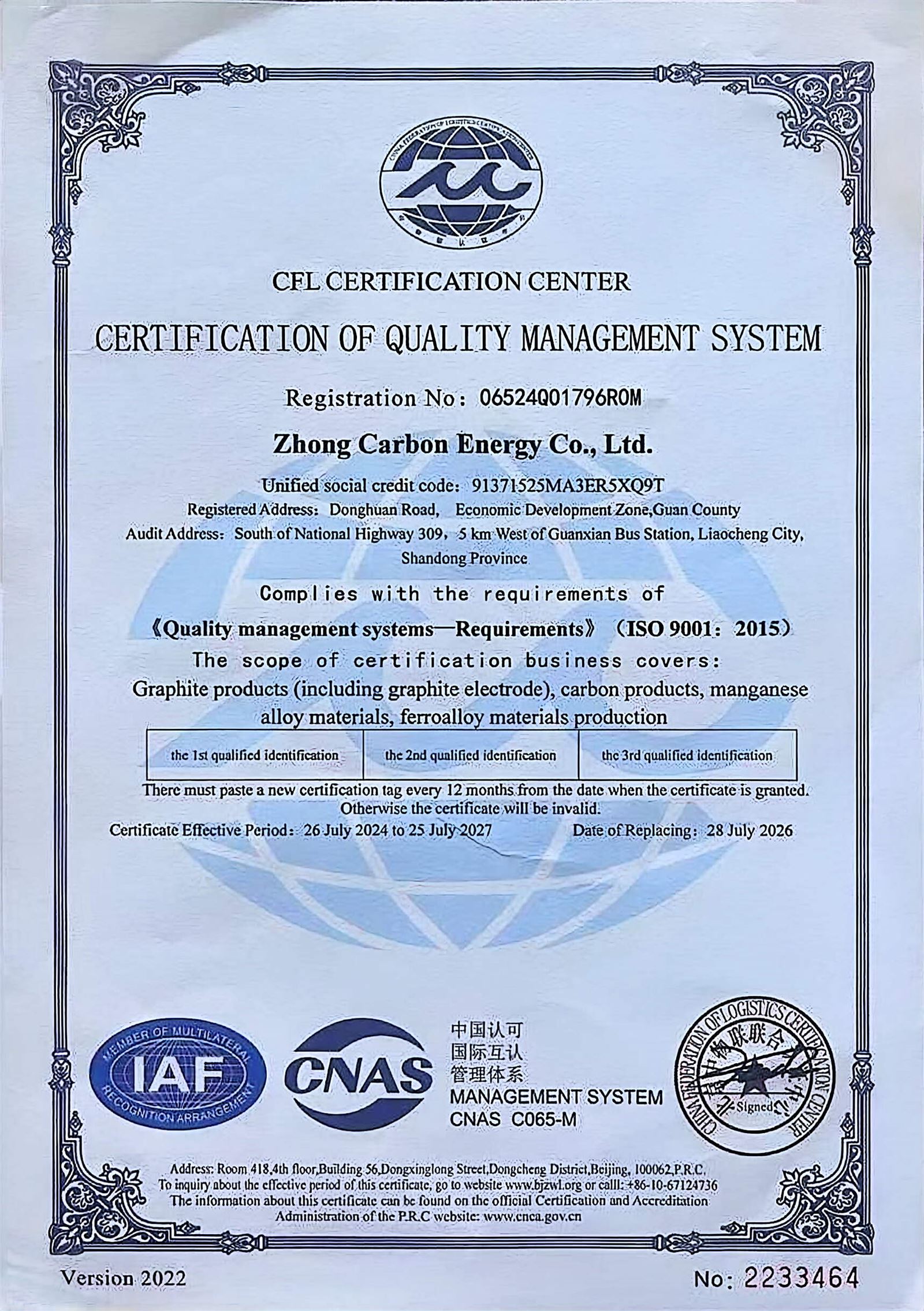
Our Certifications
FAQ
Q: What is calcined petroleum coke used for?
Q: What is the difference between calcined petroleum coke and petroleum coke?
Q: What is the future of calcined petroleum coke?
Q: Is calcined petroleum coke flammable?
Q: What is the raw material for calcined petroleum coke?
Q: What temperature is petroleum coke calcined at?
Q: What is the calorific value of calcined petroleum coke?
Q: What temperature does petroleum coke burn at?
Q: Where is calcined petroleum coke used?
Q: What is the difference between calcined coke and needle coke?
Q: What is the most common use for petroleum coke?
Q: Is petroleum coke dust explosive?
Q: What can you do with petroleum coke?
Q: How do you make calcined petroleum coke?
Q: What is the raw material of petroleum coke?
Q: What temperature is petroleum coke calcined at?
Q: What metals are in petroleum coke?
Q: What is the difference between graphite petroleum coke and calcined petroleum coke?
Q: What is the process of petroleum coke calcination?
As one of the most professional calcined petroleum coke manufacturers and suppliers in China, we're featured by quality products and good price. Please rest assured to buy calcined petroleum coke for sale here from our factory.
0 1mm Calcined Petroleum Coke, 1 5mm Calcined Petroleum Coke, Low Ash and Low Sulfur Calcined Petroleum Coke