

Graphite Electrode Granules
Graphite electrode granules are made from graphite electrode processing residual materials and high-temperature graphitized waste roasted products as raw materials, and are processed into various particle sizes, powders, granules, and blocks. The product has the characteristics of high carbon, low sulfur, low nitrogen, low resistivity, and low ash. It is widely used in metallurgy, chemical reducing agent, casting reduction inoculant, refractory materials, machinery, electronics and other fields. It can also be used in the metallurgical casting industry. High-grained carbon increasing agent, used in the carbon industry as a raw material for reducing resistance, producing regenerated electrodes, etc.
Why Choose Us?
Strict Quality Control
Qitian Products ensure 100% of all graphite petroleum coke meet industry quality standards and passed final inspection and then are carefully packaged for delivery.
Stable Supply Capacity
We have our own production plant, with a daily shipment of up to 100 tons. We have advanced technicians to help us improve production technology and production efficiency.
Professional Management System
The company's system is very complete. From the early stage of customer docking to the later stage of product sales, we can use professional software management to improve efficiency.
24 Hours Service
We can provide the best export service and after-sales service. 24 hours on line for help.


Advantages of Graphite Electrode Granules
Dimensional Accuracy
Graphite electrode granules can be used in die sinking EDM to accurately replicate the electrode’s shape onto the workpiece. This process enables the creation of highly precise and intricate features, ensuring that the workpiece adheres closely to the intended design specifications.
Fine Surface Finishes
Graphite electrode granules can generate fine surface finishes on workpieces. This attribute is crucial in applications demanding smooth and polished surfaces. Achieving these high-quality finishes significantly diminishes the need for subsequent post-processing.
Low Electrode Wear
Graphite electrode granules exhibit low wear during the EDM process. This means they maintain their shape and integrity for extended periods, reducing the frequency of electrode replacements. This results in cost savings and minimizes downtime for electrode changes.
Enhanced Efficiency
The integration of features like low wear, precise dimensions, and refined surface finishes results in increased overall efficiency. This is achieved through decreased electrode replacements, minimal rework, and quicker machining times, all of which enhance productivity and cost-effectiveness in the manufacturing process. When you combine the advantages of graphite with a contemporary CNC EDM machine equipped with a multiple electrode automatic tool changer and the option for robotic electrode and workpiece exchange, EDM becomes an exceptionally productive process.
Material Compatibility
Graphite electrode granules are versatile and compatible with various workpiece materials, including metals and alloys. This adaptability makes them suitable for a broad range of applications, from producing precision parts in the automotive industry to creating molds and dies in tool and die manufacturing. Graphite works very well with most steels and many other materials. It does not matter if the material is hardened or soft. Aluminum alloys, copper, carbide, and titanium alloys are all materials that can be effectively machined using graphite electrode granules in an EDM machine. Essentially, anything that conducts electricity can be machined with graphite in an EDM.
Improved Quality Control
Graphite electrode granules contribute to better quality control by enabling the production of components with consistent and precise dimensions. This results in reduced scrap rates and improved product quality. Fine grain graphite grades provide very low wear and fine detail which improves surface finish.
Reduced Contamination
Graphite’s chemical stability and low reactivity minimize the risk of contamination during the EDM process. This is especially crucial when working with sensitive materials, as it ensures the integrity of the workpiece.
Application of Graphite Electrode Granules
Electric Arc Furnace Steelmaking
In traditional steelmaking processes, graphite electrode granules are utilized in electric arc furnaces. An electric current is passed through these graphite electrode granules to generate a high-temperature arc that melts iron ore or scrap iron, converting it into steel. The role of graphite electrode granules is essential due to their high thermal conductivity, good electrical conductivity, and stability at elevated temperatures.
Electrolytic Extraction of Metals
Graphite serves as the anode material in the electrolytic extraction of metals like aluminum and magnesium. Graphite anodes can withstand the harsh conditions within electrolytic cells, including highly corrosive electrolytes and high temperatures. The chemical inertness of graphite makes it the ideal choice for these applications.
Battery Technology
In battery manufacturing, graphite is frequently used as the negative electrode material, especially in lithium-ion batteries. Graphite boasts good electrochemical stability and high capacitance, enabling efficient charging and discharging of lithium batteries. This makes it widely used in portable electronic devices and electric vehicles.
Welding and Plasma Cutting
Graphite is employed as an electrode material in welding and plasma-cutting technologies. It conducts electricity to generate a high-temperature plasma jet, which is used to cut metals or other materials. Graphite electrode granules are extensively used in these applications due to their high-temperature resistance and electrical conductivity.
Electrochemical Analysis
Graphite electrode granules are utilized in electrochemical analysis and testing equipment to probe the electrochemical behavior during chemical reactions. The chemical stability and excellent conductivity of graphite enable it to accurately measure current fluctuations in electrolyte solutions.
Molten Salt Electrolysis
In certain specialized chemical productions, such as the synthesis of rare earth elements and their compounds, graphite electrode granules are used in molten salt electrolysis processes. These electrode granules function effectively in extremely high temperatures and corrosive molten salts, facilitating the electrochemical synthesis of specific chemicals.
Precautions for the Use of Graphite Electrode Granules
Keep dry
Graphite materials need to maintain a good degree of dryness during use. Therefore, when using this type of electrode, you must first check whether the surface is dry. If there is moisture, it cannot be used, but a special dehumidification process is required to make the graphite It can be used again after it is dry.
How to clean up
General graphite electrode products don’t seem to pay too much attention to cleaning, while graphite electrode granules are different. It must be cleaned to avoid water and oil. Generally, compressed air is used for cleaning in the use environment, so that it can achieve Very good cleaning effect without polluting the electrode.
Hanging and placing
In the use of graphite electrode granules, it is often necessary to hoist and assemble it, and when hoisting, pay attention to lifting the middle part of the electrode, and then turn its head down, and place it with a soft cushion. In this way, the entire electrode can be protected from vibration and damage, and the next installation can be carried out.
Importance of Graphite Electrode Granules in the Steel Industry
Graphite electrode granuless are essential components in the production of steel in the steel industry. They are used in electric arc furnaces to melt scrap steel and other metals to create new steel products. Graphite electrode granuless are made of high-quality graphite materials and are designed to withstand the extreme temperatures and harsh environments of the steel-making process.
The use of Graphite electrode granuless in the steel industry has several advantages. They provide a clean and efficient way to melt steel, reducing the amount of energy and resources required to produce steel products. Graphite electrode granuless are also durable and long-lasting, reducing the need for frequent replacement and maintenance.
In addition to their use in the steel industry, Graphite electrode granuless are also used in other industries such as aluminum smelting and other metal refining processes. They play a critical role in the production of many everyday products and materials, making them an important component of the global economy.
Overall, the importance of Graphite electrode granuless in the steel industry and other industrial processes cannot be overstated. Their unique properties and characteristics make them a vital component in the production of many essential products and materials.
Graphite electrode granuless are essential in the steelmaking process, as they are used to conduct electricity into electric arc furnaces (EAFs) and melt scrap steel into liquid form. Understanding the different grades of Graphite electrode granuless is important to ensure optimal performance and cost-efficiency.
Graphite electrode granuless are typically classified into different grades based on their physical and chemical properties, such as thermal conductivity, electrical conductivity, density, and oxidation resistance. Each grade has its own unique characteristics that make it suitable for specific applications.
For example, high-density Graphite electrode granuless are typically used for high-power EAFs due to their excellent thermal conductivity and low electrical resistance. Meanwhile, electrodes with high oxidation resistance are ideal for high-temperature applications.
It’s important to choose the right grade of Graphite electrode granules based on the specific requirements of the steelmaking process. Using the wrong grade can lead to reduced performance, higher costs, and increased downtime. Consulting with an expert in Graphite electrode granuless can help ensure that the right grade is selected for the job.
Advantages of Utilizing Electrode Paste in Graphite Electrode Granules Manufacturing


Enhanced Conductivity
Electrode paste, a key ingredient in the production of graphite electrodes, significantly enhances electrical conductivity. This characteristic is paramount in ensuring efficient energy transfer during the manufacturing process. By facilitating better conductivity, electrode paste aids in achieving higher quality electrodes essential for demanding industrial applications.
Improved Homogeneity
Incorporating electrode paste into the manufacturing process promotes better homogeneity within the graphite electrode structure. This results in electrodes with consistent properties throughout, such as density and strength. The uniform distribution of paste helps mitigate inconsistencies, ensuring reliable performance and durability of the electrodes.
Optimal Performance
Graphite electrodes manufactured with electrode paste exhibit superior performance characteristics compared to those produced without it. The inclusion of electrode paste enhances the mechanical strength and thermal conductivity of the electrodes, thereby enabling them to withstand extreme operating conditions encountered in industrial settings. This translates to improved productivity and cost-effectiveness for end-users.
Reduced Production Costs
Efficiency gains achieved through the utilization of electrode paste can lead to significant cost savings in the manufacturing process. By enhancing conductivity and homogeneity while improving overall performance, manufacturers can streamline production processes and minimize waste. This ultimately contributes to lowering production costs and enhancing competitiveness in the market.
Environmental Sustainability
Electrode paste plays a role in promoting environmental sustainability within the graphite electrode manufacturing industry. By optimizing production processes and improving electrode performance, the need for frequent replacements and maintenance is reduced. This not only conserves resources but also minimizes the environmental impact associated with electrode production and usage.
Versatility and Adaptability
Another advantage of electrode paste lies in its versatility and adaptability to different manufacturing requirements and specifications. Manufacturers can tailor the composition of electrode paste to meet specific performance criteria, ensuring compatibility with various applications and industrial processes. This flexibility enables greater innovation and customization in electrode manufacturing.
What Are Graphite Electrode Granules Made Of?
Graphitized petroleum coke is the primary raw material used in the production of graphite electrode granules. This highly graphitized form of petroleum coke provides the core structure and essential properties, such as high electrical and thermal conductivity, chemical inertness, and thermal stability. To hold the graphitized petroleum coke particles together, various binder materials are added to the formulation. Common binders used include pitch (coal-tar pitch or petroleum pitch), resins, and other carbonaceous materials that can form a strong, cohesive matrix. Small amounts of other additives may be included to enhance specific properties or improve the manufacturing process. These additives can include materials like filler materials, lubricants, or processing aids. The exact composition of graphite electrode granules can vary depending on the specific application and the desired properties of the final product. However, the high-purity graphitized petroleum coke is always the primary and essential component that provides the core characteristics of the graphite electrode granules.
Graphite Electrode Granules Properties You Need to Know
Specific Resistance / Electrical Resistivity
It is the resistance to the passage of electric current. A low resistance value allows a higher current intensity without the electrodes overheating.
Apparent Density
It is the weight per unit volume. A higher bulk density usually reflects better mechanical properties.
Resistance to Tension
It is the force that is required to produce a break by tension. A high value reduces the number of nipple breaks.
Flexural Strength
The force required to produce a flexural break (also called a break module). A high value reduces the number of electrode breaks.
Grade
Depends on the quality of the raw material (coke) used in the manufacture of graphite electrodes. The classification may vary among the world’s producers.
Young’s Modulus
It is a measure of resistance to the change of length before a tension or compression force. This modulus of elasticity is expressed as the relation between force (force per unit area) and the resulting deformation (change in length per unit length). A low value is usually associated with a good resistance to thermal shock.
Our Factory
The company now has 2 modern production workshops and 2 large storage workshops, which can meet the needs of large-scale production and fast logistics. The annual production volume has reached 100,000 tons. After years of hard work, we have worked closely with many domestic companies and exported to many countries and regions. In the future, the company will continue to adhere to the business philosophy of "quality-oriented, honesty and trustworthiness", continuously improve product quality and service level, carry out extensive cooperation and exchanges with domestic and foreign companies, and jointly promote the development of the carbon industry.

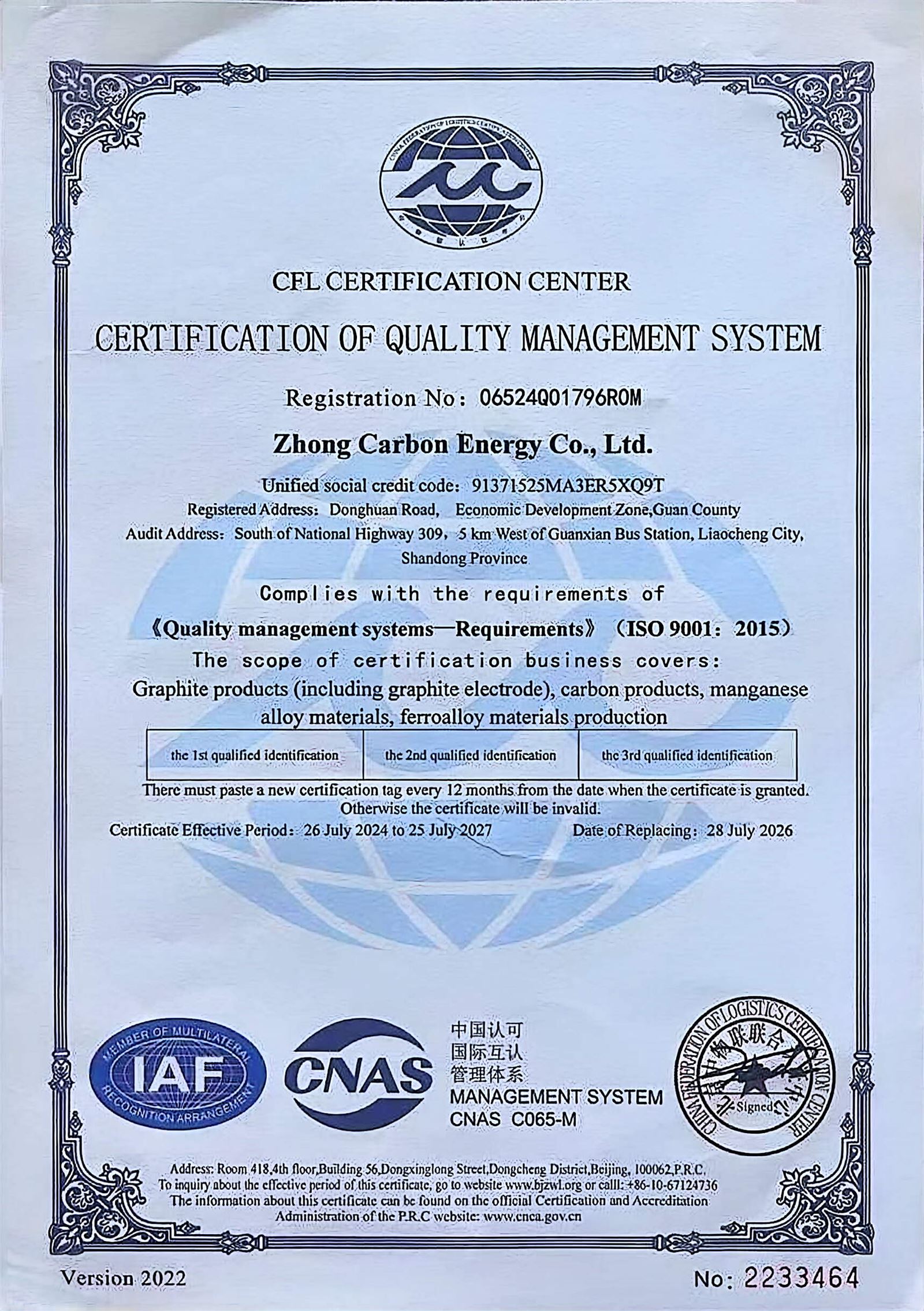
Our Certifications
FAQ
Q: What are graphite electrodes used for?
Q: What is the importance of graphite electrode?
Q: What happens to graphite electrodes?
Q: What is the raw material for graphite electrodes?
Q: Why do graphite electrodes need to be replaced regularly?
Q: Is graphite positive or negative?
Q: Why is it preferable to use a number of graphite electrodes?
Q: What is the difference between carbon electrode and graphite electrode?
Q: What is the difference between copper and graphite electrodes?
Q: Do graphite electrodes react with oxygen?
Q: What are the main raw materials used in the production of graphite electrode granules?
Q: What is the purpose of the binder materials in graphite electrode granules?
Q: Why is the high purity of graphitized petroleum coke important for graphite electrode granules?
Q: What is the typical range of electrical conductivity for graphite electrode granules?
Q: How does the manufacturing process of graphite electrode granules differ from regular petroleum coke?
Q: What are some of the common applications of graphite electrode granules?
Q: How does the particle size and distribution of graphite electrode granules affect their performance?
Q: What is the typical range of the coefficient of thermal expansion for graphite electrode granules?
Q: How does the graphitization process affect the density of the final graphite electrode granules?
Q: What are some of the key factors that influence the performance of graphite electrode granules in industrial applications?
As one of the most professional graphite electrode granules manufacturers and suppliers in China, we're featured by quality products and good price. Please rest assured to buy graphite electrode granules for sale here from our factory.
graphite for crosslinked polymers, graphite for bead based polymers, graphite for inorganic compounds