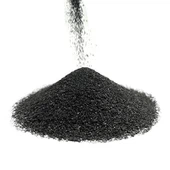
The sulfur content of graphite petroleum coke has a significant impact on the quality of castings, production costs, environmental impact and the graphitization process. Therefore, the sulfur content of petroleum coke needs to be strictly controlled during the casting process.
The influence of the sulfur content of graphite petroleum coke on castings is mainly reflected in the following aspects:
1. Impact on product quality: The sulfur content in petroleum coke has a significant impact on product quality. Sulfur is a harmful element. Graphite electrodes produced from petroleum coke with a large sulfur content will produce "bloating" during the graphitization process, which can easily lead to product cracks. This means that petroleum coke with higher sulfur content may cause cracks in the casting, affecting its overall quality and service life.
2. Electrode consumption during steelmaking: Graphite electrodes with high sulfur content will increase electrode consumption per ton of steel during steelmaking. This not only increases production costs, but may also affect casting production efficiency.
3. Environmental impact: Petroleum coke with high sulfur content will produce sulfur dioxide (SO2) and other sulfide emissions during the calcination process, causing pollution to the environment. This is not only related to the environmental friendliness of the casting production process, but may also involve compliance with environmental regulations.
4. Influence during the graphitization process: The escape of sulfur has an important impact on the graphitization of petroleum coke. The high-temperature escape process of sulfur will cause crystal expansion and cause cracks in graphite products. This shows that the level of sulfur content directly affects the smooth progress of the graphitization process, thereby affecting the microstructure and performance of the casting.The sulfur content of low-sulfur graphite petroleum coke produced by Zhong Carbon Energy Co., Ltd. can reach 0.02%, which has almost negligible impact on castings. Low-sulfur graphite petroleum coke produced by Zhong Carbon Energy Co., Ltd. improves the performance of steel castings from the source.
5. Desulfurization effect during the calcination process: Generally, the desulfurization effect is not great when calcined to about 1300°C. Only by increasing the calcination temperature to about 1450°C can a more obvious desulfurization effect be achieved. This means that high-sulfur petcoke requires higher calcination temperatures to reduce sulfur content, which may increase energy consumption and production costs.
The specific effects of sulfur content on the properties of steel castings include:
1. Effect of graphite morphology: Changes in sulfur content will affect the graphite morphology in cast iron. When the carbon equivalent is constant, the increase of sulfur will reduce the solubility of carbon in the molten iron. From a thermodynamic point of view, it may be an element that promotes graphitization, but from a kinetic point of view, it is an element that strongly hinders graphitization. Since sulfur is enriched at the boundaries of eutectic groups in molten iron, it blocks dislocation steps, hinders the diffusion of carbon atoms and the growth of graphite-austenite eutectic groups, resulting in reduced branches of precipitated graphite and the formation of short and thick flakes. Shape graphite, and at the same time increase the supercooling of the molten iron to make the solidification process change according to the metastable system.
2. Effect of tensile strength: Different sulfur contents will cause changes in the tensile strength of cast iron parts. For example, there is little difference in the morphology of graphite between low manganese and low sulfur and medium manganese, showing uniform distribution of flakes, and higher tensile strength; while at low manganese and high sulfur, the graphite is distributed in flakes and dendritic point-like areas, and the tensile strength is higher. Low, about 30% lower than the low manganese and low sulfur state.
3. Inhibit nitrogen absorption function: Sulfur can significantly reduce the nitrogen absorption rate in gray cast iron, thus affecting the quality of castings. At low sulfur content, every 0.05% increase in sulfur will reduce the dissolution rate coefficient of nitrogen by about 50%, and sulfur has basically no effect on the solubility of nitrogen.
4. Thermal shock resistance: The increase in sulfur content may affect the thermal shock resistance of graphite products, because the escape process of sulfur may cause cracks, affecting the products when they withstand the thermal shock of sudden rise to high temperature or rapid cooling from high temperature. anti-rupture properties.
5. Influence of chemical composition: As one of the chemical components, sulfur has an impact on the chemical composition of steel castings. For example, the sulfur content in the chemical composition of some heat-resistant steel castings is strictly controlled within a certain range to ensure the performance of the castings.
In summary, sulfur content has an important impact on the properties of steel castings, including graphite morphology, tensile strength, nitrogen absorption, gas expansion and thermal shock resistance. Therefore, the control of sulfur content during the production process is very important.Choosing low-sulfur graphite petroleum coke from Zhong Carbon Energy Co., Ltd. will add points to the performance of steel castings, inject pure power into steel castings, safeguard the quality, help steel castings achieve a leap in performance, and make steel castings tougher and more reliable.