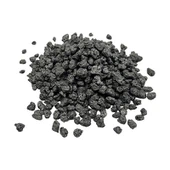
In high-tech manufacturing sectors like battery materials, the quality of artificial graphite directly impacts the performance and safety of end products. While ISO certificates are important, they often only represent the "basic threshold" of supplier qualifications. True risk control and quality assurance lie in those easily overlooked on-site details.
This article reveals five "invisible" key details you must inspect on-site when auditing artificial graphite suppliers, beyond documentation, to help you make more accurate and reliable supplier decisions.
1. Cleanliness of Production Environment and Cross-Contamination Control
What to inspect: Don't just look at whether the floor is clean; focus on:
- Airflow and Zoning Management: Graphite dust is highly prone to dispersion. Observe whether there are effective physical barriers and independent ventilation systems between different processes (such as crushing, graphitization, and screening). Is dust drifting from upstream processes to downstream clean areas?
- Equipment and Wall Details: Run your hand over less frequently cleaned areas like the edges of countertops, above pipes, or lamp covers. Excessive accumulation of graphite dust is direct evidence of inadequate daily cleaning and indicates an increased risk of product contamination.
- Personnel and Material Flow: Do employees and material carts move directly from the raw material area to the finished product packaging area? Disorganized flow is a breeding ground for cross-contamination.
Why it matters: The introduction of trace metal impurities or foreign objects can severely affect the electrochemical performance of artificial graphite, especially for high-end anode materials.
2. Actual Operation and Energy Consumption Management in Graphitization Workshops
What to inspect: Graphitization is a core process with extremely high energy consumption, and its operational status directly reflects technical capabilities and stability.
- Furnace Condition and Maintenance Records: Observe the appearance of the Acheson furnace or internal series furnace, checking for obvious repair traces and the consumption of furnace head electrodes. Request to randomly review recent furnace temperature curve records and maintenance logs to see if they are smooth and controllable.
- Real-Time Energy Consumption Monitoring: Ask to see if the workshop is equipped with a real-time power monitoring system for each furnace batch. A well-managed supplier can clearly understand the specific energy consumption of each furnace batch, which reflects its cost control and technical uniformity.
- Furnace Loading and Filler Technology: Observe whether the furnace loading process is standardized and orderly. Is the filler uniform and compact? This directly affects the uniformity of graphitization and product consistency.
Why it matters: The graphitization process determines the crystal structure of graphite, and its uniformity and stability are the foundation of product batch consistency. Disorganized energy consumption management often indicates imprecise process control, leading to significant fluctuations in cost and quality.
3. Implementation "Traces" of Process Quality Control Points
What to inspect: Quality system documents may be perfect, but the key is to see if they are actually followed on-site.
- Real-Time Inspection Records: Randomly select the "Process Parameter Inspection Records" from the current day or the previous day and compare them with the actual readings of on-site instruments. Are the data recorded timely and accurately? Is there any advance recording or tampering?
- Immediate Handling of Non-Conforming Products (NG Items): Is there a clearly marked isolation area or container for non-conforming products on the production line or inspection bench? Are the defective products from the current day or have they been积压 for a long time? This directly reflects the response speed to quality abnormalities.
- "Working Status" of Measuring Equipment: Check if online particle size analyzers, moisture meters, etc., are turned on and have recent data. Are the measuring tools within the valid calibration period and labeled? Detection equipment left unused in a corner is a dangerous sign.
Why it matters: Process control failure is the root cause of large-scale quality issues. These "traces" are a litmus test for whether the quality culture is effectively implemented.
4. Storage and Traceability Management of Raw Materials and Finished Products
What to inspect: The storage link directly relates to raw material stability and product traceability.
- Management of Raw Materials like Petroleum Coke/Needle Coke: Are different batches and sources of raw materials clearly labeled and isolated? Is the warehouse environment moisture-proof and pollution-proof (petroleum coke is highly hygroscopic)? Is there a visual method for implementing the first-in-first-out (FIFO) principle (such as color labels)?
- On-Site Test of Batch Traceability: Randomly select a pallet of products from the finished product warehouse and ask on-site personnel to provide the process parameter records and raw material batch information for key processes (such as grinding and graphitization) corresponding to that batch within 5 minutes based on the labeled batch number. The smoothness of the traceability chain is the best proof of system reliability.
- Packaging Details: Is the inner packaging of finished products well-sealed? Are the ton bags or cartons clean and sturdy enough to effectively protect the products from moisture and contamination during transportation?
Why it matters: A reliable traceability system is the lifeline for quickly identifying the cause and minimizing losses when quality issues occur. Improper storage can negate all the sophisticated processes implemented earlier.
5. Skills and Awareness of Frontline Employees
What to inspect: Employees are the executors of all processes.
- Operations During "Downtime": When equipment is temporarily shut down or changing production runs, observe what the operators are doing. Are they cleaning the equipment, organizing tools, or just idle? This reflects their daily 5S素养 and work discipline.
- Awareness of Key Parameters: Have a brief conversation with the on-duty operator and ask about 1-2 of the most critical process parameters for their position and their control ranges. Their answers can quickly reveal whether training is adequate.
- Safety and Quality Warnings: Are there easy-to-understand, illustrated safety and quality warnings (such as "Prevent Metal Foreign Object Contamination" and "Dust Explosion Hazard") placed at relevant workstations in the workshop? Do employees follow them (such as correctly wearing dust masks)?
Why it matters: No matter how advanced the equipment and management systems are, they ultimately rely on human execution. A well-trained and highly conscious team is the ultimate guarantee for stable production of high-quality products.
Conclusion
Auditing artificial graphite suppliers should never stop at document reviews in meeting rooms and sample testing. By going deep into the production site and using this "invisible checklist" to observe, inquire, and verify, you can truly gain insight into the supplier's internal strength, management level, and the essence of its quality culture.
This detail-oriented, in-depth assessment is far more effective than a single certificate in helping you identify reliable, resilient long-term partners who can grow with you, building the strongest defense for your supply chain security.