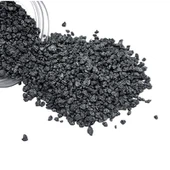
In the carbon materials industry, a common question arises: Why does 0-2mm synthetic graphite cost significantly less than 0.2-1mm synthetic graphite? The answer lies not in the graphite itself, but in two critical factors: processing complexity and product specifications. This article breaks down the key differences to help you understand the value behind each grade.
1. The Core Reason: Processing Depth & Cost
The biggest driver of price disparity is the length and precision of the production process. Let's compare the two:
0-2mm Synthetic Graphite: The "Raw" Grade
- Production Flow: This is the direct output of primary crushing. Large synthetic graphite blocks are first crushed into coarse particles, then screened through a 2mm mesh. The material that passes through (0-2mm) is the final product.
- Cost Implications:
- Short process: Minimal steps mean low energy consumption, low equipment wear, and high production yield.
- No extra processing: No need for fine grinding or multi-stage screening, so labor and maintenance costs are negligible.
0.2-1mm Synthetic Graphite: The "Precision" Grade
- Production Flow: This is a secondary, refined product. It starts with 0-2mm (or similar coarse material), which is then:
- Finely ground (often using energy-intensive equipment like jet mills).
- Precisely screened through multiple layers of vibrating screens to isolate particles between 0.2mm and 1mm.
- Cost Implications:
- High energy use: Fine grinding consumes 3-5x more energy than primary crushing.
- Low yield: Up to 40% of the input material becomes "waste" (either <0.2mm fine powder or >1mm coarse particles), which are sold at lower prices.
- Equipment wear: Precision mills and screens degrade faster, increasing maintenance costs.
Simple Analogy:
0-2mm graphite is like "gravel scooped directly from a quarry"-quick and cheap to get.
0.2-1mm graphite is like "polished pebbles sorted by exact size"-it requires extra time, energy, and labor to refine.
2. Product Quality: Consistency & Purity
Beyond processing, the quality specifications of each grade further justify the price gap.
|
Feature |
0-2mm Synthetic Graphite |
0.2-1mm Synthetic Graphite |
|
Particle Size Range |
Wide (0 to 2mm), with mixed fine/coarse particles |
Narrow (0.2 to 1mm), uniform particle distribution |
|
Consistency |
Poor-physical/chemical properties vary widely |
Excellent-stable performance across all particles |
|
Purity |
Lower (may contain impurities from rough crushing) |
Higher (fine grinding/screening removes defects) |
|
Material Grade |
Bulk raw material |
Precision engineering material |
3. Market Demand & Application Impact
Price is also shaped by supply and demand dynamics, driven by their distinct use cases.
0-2mm Synthetic Graphite: Low-Value, High-Volume Uses
This grade is a workhorse for cost-sensitive, low-tech applications where precision isn't critical:
- Foundry coatings (to prevent metal adhesion)
- General refractory materials (for high-temperature furnaces)
- Brake pad fillers (to improve friction)
- Low-cost carburizers (for steelmaking)
These industries prioritize volume over precision, so demand is steady but price-sensitive.
0.2-1mm Synthetic Graphite: High-Value, High-Growth Uses
This grade is a key material for high-tech, performance-driven industries-especially lithium-ion battery anodes (a core component of electric vehicles):
- EV Batteries: The 0.2-1mm size optimizes compaction density and electrochemical performance (e.g., charging speed, cycle life).
- Advanced Conductive Additives: Used in electronics to enhance heat/electricity transfer.
- Specialty Lubricants: Reduce friction in aerospace or industrial machinery.
- High-End Composites: Improves strength and conductivity in carbon fiber materials.
The boom in electric vehicles has caused demand for 0.2-1mm graphite to surge, creating a supply-demand imbalance that further elevates its price.
Key Takeaways: Why the Price Gap Matters
|
Characteristic |
0-2mm Synthetic Graphite |
0.2-1mm Synthetic Graphite |
|
Processing Cost |
Low (minimal steps, high yield) |
High (energy-intensive, low yield) |
|
Quality |
Basic, inconsistent |
Premium, consistent |
|
Application |
Low-end, bulk industries |
High-end, tech-driven industries (EVs, electronics) |
|
Price Driver |
Cost-focused |
Performance-focused + supply-demand imbalance |
Final Conclusion
The price difference between 0-2mm and 0.2-1mm synthetic graphite boils down to value added through processing. When you buy 0.2-1mm graphite, you're not just paying for carbon-you're paying for:
- The energy to grind it to a precise size.
- The technology to screen out impurities.
- The consistency required for high-performance applications.
For buyers, understanding this distinction helps align material choice with project needs:
- Choose 0-2mm for cost-sensitive, low-precision uses.
- Choose 0.2-1mm for high-tech applications where performance is non-negotiable.
As the global shift toward clean energy accelerates, the demand for precision-engineered graphite grades like 0.2-1mm will only grow-making this price gap a defining feature of the carbon materials market for years to come.