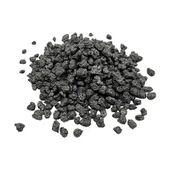
As a key industrial material, artificial graphite needs to pay special attention to dust explosion risks, conductivity, inhalation hazards, and hygroscopicity during storage and handling. The following guidelines are based on industry standards and practical experience to help companies establish a safety management system to ensure personnel and production safety.
Ⅰ. Best Practices for Storage Safety
Core Goal: Control the environment, prevent dust accumulation, and water intrusion
1. Environmental Control
- Dryness first: The humidity in the storage area must be controlled at 40%-60%. Moisture may cause material agglomeration, performance degradation (such as battery negative electrode material capacity decay), and oxidation risks. It is recommended to equip industrial dehumidifiers and humidity monitors.
- Forced ventilation: Install an explosion-proof ventilation system to ensure that the air is exchanged 6-12 times per hour, especially in the loading and unloading area, to reduce the dust concentration to below the lower explosion limit (LEL).
- Temperature and cleanliness: Maintain room temperature (15-30℃), away from heat/fire sources; clean the floor and shelves daily to avoid oil and debris contamination.
2. Warehouse facilities and packaging requirements
- Explosion-proof design: Use explosion-proof electrical equipment (lamps, switches) that comply with ATEX/IECEx standards, set explosion vents (area ≥ 0.05m²/m³ space) and anti-static floors (resistance < 10⁹Ω).
- Sealed packaging: Use ton bags, metal drums, or sealed valve bags lined with plastic film to ensure that the packaging is not damaged. Large silos must be equipped with bag dust collectors and material level monitoring systems.
- Clear labeling: The packaging must be marked with warnings such as "artificial graphite", "moisture-proof", "dust explosion risk", as well as batch number, net weight, and supplier information.
II. Handling and transportation safety procedures
Core goal: Control dust throughout the process and eliminate ignition sources
1. Key measures for dust control
- Enclosed operation: Use negative pressure conveying pipelines or closed equipment in feeding, screening, mixing and other links to reduce dust leakage.
- Local dust removal: Install high-efficiency cartridge dust collectors (filtration efficiency ≥ 99.9%) at the ton bag discharge port and sampling point, and replace the filter element regularly.
- Cleaning taboos: Explosion-proof vacuum cleaners (certification level II 2D T12) must be used to clean dust, and the dust layer thickness is prohibited from exceeding 1mm.
2. Personal protection and operating specifications
- PPE configuration:
Respiratory protection: N95/P2 mask (routine operation); P100 full mask (high concentration dust environment).
Full body protection: anti-static overalls, nitrile gloves, goggles, and safety shoes.
- Anti-static and fire prevention:
When the equipment and pipeline grounding resistance is <10Ω, operators must discharge before touching metal parts.
Permits are required for hot work. Before the work, use explosion-proof vacuum cleaners to clean dust within 5 meters and equip them with Class D fire extinguishers.
- Transportation requirements: Vehicles must be rainproof and fixedly packaged. The speed limit in the factory is 15km/h to avoid dust leakage caused by bumps.
III. Waste treatment and emergency management
1. Compliance disposal process
- Waste graphite and contaminated materials must be placed in sealed metal barrels marked with "industrial solid waste - combustible dust" and recycled or incinerated by qualified companies (random dumping is prohibited).
2. Training and emergency plans
- Mandatory training: The content covers the mechanism of dust explosion, the use of PPE, the operation of explosion-proof vacuum cleaners, and emergency procedures. Only qualified personnel can take up their posts.
- Emergency preparation:
Equip Class D fire extinguishers (water/foam is prohibited for graphite fires) and emergency sandboxes.
Develop a leakage disposal process: isolate area → negative pressure vacuum → sealed collection to avoid dust.
Carry out dust explosion emergency drills every quarter and record improvement measures.
IV. Quick overview of key points
- Dust control: closed + dust removal + explosion-proof cleaning to prevent "dust cloud" and accumulation.
- Ignition source management: explosion-proof equipment + anti-static + no open flame, regular grounding resistance testing.
- Personnel safety: mandatory PPE + regular training to ensure that everyone has emergency skills.
- Regulatory compliance: refer to OSHA 29 CFR 1910.178 (USA), GB 15577 (China), and other standards, and regularly audit the safety system.
Safety is no small matter; details determine success or failure. Through systematic management, the storage and handling risks of artificial graphite can be fully controlled to protect production.