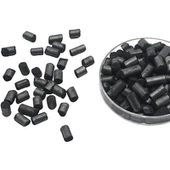
In the foundry industry, the selection of carburizers is a critical factor influencing casting quality, process stability, and production costs. This article conducts an in-depth comparative analysis of two mainstream carburizing materials-Graphitized Petroleum Coke (GPC) and Calcined Anthracite (CA)-under the premise of identical sulfur content. The analysis spans four dimensions: material properties, casting process impact, economic efficiency, and applicable scenarios, aiming to provide a scientific and systematic professional reference for foundry enterprises in material selection.
I. In-depth Comparison of Material Properties
The core performance of a carburizer is determined by its chemical composition and physical structure. Under identical sulfur content, the fundamental differences between the two materials lie in their crystalline structure and chemical purity.
|
Characteristic |
Graphitized Petroleum Coke |
Calcined Anthracite |
Key Difference Analysis |
|
Crystalline Structure |
Highly ordered graphite crystalline structure |
Semi-graphitized/amorphous carbon structure |
The degree of graphitization dictates the dissolution kinetics in molten iron and the ability to nucleate graphite. |
|
Fixed Carbon Content |
≥99% |
90-95% |
Higher fixed carbon content implies fewer impurities and a higher theoretical upper limit for carburization efficiency. |
|
Sulfur Content |
Equal under identical conditions |
Equal under identical conditions |
The controlled variable in this study eliminates sulfur's interference with the results. |
|
Volatile Matter |
<0.5% |
1-3% |
Volatile matter is a key indicator of process stability; higher levels can cause molten iron boiling and compositional fluctuations. |
|
Nitrogen Content |
Low (typically <300ppm) |
High (potentially >500ppm) |
Nitrogen is a major cause of porosity defects, especially in ductile iron. |
|
Microstructure |
Flaky graphite structure |
Dense blocky structure |
The flaky structure provides a larger reactive surface area, accelerating dissolution. |
|
Density |
Lower (porous and loose) |
Higher (dense structure) |
Density affects the method of addition and dispersibility in molten iron. |
II. Specific Impact on Casting Processes
1. Carburization Efficiency and Absorption Rate
Carburization efficiency directly relates to the actual material usage and cost.
- Graphitized Petroleum Coke: Benefiting from its highly graphitized and ordered structure, it dissolves extremely rapidly in molten iron, achieving a carburization absorption rate typically between 90-95%. The absorption process is stable and predictable, allowing for precise control of carbon equivalent.
- Calcined Anthracite: Due to its semi-graphitized and disordered structure, the release and dissolution of carbon are relatively slow, resulting in an absorption rate usually between 85-90%. This necessitates a larger quantity of material to reach the target carbon content, and the longer dissolution time can become a bottleneck in production pacing.
2. Molten Iron Quality and Casting Performance
Material selection has a decisive impact on the final metallographic structure and mechanical properties of castings.
- Graphite Nucleation Ability:
- Graphitized Petroleum Coke: As a high-quality graphite crystal itself, it provides a large number of effective graphite nuclei in molten iron, significantly promoting the formation of Type A graphite (flaky, uniformly distributed), which is the ideal graphite morphology for ensuring the strength and toughness of gray iron.
- Calcined Anthracite: Its low degree of graphitization provides fewer effective nucleation sites, more readily promoting the formation of Type D/E graphite (interdendritic flaky, unevenly distributed), which degrades the mechanical properties of castings, particularly toughness and fatigue resistance.
- Impact of Nitrogen Content:
- Calcined Anthracite: Its high nitrogen content is a major disadvantage. Nitrogen has limited solubility in molten iron; nitrogen gas precipitated during cooling forms subcutaneous porosity or pinholes, posing extremely high risks especially in ductile iron, which can lead to casting rejection.
- Graphitized Petroleum Coke: Its extremely low nitrogen content makes it the preferred choice for high-quality ductile iron production, effectively avoiding nitrogen porosity defects and ensuring nodularity and nodule roundness.
3. Process Stability and Controllability
A stable process is fundamental to large-scale production.
- Impact of Sulfur Content: Under the "identical sulfur content" condition set in this study, the differences in their effects on the formation and distribution of sulfides in molten iron are negligible.
- Stability of Chemical Properties:
- Graphitized Petroleum Coke: Its chemical composition is extremely stable with minimal batch-to-batch variation, greatly simplifying process control and significantly reducing the frequency of parameter adjustments during production.
- Calcined Anthracite: As a natural mineral, the content of impurities such as volatile matter and ash fluctuates considerably between different sources and batches, potentially causing molten iron boiling, splashing, or severe compositional fluctuations, placing higher demands on the experience of furnace operators and process control capabilities.
III. Comprehensive Economic Analysis
The final decision on material selection often hinges on its overall cost-effectiveness rather than the mere unit price of the material.
|
Analysis Dimension |
Graphitized Petroleum Coke |
Calcined Anthracite |
|
Direct Material Cost |
Higher |
Lower |
|
Material Utilization Rate |
High (90-95% absorption rate) |
Lower (85-90% absorption rate) |
|
Transportation & Storage Cost |
Low (smaller quantity required) |
High (larger quantity required) |
|
Process Adjustment Cost |
Low (high stability) |
High (frequent adjustments needed) |
|
Quality Control Cost |
Low (low rejection rate) |
High (enhanced testing required) |
|
Potential Rejection Loss |
Low |
High (high performance variability) |
Key Conclusion: While calcined anthracite has a lower direct material cost, its lower absorption rate, higher process control difficulty, and potential rejection losses may result in an overall cost comparable to or even higher than that of graphitized petroleum coke. For high-end products sensitive to rejection rates, the economic advantages of graphitized petroleum coke become even more prominent.
IV. Precise Matching of Applicable Scenarios
Based on material properties and process impacts, we precisely delineate the applicable scenarios for both materials.
1.Recommended Scenarios for Graphitized Petroleum Coke
- Production of high-end ductile iron castings: Such as automotive chassis components, engine blocks, and wind power castings, which have extremely high requirements for nodularity, nitrogen content, and mechanical properties.
- Thin-walled complex castings: Thin-walled parts solidify quickly and require rapid dissolution of the carburizer and effective nucleation to form Type A graphite, which is crucial for their strength.
- High-speed automated production lines: Fast production pacing demands rapid and stable carburization to match the assembly line rhythm.
- Special alloy casting sensitive to nitrogen content: Such as high-purity alloy iron and heat-resistant iron.
2. Scenarios Where Calcined Anthracite May Be Considered
- Ordinary thick-section gray iron castings: Thick-section parts have a long solidification time, are relatively tolerant of graphite morphology, and the lower cost can bring significant economic benefits.
- Cost-sensitive non-critical structural parts: Such as counterweights and some agricultural machinery components with low performance requirements.
- Factories with established mature process control: Factories with rich experience and advanced testing means can compensate for the instability of anthracite through strict process control.
V. Key Considerations for Practical Application
To ensure the success of material replacement or application, the following points are crucial:
- Re-optimization of Mixing Ratio and Addition Timing: When changing carburizer types, it is imperative to recalculate and test the addition ratio (typically, petroleum coke requires a smaller addition than anthracite) and determine the optimal addition timing (e.g., stream addition during tapping or furnace addition).
- Small-batch Process Validation: Before large-scale application, small-batch trial production must be conducted to comprehensively evaluate its specific impacts on molten iron composition, metallographic structure, mechanical properties, and the process itself.
- Mixed Usage Strategy: Some enterprises adopt a mixed strategy of "graphitized petroleum coke as the main component, calcined anthracite as a supplement" to balance core performance and cost-effectiveness.
- Establishing a Stable Supply Chain: Carburizers of the same type can vary significantly in quality from different suppliers. Selecting and locking in suppliers with stable quality is fundamental to ensuring production continuity and product consistency.
VI. Conclusion and Outlook
Under the condition of identical sulfur content, the choice between graphitized petroleum coke and calcined anthracite essentially represents a strategic trade-off for foundry enterprises between "performance and stability" and "direct cost.
- Performance and Stability Priority: For enterprises pursuing high-end quality, complex thin-walled parts, and stable production, graphitized petroleum coke is the undisputed superior choice. It offers exceptional carburization efficiency, stable graphite morphology, and minimal defect risks.
- Cost Control Priority: For enterprises producing ordinary castings with high cost pressure and mature process control capabilities, calcined anthracite still holds irreplaceable cost advantages, but a strict quality control system must be established to match it.
- Future Trend Outlook: As global manufacturing continues to raise requirements for casting quality and environmental regulations become increasingly stringent (anthracite mining and use face greater environmental pressure), the application proportion of graphitized petroleum coke in the foundry industry is showing a sustained upward trend. Its high efficiency, cleanliness, and stability perfectly align with the development direction of the modern foundry industry.
- Final Recommendation: Foundry enterprises should abandon the "one-size-fits-all" selection approach and conduct a comprehensive techno-economic analysis based on their product positioning, equipment level, technical capabilities, and cost structure. It is advisable to establish a dynamic evaluation mechanism to regularly review changes in material performance, market prices, and process requirements to achieve optimal material selection and maximize economic benefits.