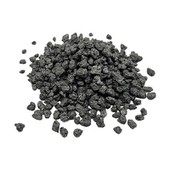
Graphitized petroleum coke is a key basic raw material for high-end materials such as lithium-ion battery negative electrode materials, high-power electrodes, and special graphite. Its performance directly affects the quality and competitiveness of the product. As the raw materials of graphitized petroleum coke, sulfur (S) and various metal elements are key impurities that are difficult to avoid. Their presence and residue have a great impact on the performance of graphitized petroleum coke.
1. The mechanism of the influence of impurities on the performance of graphitized petroleum coke
(1)The influence of sulfur :
Graphitization degree and structural defects:
Sulfur escapes mainly in the form of sulfur-containing gas (such as H₂S, COS, SO₂) during high-temperature graphitization. This desulfurization process will leave structural defects such as holes and dislocations in the carbon structure, destroy the regularity of the carbon hexagonal grid, and significantly reduce the graphitization degree of the final product. Insufficient graphitization directly leads to a decrease in electrical conductivity and thermal conductivity, and a decrease in true density.
Expansion coefficient:
Residual sulfur or sulfide will gasify and expand again when used at high temperature, causing the volume of the material to increase sharply, increasing the thermal expansion coefficient of the material, seriously affecting the high-temperature dimensional stability and thermal shock resistance, and even causing cracking failure.
Electrochemical performance:
For lithium battery negative electrode materials, residual sulfur will aggravate the decomposition of the electrolyte, form a thicker and more unstable solid electrolyte interface film on the negative electrode surface, increase irreversible capacity loss, reduce the first coulomb efficiency, and accelerate the cycle capacity decay.
(2)Influence of metal elements:
Catalytic graphitization and structural disorder:
Transition metals such as vanadium (V), nickel (Ni), iron (Fe) and their compounds are powerful "catalytic graphitization" catalysts at high temperatures. Their catalytic action will cause excessive graphitization in local areas or form disordered carbon structures, introduce a large number of grain boundaries and defects, destroy the overall uniformity, and reduce the overall electrical/thermal conductivity and mechanical strength of the material.
Catalytic oxidation:
Metal impurities such as vanadium, nickel, and iron (especially vanadium oxides) are powerful catalysts for high-temperature oxidation of carbon materials. They significantly reduce the initial oxidation temperature of the material, greatly accelerate its oxidation rate in air or CO₂ atmosphere, and severely shorten the service life of high-temperature components.
Ash and pollution:
Metal impurities are the main source of petroleum coke ash. High ash content reduces the purity of the product and affects electrical/thermal conductivity. In extreme applications, metal ions in the ash may become a source of contaminants.
Electrochemical properties:
Residual metal ions will migrate to the surface of the negative electrode, destroy the stability of the SEI film, lead to increased self-discharge, poor cycle performance, and potential safety risks.
Volume stability and strength:
Some metal oxides may undergo hydration or phase change in high temperature or humid environments, causing local volume expansion, affecting the dimensional stability and mechanical strength of the material.
2. Methods for removing impurities from petroleum coke raw materials
(1)Desulfurization method:
High temperature calcination desulfurization: The most commonly used and most economical pretreatment method. Calcining green coke at 1200-1500°C in an inert atmosphere (to prevent oxidation combustion) decomposes most of the organic sulfur into gases such as H₂S and COS.
Hydrodesulfurization (HDS): Using a catalyst in a high-temperature and high-pressure hydrogen environment. The organic sulfur in petroleum coke is converted into H₂S for removal.
Oxidative desulfurization: Using an oxidant (such as air/O₂, H₂O₂, nitric acid, peroxy acid, etc.) to oxidize sulfur into water-soluble sulfate or highly oxidized sulfur oxides under specific conditions, and then remove it by water washing.
Biological desulfurization: Using specific microorganisms to metabolize organic sulfur in petroleum coke.
(2)Demetallization method:
Acid washing: Currently, the most mainstream and effective demetallization method. Calcined coke or green coke is usually treated with hydrochloric acid, nitric acid, hydrofluoric acid, or their mixed acids. Acid can dissolve most metal oxides and salts, and is mainly used to remove water-soluble salt impurities.
High-temperature chlorination roasting: Chlorine gas is introduced or a chlorinating agent is added at high temperature to convert metal impurities into volatile chlorides for removal.
Alkali washing: It is mainly used to remove acidic oxide impurities such as silicon (Si) and aluminum (Al).
In the future, with the growing demand for graphitized petroleum coke in the fields of new energy and high-end metallurgy, impurity removal technology will develop in the direction of intelligence and low carbonization, such as optimizing the calcination temperature gradient through AI, developing low-energy microwave desulfurization equipment, etc., to promote the green upgrade of the industry.