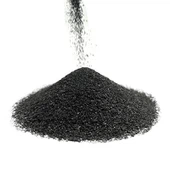
Temperature has a decisive influence on the performance and structure of graphite petroleum coke, and its core role is reflected in the transformation of the graphitization process and the physical and chemical properties of the final material. Temperature not only affects the graphitization process, but is also directly related to the quality and performance of the product.
Impact of the graphitization process:
1. Promote graphitization reaction:
Temperature is a key factor in the graphitization process. As the temperature rises, the carbon atoms in petroleum coke will obtain enough energy to rearrange to form a graphitized structure. This process requires high temperature conditions to activate the rearrangement of carbon atoms, usually at a high temperature above 2000C.
2. Affect the graphitization rate:
The higher the temperature, the faster the graphitization reaction rate. Higher temperatures can accelerate the diffusion and rearrangement of carbon atoms, thereby shortening the time required for the graphitization process.
3. Determine the degree of graphitization:
The temperature directly determines the degree of graphitization. Within the appropriate temperature range, as the temperature rises, the degree of graphitization gradually increases, and the electrical conductivity, thermal conductivity and mechanical strength of petroleum coke will also increase accordingly.
Influence on product performance:
1. Density and true density:
Temperature has a significant effect on the density and true density of graphitized petroleum coke. As the temperature increases, the pore structure in the petroleum coke gradually changes, resulting in a corresponding increase in its density and true density.
2. Resistivity and conductivity:
Increasing the degree of graphitization can reduce the resistivity of graphitized petroleum coke and increase its conductivity. The increase in the degree of graphitization is closely related to temperature.
3. Mechanical strength:
Higher temperatures help to form a denser and more stable graphitized structure, thereby improving the mechanical strength of graphitized petroleum coke.
In general, temperature plays a vital role in the production process of graphitized petroleum coke. Accurately controlling the temperature can not only promote the graphitization reaction and improve the quality and performance of the product, but also optimize the production process, reduce energy consumption, and improve production efficiency.