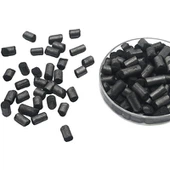
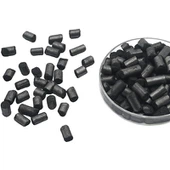
In Turkey, the impact of the particle size of graphitized petroleum coke recarburizer on its casting application is mainly reflected in the recarburization efficiency, process stability, and final casting performance. Combined with market analysis and product characteristics, the specific impact can be summarized as follows:

1. Relationship between particle size and recarburization efficiency
Fine particle size (<1mm):
Excessively fine particles are easily oxidized or burned during high-temperature smelting, resulting in a decrease in carbon absorption rate. For example, if too fine a recarburizer is used in converter steelmaking, it will increase power consumption and produce slag, affecting the purity of molten steel. In the casting scene in Turkey, fine particle size may only be applicable to specific short-process processes such as induction furnaces, and the timing of addition and smelting conditions must be strictly controlled.
Medium particle size (1-5mm):
This is a common range in the foundry industry, especially for gray cast iron and ductile iron. The appropriate particle size can balance the dissolution rate and absorption rate of carbon elements and reduce residual impurities. This particle size range ensures that the recarburizer is evenly dispersed in the molten iron, avoiding floating on the surface or sinking to the bottom of the furnace, thereby improving the uniformity of recarburization.
Coarse grain size (>5mm):
Particles that are too large will prolong the melting time, resulting in delayed carbon addition, which may affect the precise control of the carbon content of the casting. In large-scale electric furnace steelmaking in Turkey, coarse grain size may be applicable due to the long melting cycle, but the addition ratio and melting parameters need to be adjusted to avoid residual unmelted particles.
2. Effect of grain size on process stability
Melting speed and energy consumption:
Medium-grained carburizers can optimize melting efficiency and reduce energy waste caused by mismatched grain size. Web page 4 mentioned that the operating rate of the Turkish smelting industry increased when the electricity cost decreased during the flood season. At this time, the use of carburizers with a suitable grain size can further reduce the overall cost.
Impurity residues and casting defects:
If the sulfur and ash content of fine-grained carburizers is high, more gas may be released due to increased oxidation, resulting in porosity in the casting; coarse-grain size may introduce inclusions due to insufficient dissolution. Turkish foundries need to select grain size based on the characteristics of local raw materials (such as low-sulfur petroleum coke) to meet environmental protection and high-quality casting requirements.
3. Effect of particle size on final casting performance
Carbon distribution uniformity:
Medium-sized recarburizers help form a uniform graphite structure and improve the mechanical strength of castings (such as tensile strength and toughness). Graphitized petroleum coke optimizes cast iron performance by increasing the number of graphite nuclei in molten iron, and particle size control is the key to ensuring this process.
Shrinkage tendency and dimensional accuracy:
Fine-grained recarburizers may cause excessive local carbon concentration due to rapid carbonization, exacerbating solidification shrinkage; coarse-grained recarburizers may cause micro-shrinkage due to uneven dissolution. Turkish foundries need to adjust the particle size according to the product type to balance shrinkage and dimensional stability.
4. The particularity of the Turkish market
As the world's seventh-largest steel producer, Turkey has a high proportion of electric furnace steel. The demand for graphite electrodes and recarburizers is concentrated on medium and high power processes. It tends to use standardized products with a medium particle size of 1-5mm to meet the stability requirements of large-scale production.
Summary
In the Turkish foundry industry, the particle size of graphitized petroleum coke needs to be selected comprehensively based on the specific process and cost-effectiveness, such as the type of smelting equipment and the material of the casting.
1-5mm is the mainstream choice, taking into account both efficiency and quality;
<1mm is suitable for short-process, high-precision casting, but oxidation needs to be controlled.
>5mm requires extended smelting time or a pretreatment process.