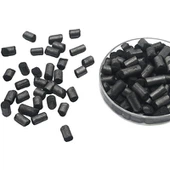
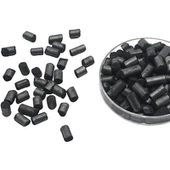
In casting production, the efficiency and stability of the mold release process directly determine casting quality and company costs. According to industry statistics, 3 out of every 10 defective castings are due to mold release issues. Artificial graphite release agents, with their unique properties, are becoming a core solution to this pain point. This article will deeply analyze the application value, working principles, selection guidelines, and practical methods of artificial graphite in casting release, providing foundries with a comprehensive reference for improving production efficiency.
1. Artificial Graphite Release Agents: The Core Advantages of Casting Release
During the casting process, the separation between the mold and the casting directly affects the product qualification rate and production speed. Artificial graphite mold release agents provide three key benefits by forming a highly effective protective layer on the mold surface:
- Improving casting finish: The smooth film reduces surface defects and reduces subsequent polishing costs.
- Eliminating sand adhesion: The physical barrier and lubricating properties prevent molten iron from penetrating the sand mold, fundamentally reducing scrap.
- Accelerating the production process: Low demolding resistance shortens demolding time, making it particularly suitable for mass production of complex castings.
II. How Artificial Graphite Mold Release Agents Work: Three Mechanisms Working Together
Artificial graphite is a highly effective mold release material due to its unique physical and chemical properties and multi-dimensional mechanisms of action:
1. High-Temperature Stable Film-Forming Protection
Graphite particles form a high-temperature-resistant, highly adhesive, smooth film on the mold surface. Even in molten iron pouring environments exceeding 1500°C, the structure remains stable, ensuring that the casting does not stick or separate from the mold.
2. Double Barrier to Sand Sticking
- Wetting Angle Effect: Graphite's wetting angle with molten iron is >90°, preventing the molten iron from wetting the sand mold surface.
- Pore-Plugging Effect: Ultrafine graphite powder fills the micropores on the mold surface, preventing molten iron from penetrating the gaps between sand particles, completely eliminating common defects such as sand sticking and inclusions.
3. Low-Friction Lubrication
The sliding structure between graphite layers imparts excellent lubricity, reducing demolding resistance by over 40%. For castings with complex geometries such as gears and turbines, this property significantly reduces the risk of mold damage during demolding.
III. Synthetic Graphite vs. Natural Graphite: Why Choose Synthetic Graphite?
| Comparison Dimensions | Artificial Graphite | Natural Graphite |
| Composition Stability | Industrialized production controls result in uniform composition, with impurities <0.5% | Natural ore processing results in large fluctuations in impurity content (2%-10%). |
| Performance Consistency | Physical indicators (particle size, lubricity) exhibit deviations <3% | Depending on the origin of production, performance fluctuations can reach 15%-20% |
| High-Temperature Resistance | Oxidation Resistance Temperature >1600°C | Oxidation Resistance Temperature <1400°C |
| Environmental Compliance | Sulfur- and heavy metal-free products can be produced, complying with RoHS standards | May contain harmful impurities such as sulfur and arsenic, requiring additional purification. |
Conclusion: Artificial graphite achieves controllable performance through standardized production, making it particularly suitable for high-end manufacturing applications such as automotive and aerospace, which demand stringent casting quality requirements.
IV. Practical Application Guide for Artificial Graphite Release Agents
1. Pretreatment and Mixing
- Storage: Store sealed in a cool, dark place away from direct sunlight.
Mixing Requirements: Before use, stir at high speed (≥300 rpm) for 5-10 minutes to ensure uniform suspension of graphite particles. (Settling is normal and does not affect performance after mixing.)
2. Precise Dilution Ratio (By Casting Process)
| Casting Type | Dilution Ratio | Applicable Applications |
| Large Castings with Complex Shapes | 3-5x | Turbine Blades, Large Machine Tool Beds |
| Small and Medium-Sized Precision Castings | 5-10x | Automotive Transmission Gears, Pump Bodies |
| Gear Precision Forgings | 5-15x | Motorcycle Gears, Construction Machinery Gears |
| Roll Forging | 20-30x | Long Shaft Parts, Plate Rolling |
| Special Processes | No Dilution | High-Precision Medical Device Parts |
3. Coating Method and Precautions
- Recommended Tools: High-Pressure Spray Gun (Atomized Particle Size 50-80μm) or Dip Coating
- Coating Thickness: 20-50μm (Excessive thickness may cause graphite accumulation, affecting casting accuracy)
- Drying Time: Air dry for 15-20 minutes, or oven dry at 80°C for 5 minutes.
V. Environmental Protection and Safety: The Inevitable Choice for Green Casting
Modern artificial graphite release agents (such as water-based graphite emulsions) achieve environmental compliance through the following characteristics:
- Zero VOC emissions: Using water as a carrier, they contain no harmful volatile compounds such as benzene and formaldehyde;
- Biodegradable: The COD value of the wastewater is less than 500 mg/L, meeting industrial wastewater discharge standards.
- Occupational health protection: Dust concentration is less than 2 mg/m³, well below the OSHA limit of 5 mg/m³, reducing the risk of silicosis.
VI. Conclusion: From mold release to efficiency improvement, artificial graphite is reshaping the foundry industry standard
With its three key advantages: stable performance, efficient mold release, and environmental safety, artificial graphite release agents have become a key material for boosting the competitiveness of foundries. Whether pursuing high-precision casting surface quality or reducing production costs and environmental impact, choosing the right artificial graphite solution will yield significant returns.
Act now: Contact us for a free process evaluation and customized artificial graphite release solutions to usher in a new era of efficient casting production!