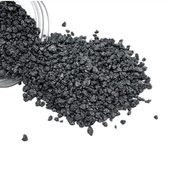
High-purity graphite and graphitized materials are two closely related yet significantly different concepts. Simply put, "graphitization" is a process, while "high purity" is a state.
Below, I will explain their differences and connections in detail from the aspects of definition, process, structural properties, and applications.
Core Summary
• Graphitized materials: refer to any carbon material that has undergone high-temperature heat treatment (usually >2500℃), transforming its internal carbon atoms from a disordered arrangement to an ordered graphite crystal structure. The key lies in the degree of perfection of its crystal structure.
• High-purity graphite: refers to artificial graphite materials with a high degree of graphitization and extremely low impurity content (usually ash content <100ppm). It emphasizes both structure and purity.
In short: High-purity graphite is necessarily a graphitized material, but a graphitized material is not necessarily high-purity graphite.
Detailed Comparison
• Core Definition:
º Graphitized materials: Carbon materials that have undergone the "graphitization" process and possess a preliminary or highly developed graphite crystal structure.
• High-purity graphite: Artificial graphite with extremely low impurity content after deep purification.
• Key processes:
• Graphitized materials: High-temperature heat treatment (graphitization): Amorphous carbon is transformed into graphite crystals at 2500-3000℃.
• High-purity graphite:
1. Graphitization
2. Purification: Based on graphitization, impurities are removed by reacting with halogen gases such as chlorine and Freon at high temperatures.
• Microstructure:
• Graphitized materials: Not only do they possess a well-developed graphite crystal structure, but a large number of impurity atoms (such as Fe, Si, Al, Ca, etc.) are also removed from the structure, resulting in a "cleaner" crystal lattice.
• High-purity graphite: Not only do they possess a well-developed graphite crystal structure, but a large number of impurity atoms (such as Fe, Si, Al, Ca, etc.) are also removed from the structure, resulting in a "cleaner" crystal lattice.
• Key Performance Characteristics:
º Graphitized Materials:
1. Significantly improved electrical and thermal conductivity
2. Improved thermal stability
3. Enhanced chemical stability
4. Improved lubricity
º High-Purity Graphite:
1. Possesses all the excellent properties of graphitized materials
2. Extremely high chemical purity
3. Superior thermal shock resistance
4. More stable performance in high-temperature or sensitive environments
• Main Applications:
º Graphitized Materials:
1. Lithium-ion battery anode material
2. Electrode for ordinary electric arc furnaces/refining furnaces
3. Casting molds
4. Ordinary crucibles, heating elements
º High-Purity Graphite:
1. Semiconductor industry: hot zone and crucible for single-crystal silicon pulling furnaces
2. Fiber optic preform deposition furnaces
3. High-end electrical discharge machining (EDM) electrodes
4. Precision metallurgy, aerospace
5. Nuclear reactors (neutron moderators, reflectors)
Summary and Analogy: To understand this more vividly, we can use an analogy: Ordinary carbon materials (such as charcoal blocks): like an ordinary piece of wood.
Graphitized materials: Like a piece of treated, high-quality wood, with a denser structure and better performance. They can be used to make furniture (corresponding to ordinary electrodes and molds).
High-purity graphite: Like a rare wood that has undergone special treatment and drying to make top-tier musical instruments, it not only has an excellent structure but also uniform internal stress, is flawless, and has extremely high stability. It is used to manufacture piano soundboards (corresponding to semiconductor heating elements and fiber optic furnaces).