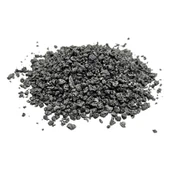
The core advantages of petroleum coke powder lie in its extremely high calorific value and significant cost-effectiveness, making it an attractive alternative to traditional fuels (such as heavy oil, coal, and natural gas) in certain industrial sectors.
The following are specific examples of its advantages, which can be viewed from several dimensions:
I. Core Calorific Value and Cost Advantages
1. Extremely High Calorific Value
The calorific value of petroleum coke powder is typically 8,000-8,500 kcal/kg, significantly higher than that of high-quality coal (approximately 5,500-6,500 kcal/kg) and far exceeding fuels such as wood and biomass pellets.
Advantages: In industrial furnaces requiring high temperatures, less fuel is required to reach the required process temperature, directly improving energy efficiency and reducing unit consumption.
2. Significant Cost Advantages: Petroleum coke is a byproduct of the oil refining process, with a stable source and a price generally far lower than that of heavy oil and natural gas.
Advantages: For industries where energy costs account for a significant portion of total production costs (such as glass, cement, and metallurgy), using petroleum coke powder can significantly reduce fuel costs, which is its core appeal. II. Physical and Chemical Advantages
1. Low Volatile Matter
Petroleum coke powder has a low volatile matter content (typically 8%-15%), which means it produces a more concentrated and stable flame during combustion.
Advantages: It is particularly suitable for processes requiring a stable, high-intensity heat source, such as glass melting furnaces, ensuring the quality of the molten glass and a stable melting process.
2. High Carbon Content
A fixed carbon content of 80%-90% means a very high proportion of combustible components, resulting in low residue after complete combustion.
Advantages: In addition to providing high calorific value, it also functions effectively as a reducing agent in certain metallurgical processes.
3. Low Ash Content
Petroleum coke powder typically has an ash content of less than 1%, significantly lower than coal (often 10%-30%).
Advantages:
Reduced slagging and ash accumulation: This reduces erosion and clogging of the furnace lining, extends equipment life, and reduces slag cleaning and maintenance.
Improved Product Purity: In applications such as glass production, low ash content means fewer impurities, improving the quality and transparency of the finished glass.
III. Supply and Logistics Advantages
1. Stable Supply Source
As an essential product of the global refining industry, petroleum coke production is directly related to crude oil processing volume, resulting in a large and stable supply.
Advantages: A stable fuel source is crucial for industrial enterprises with continuous production, avoiding the risk of production stoppages due to fuel shortages.
2. Ease of Transportation and Storage
Compared to heavy oil (which requires insulation) and natural gas (which requires pipelines or high-pressure tanks), powdered solids offer greater flexibility and ease of transportation and storage.
Advantages: They can be transported using conventional tank trucks and stored in silos, requiring relatively low infrastructure requirements and minimal initial investment.
Conclusion: The advantages of petroleum coke powder are real and substantial, primarily in terms of economic efficiency and thermal performance. However, these advantages are not free; they come at the cost of significant investment in environmental protection equipment and rigorous operational management. Therefore, it is a competitive fuel option in specific industrial scenarios where environmental regulations permit and companies are able to manage its environmental side effects.
Advantages of Petroleum Coke Powder
Oct 09, 2025
Leave a message
You Might Also Like