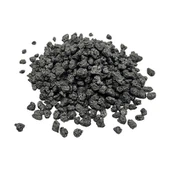
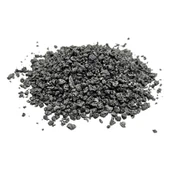
Two grades. One decimal point. Entirely different worlds.
The Numbers
|
High Purity |
Ultra-High Purity |
|
|
Carbon content |
99.9% – 99.99% |
≥99.99% (4N, 5N, 6N) |
|
Ash |
50 – 100 ppm |
<10 ppm (often <5 ppm) |
|
Impurity tracking |
Major elements only |
Every element – B, Li, Na, Al, Fe at ppm/sub-ppm |
Standard reference: YB/T 4821-2020 defines ≤20 ppm ash as "high purity" and ≤5 ppm as "ultra-high."
Every extra 9 doubles or triples production cost. It's not linear – it's exponential.
Where They Go
High purity goes into:
Metallurgical molds and EDM electrodes
Lithium-ion battery anodes (precursor grade)
Refractory linings and general foundry shapes
Ultra-high purity goes where contamination is catastrophic:
Semiconductor crystal pulling crucibles
SiC substrate manufacturing
Fiber-optic drawing heaters
Nuclear reactor components
Epitaxial susceptors
One way to put it: high purity is industrial material; ultra-high is strategic material.
Cost & Supply
The ultra-high market is concentrated. Japanese suppliers (Toyo Tanso, Tokai Carbon) dominate semiconductor grades. SGL and Mersen do small batches. China is breaking in but still struggles with batch consistency.
Ultra-high purity market is growing at ~10.5% CAGR, expected to hit $1.43 billion by 2030.
You can find high purity anywhere. Reliable ultra-high suppliers? Count them on one hand.
How to Choose
Making battery anodes, molds, or castings? Stick with high purity (99.9-99.99%). It works and it's affordable.
In semiconductors, fiber optics, or nuclear? Don't compromise – go straight to ultra-high. The extra cost is nothing compared to scrapping a furnace run because of trace metal outgassing.
Using the wrong grade is always more expensive than buying the right one. A 99.9% crucible in a semiconductor puller will ruin your wafer batch – that loss pays for dozens of ultra-high crucibles. Using ultra-high for cast iron is like putting racing fuel in a tractor – pointless.
Bottom Line
Purity isn't about "higher is better." It's about fit for purpose.