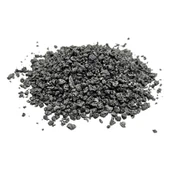
In the foundry and steel smelting industries, carburizers are essential materials for improving product quality and controlling production costs. However, when selecting carburizers, many enterprises tend to overfocus on the "fixed carbon content" index, mistakenly believing that the higher the carbon content, the better the carburizing effect. This cognitive misunderstanding can lead to inefficiencies, increased costs, and even product quality issues in the production process.
In reality, the absorption rate of carburizers is the result of multiple factors working together. This article will deeply analyze those often-overlooked yet crucial influencing factors, helping you fully understand carburizer performance and make more scientific choices.
Fixed Carbon Content: Not the Sole Determining Factor
Admittedly, fixed carbon content is a fundamental index of carburizers, as it determines the theoretical maximum carbon contribution value. However, the "absorption rate" in actual production is the real economic and technical indicator-the proportion of carbon actually absorbed by the molten iron. A high fixed carbon content accompanied by a low absorption rate not only causes resource waste but may also affect the melt quality due to unabsorbed residues.
Five Overlooked Key Factors
1. Pore Structure and Specific Surface Area
The microstructure of carburizers directly affects their contact efficiency with molten iron:
- High-porosity materials (such as high-quality calcined petroleum coke) provide a larger reaction surface area, making it easier for carbon elements to dissolve in the molten iron.
- Dense-structured materials react slowly and easily form an isolation layer on the melt surface, hindering carbon absorption.
- The optimal pore diameter should be between 10 and 100 microns, which ensures rapid dissolution without excessive oxidation due to being too fine.
2. Sulfur Content - The Invisible "Absorption Rate Killer."
- Sulfur and carbon have a competitive dissolution relationship in molten iron, and high sulfur content significantly inhibits carbon absorption.
- Sulfur also combines with elements such as manganese to form sulfide inclusions, affecting the mechanical properties of the material.
- The sulfur content of high-quality carburizers should be controlled below 0.1%, and for special applications, it needs to be less than 0.03%.
3. Moisture and Volatile Matter - Unstable Factors
- Moisture vaporizes rapidly at high temperatures, causing molten iron splashing, resulting in carbon loss and safety risks.
- A high volatile matter content (>1.5%) will cause the carburizer to react violently in the initial stage of addition, and the carbon element will be oxidized before being fully absorbed.
- The absorption rate of carburizers with insufficient drying treatment can fluctuate by 10-15%.
4. Particle Size Distribution and Dissolution Kinetics
- Coarse particle size (>10mm): Sinks quickly but dissolves slowly, easily sinking to the bottom and agglomerating.
- Fine particle size (<1mm): Dissolves quickly but is prone to floating and oxidation, resulting in low recovery rates.
- The optimal particle size distribution should be a multi-stage ratio, usually with 2-8mm as the main component, balancing the sinking speed and dissolution efficiency.
Different smelting equipment (induction furnaces, electric arc furnaces) has specific requirements for particle size.
5. Additives and Surface Modification
Modern carburizer technology has gone beyond simple carbon materials:
- Rare earth element addition: Changes the surface tension of molten iron, promoting the infiltration and diffusion of carbon.
- Alkali metal treatment: Accelerates the graphitization process of carbon, improving absorption stability.
- Composite coating technology: Delays the initial oxidation of the carburizer, increasing the effective action time.
Synergistic Effect of Temperature and Process
The ideal absorption temperature window for carburizers is 1450-1550°C. Within this range:
- For every 50°C increase in temperature, the saturated solubility of carbon increases by approximately 0.3%, and the absorption rate can be improved by 5-8%.
- When the superheating temperature is insufficient, even if high-quality carburizers are used, the absorption rate may be lower than 70%.
- The addition timing is also crucial: adding during the optimal "carbon window" after the molten iron is melted and before tapping avoids interference with the slag.
How to Scientifically Evaluate Carburizers?
Establish a comprehensive evaluation system:
1. Laboratory analysis: Full-index testing of fixed carbon, sulfur, moisture, ash, and volatile matter.
2. Physical property testing: Analysis of porosity, bulk density, and particle size distribution.
3. Process adaptability test: Conduct small-scale trials under own production conditions.
4. Economic calculation: Calculate the actual carburizing cost based on the absorption rate, rather than just the unit price.
Conclusion: From "Content Thinking" to "Efficiency Thinking"
In the selection of carburizers, the real competitive advantage does not lie in pursuing the ultimate fixed carbon content, but in achieving the optimal carbon absorption efficiency. Those often-overlooked factors-pore structure, sulfur content, moisture control, particle size distribution, and process adaptability-are often the key to determining actual production costs and product quality.
Wise enterprises should:
- Establish procurement evaluation standards based on actual absorption rates.
- Collaborate with suppliers to develop customized solutions suitable for their own processes.
- Regularly conduct carburizer performance audits and process optimizations.
- Cultivate technical personnel's understanding of the multi-dimensional performance of carburizers.
In today's era of increasing pressure to reduce costs and increase efficiency, a comprehensive understanding of the "battle for carburizer absorption rates" and grasping these overlooked key factors will become a powerful weapon for enterprises to enhance their competitiveness and achieve sustainable development.