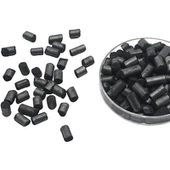
I. What is Volatile Matter in Graphite Petroleum Coke?
Volatile matter is one of the core physicochemical indicators for evaluating the quality of graphite petroleum coke. It refers to the percentage of volatile substances such as small organic molecules, light hydrocarbons, and residual tar that are volatilized from a sample under high-temperature heating conditions in the absence of air, relative to the total mass.
Graphite petroleum coke is produced from raw petroleum coke through calcination and high-temperature graphitization. Theoretically, after sufficient high-temperature purification, the volatile matter content should be significantly reduced. The level of volatile matter directly reflects the degree of calcination of the raw materials and the level of control over the graphitization process. It also directly determines the performance in downstream applications such as smelting, casting, and electrolytic aluminum production, making it a key indicator that overseas buyers check when inquiring about products.
II. Disadvantages of High-Volatile Graphite Petroleum Coke
- Prone to Porosity and Defects during Smelting, Reducing Finished Product Qualification Rate
In casting and steelmaking carbonization processes, high-volatile graphite petroleum coke rapidly releases large amounts of gas upon heating. The gases inside the molten iron and steel cannot rise and escape quickly enough, making castings highly susceptible to defects such as subcutaneous porosity, pinholes, and looseness, significantly increasing scrap rates. The ductile iron and precision steel casting industries are particularly sensitive to this issue.
- Generates Large Amounts of Flue Gas, Deteriorating the Workshop Environment
High-temperature pyrolysis of volatiles generates black smoke and irritating organic fumes, polluting the workshop environment and increasing the load on factory dust removal and waste gas treatment equipment. Overseas customers in Europe, America, and Southeast Asia often have environmental emission restrictions, and high-volatile raw materials increase the risk of exceeding environmental standards.
- Decreased Carbon Utilization, Increased Production Costs
Volatiles are essentially light, combustible organic matter and do not constitute effective carbon fixation. At the same addition rate, high-volatile coke has a lower effective carbon content. To achieve the target carbon equivalent, a larger feed rate is required, which will increase raw material procurement costs for enterprises in the long term.
It easily causes bubbling and splashing inside the furnace, posing safety hazards. In aluminum electrolysis and submerged arc furnace smelting scenarios, high-volatile raw materials rapidly generate gas after being added to the furnace, causing the furnace charge to boil and the melt to splash, which not only damages the furnace lining but also easily causes safety accidents such as burns to operators.
III. Limited Applicable Scenarios for High-Volatile Graphite Petroleum Coke
Not all industries completely reject high-volatile graphite petroleum coke. It has slight suitability in a small number of low-end rough smelting applications: Low-end crude steel refining and simple reduction furnace smelting, where there are no strict requirements for the appearance of castings, can be used for short-term, low-cost applications; Some refractory material filling scenarios where high-precision forming is not required and there are no restrictions on porosity.
Overall, high-volatile graphite petroleum coke is a low-grade raw material, and mainstream high-end downstream markets generally do not purchase it.
IV. Core Advantages of Low-Volatile Graphite Petroleum Coke
- 1. Stable Carbon Addition, High-Quality Castings: Low-volatile graphite petroleum coke produces very little gas when heated, minimizing porosity and slag inclusions during iron and steel smelting. Castings have smooth surfaces and dense internal structures, perfectly suited for ductile iron, precision castings, and high-end special steel production, making it the preferred carbon-adding raw material for foundries.
- 2. High Effective Utilization Rate of Fixed Carbon, Saving Raw Material Costs: The lower the volatile content, the higher the proportion of effective fixed carbon in the product. Carbon addition is rapid and stable, requiring only a small amount to achieve the preset carbon content. Long-term use significantly reduces overall material costs.
- 3. Low Flue Gas, Compliant with Global Environmental Standards: Extremely low flue gas release during high-temperature smelting, resulting in low exhaust gas treatment pressure. It meets the stringent environmental emission requirements of the EU, North America, and Southeast Asia, making it more competitive for export orders and a key reason for overseas buyers' preference.
- 4. Stable smelting process, reducing production safety risks: Smooth gas production after entering the furnace prevents molten metal splashing and furnace charge bubbling, protecting the electrolytic cell and furnace lining, extending equipment lifespan, and reducing downtime for maintenance.
- 5. Strong storage stability and resistance to deterioration: Low-volatile graphite petroleum coke has fewer internal light residues, resulting in better moisture resistance and oxidation resistance. It is less prone to clumping and pulverization during long-term sea transport and warehousing, making it suitable for large-volume export over long distances.
- 6. Suitable for high-end deep-processing industries: High-end industrial chains such as electrolytic aluminum anodes, lithium battery negative electrode precursors, high-purity graphite electrodes, and high-purity silicon smelting have strict lower limits on volatile matter content, and only low-volatile graphite petroleum coke can meet these production standards.
V. How to Control the Volatile Content of Graphite Petroleum Coke to Achieve Low Standards
Extend the calcination isothermal time and increase the calcination temperature to fully remove light volatiles from the raw materials;
Improve the high-temperature graphitization process, using deep pyrolysis at temperatures above 2800℃ to remove residual organic matter;
Pre-treat the raw materials to remove tar and heavy oil impurities adhering to the surface of the raw coke in advance;
Cool the finished product in an air-isolated manner to avoid secondary adsorption of light impurities and prevent a rebound in volatile content.
VI. Conclusion
Considering its overall industry application value, low-volatile graphite petroleum coke has far greater advantages than high-volatile products, making it suitable for most high-end downstream industries and export orders; high-volatile graphite petroleum coke is only suitable for low-end crude smelting where product quality is not a primary concern, with significant disadvantages, resulting in lower market premiums and customer acceptance.