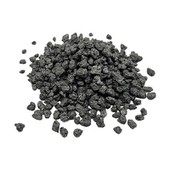
Graphitization rate refers to the ease and perfection of the transformation of petroleum coke's carbon microcrystals into an ideal graphite structure at high temperatures. The graphitization rate of petroleum coke is not determined by a single factor but rather by the combined effects of raw materials, production process, and impurity content.
The following are four key factors influencing the graphitization rate of graphite petroleum coke:
Ⅰ. Raw material properties (the most fundamental determining factor)
The raw material is the cornerstone, determining the quality of the graphite petroleum coke's "genetic DNA." The raw material for producing high-graphitization petroleum coke (i.e., needle coke) must be a specific, aromatic-rich, and low-impurity heavy oil.
Ⅱ. Coking process conditions (transforming the raw material's potential into reality)
Even with good raw materials, precise process control is required to realize their "genetic DNA." The key lies in controlling the parameters of the delayed coking unit.
1. Temperature and thermal cracking depth:
The temperature and heating rate directly affect the polycondensation reaction of aromatic molecules. Too low a temperature will result in incomplete reaction; too high a temperature or excessive heating will lead to excessive cracking and disordered coke formation. An optimal, stable temperature range (typically between 490-505°C) is required to promote the formation and fusion of mesophase globules.
2. Pressure and Circulation Ratio:
System Pressure: Higher pressure can inhibit the volatilization of oil and gas in the feedstock, prolong the liquid phase residence time, and promote the full growth and orderly arrangement of mesophase globules.
3. Circulation Ratio:
Recirculating heavy distillate oil back into the reaction system increases the probability of deep liquid phase reaction, improves liquid yield, and optimizes the coke structure.
4. Nucleation and Growth Environment:
The entire reaction system must remain relatively stable, avoiding violent disturbances, to create a favorable environment for the nucleation, growth, and fusion of mesophase globules, ultimately forming the ideal fibrous (needle-like) structure.
III. Micromorphology and Structure (a direct reflection of graphitization rate)
The raw materials and process ultimately determine the microstructure of the coke, which provides an intuitive basis for judging its graphitization properties.
1. Anisotropy:
- High graphitizable coke (needle coke): exhibits a distinct flow texture and fibrous structure, showing strong optical anisotropy (bright, wide-area color gamut under a polarizing microscope).
- Low graphitizable coke: exhibits an isotropic structure, lacking orientation and texture, resembling a piece of glassy carbon, lacking the structural foundation for graphitization.
2. Crystallite Size and Orientation:
The larger and more ordered the initial carbon crystallites, the easier and more complete the subsequent graphitization process.
Ⅳ. Calcination and Pretreatment:
The "green coke" exiting the coking unit contains a large amount of volatiles and a loose structure, making it unsuitable for direct graphitization. Calcination (at 1200-1350°C) is an essential pretreatment step.
1. Volatile Removal:
This removes water and volatile substances such as hydrogen and oxygen, allowing for initial condensation of the carbon network planes, resulting in volume reduction and increased density.
2. Initial Crystallite Development:
At the calcination temperature, carbon crystallites initially grow and become organized, preparing them for the higher-temperature graphitization process.
3. Stable Structure:
The calcined "calcined coke" exhibits more stable physical and chemical properties, making it a suitable raw material for graphitization.
Therefore, producing graphite petroleum coke with a high graphitization rate is a systematic project, requiring meticulous attention from crude oil selection, raw material pretreatment, and precise control of the coking process. The technical barriers are extremely high.