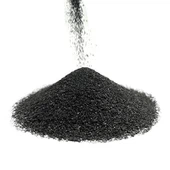
As a key raw material for the metallurgical foundry industry, calcined petroleum coke (CPC) is of multiple importance to Turkey's steel, non-ferrous metals, and foundry industry chain. Therefore, when purchasing and selecting, it is necessary to comprehensively consider the production process, environmental protection requirements, cost-effectiveness, and final product performance. The following are the most suitable CPC types for Turkish foundries to use and produce:

As the Turkish government is gradually tightening industrial emission standards, low-sulfur CPC, that is, sulfur content <0.5%, releases less SO₂ when burned, which can help foundries meet environmental regulations and avoid high fines or production restrictions. The Turkish foundry industry invests in high-value-added products, such as automotive parts, precision castings, etc. Low-sulfur CPC has fewer impurities, which can improve the surface finish and mechanical properties of castings, meeting the stringent standards of European automakers. 65% of Turkey's castings are exported to the European market. Castings produced by low-sulfur CPC are more likely to pass EU environmental certification and enhance export competitiveness.
The extensive foundry industry is suitable for replacing with low-cost fuels, high sulfur CPC, sulfur content> 3%, calorific value close to 1.5-2 times that of coal, suitable as smelting fuel for foundry cupola or electric furnace, reducing energy costs. In the face of profit pressure, cost-effective fuel can alleviate the survival pressure of small and medium-sized enterprises. At the same time, if high-sulfur CPC is used, flue gas desulfurization equipment is required.
CPC with high fixed carbon content, fixed carbon content> 98%, Turkey's steel industry, which ranks second in Europe and eighth in the world, relies on graphite electrodes for steelmaking, and CPC is the core raw material of electrodes. High fixed carbon CPC can improve the conductivity and high temperature resistance of electrodes, shorten the steelmaking cycle, and improve efficiency. At the same time, CPC with high fixed carbon content can also be used in the manufacture of the aluminum industry, which requires pre-baked anodes. High fixed carbon CPC can reduce the anode consumption rate and the energy consumption cost of electrolytic aluminum.
Different casting processes have different requirements for CPC particle size. In sand casting, medium-sized CPC of 2-5mm is required to ensure the permeability of sand molds and the molding quality of castings. In die casting and precision casting, CPC with ultra-fine particle size <1mm is required to reduce the flow resistance of molten metal and improve surface accuracy. CPC with low volatility <0.5% is suitable for high-temperature smelting scenes to reduce smoke generation; medium volatility 0.5-1.5% can be used in cupolas to balance combustion efficiency and cost.
In summary, the development of the foundry industry is inseparable from casting raw materials, so in order to improve the casting quality of the foundry industry, it is necessary to pay special attention to the specifications of CPC when purchasing and choose CPC of appropriate specifications.