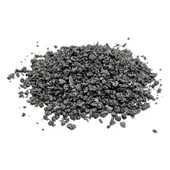
Why Artificial Graphite Is Better for High-End Steelmaking?
Both natural graphite and artificial graphite feature good conductivity, thermal conductivity, high-temperature resistance and corrosion resistance, suitable for high-temperature steelmaking and casting working conditions. However, they have essential differences in production technology, crystal structure, high-temperature stability, batch consistency, metallurgical application scenarios and cost performance. This guide is tailored for steel mills and foundries to help manufacturers select the right graphite materials, avoid procurement risks and reduce production costs.
一,Raw Material & Production Process Differences
1.1 Natural Graphite: Mineral-Based Graphite
Natural graphite is a mineral graphite processed through crushing, flotation, purification and classification without high-temperature synthesis. Flake graphite and amorphous graphite are traditional and cost-effective carbon materials widely used in the foundry industry with stable supply.
Process features: physical processing retains excellent lubricity, release performance and ductility, ideal for conventional casting demolding, inoculation and thermal insulation. However, mineral differences cause unstable impurities and inconsistent performance, leading to batch fluctuations in high-temperature working conditions.
1.2 Artificial Graphite: High-Temperature Synthetic Graphite
Artificial graphite is synthesized from petroleum coke and needle coke through high-pressure molding, multiple calcination, vacuum impregnation and ultra-high-temperature graphitization above 2500℃. With fully controllable production indicators, it is widely used for high-standard steel smelting, high-temperature furnace components and precision metallurgical consumables.
Process features: high-temperature recrystallization rebuilds the internal structure, enabling customizable purity, density and resistivity. Artificial graphite provides excellent batch consistency, thermal shock resistance and oxidation resistance, perfectly suitable for continuous high-temperature steelmaking and high-load metallurgical environments.
二,Structural & Metallurgical Performance Differences
2.1 Crystal Structure Differences
Natural graphite has a natural layered structure with excellent lubricity and demolding performance, suitable for casting processes. However, its loose and uneven structure leads to easy oxidation, burning loss and peeling under continuous high-temperature smelting conditions.
Artificial graphite features dense, uniform and well-arranged crystal structure with low porosity. Without natural structural defects, it resists cracking, oxidation and performance attenuation under repeated heating and cooling cycles in steelmaking production.
2.2 Key Metallurgical Performance Comparison
- Purity & Impurity Control: Natural graphite has limited purity with relatively high Si, Fe and S impurities, which may affect molten steel purity. Artificial graphite achieves ultra-low impurities, ensuring clean molten steel for high-quality steel production.
- High-Temperature Stability & Oxidation Resistance:Natural graphite suffers severe oxidation and burning loss under long-term high temperature above 1000℃. Artificial graphite maintains stable performance with low loss in continuous steelmaking.
- Carburizing Stability:Natural graphite causes unstable carburizing speed and carbon deviation due to batch differences. Artificial graphite ensures uniform carbon release and high recovery rate for stable molten steel composition.
- Mechanical Strength & Thermal Shock Resistance:Natural graphite is soft and fragile under thermal shock. Artificial graphite's high density and strength enable excellent thermal shock resistance and longer service
- Batch Consistency:Natural graphite has unstable indicators due to mineral differences. Artificial graphite supports fully standardized production with consistent batch indicators for stable steelmaking quality.
三,Steel & Foundry Parameter Comparison
The following parameters are critical for steel mill and foundry material selection, determining smelting stability, casting quality and consumable cost.
|
Performance Parameter |
Natural Graphite |
Artificial Graphite |
|
Fixed Carbon |
85% - 99%,难超高纯 |
99% - 99.99%,可定制超高纯 |
|
Impurities |
偏高,易影响钢水品质 |
极低,适合高品质炼钢 |
|
Oxidation Resistance |
一般,高温烧损大 |
优异,冶炼损耗低 |
|
Thermal Shock Resistance |
弱,易开裂脱落 |
强,耐受冷热循环 |
|
Carburizing Stability |
一般,碳量波动大 |
优秀,回收率稳定 |
|
Lubricity & Release |
极佳,适合铸造工艺 |
良好,更适合高温结构件 |
|
Structural Strength |
较低,易破损 |
高,致密耐用 |
|
Batch Consistency |
较差,指标浮动大 |
优秀,标准化可控 |
|
Application Positioning |
普通铸造,脱模,保温,低端增碳 |
高端炼钢,精密铸件,高温炉材,稳定增碳 |
四,Pros & Cons for Metallurgy & Foundry
4.1 Natural Graphite
Excellent lubricity and demolding performance, low price and stable supply. Ideal for foundry demolding, mold coating, molten iron inoculation and conventional thermal insulation to reduce casting costs.
Poor high-temperature oxidation resistance, large burning loss and unstable batch quality. Not suitable for high-grade steel and precision casting production due to relatively high impurities and unstable carburizing effect.
4.2 Artificial Graphite
High purity, ultra-low impurities, excellent high-temperature stability, low oxidation loss and stable carburizing recovery. Perfect for high-grade steel, special steel, precision casting, high-temperature furnace lining and conductive wear-resistant parts, reducing defective rate and long-term maintenance cost.
Higher unit price due to complex production process. More suitable for high-standard smelting rather than low-cost simple casting scenarios.
五, Material Selection Guide for Steel Mills & Foundries
5.1 Best Applications for Natural Graphite
Natural graphite is the most cost-effective choice for casting-focused and cost-sensitive working conditions.
Cast iron & steel demolding, sand mold graphite coating
Molten iron inoculants and general carbon filling materials
Foundry equipment sealing and lubricating parts
General furnace thermal insulation and auxiliary high-temperature consumables
5.2 Best Applications for Artificial Graphite
Artificial graphite is essential for high-quality steelmaking, high-purity smelting, low loss and low defective rate requirements.
Precise carburizing for carbon steel, alloy steel and special steel
High-purity molten steel/iron smelting with strict impurity control
High-temperature furnace lining, bottom components and conductive graphite parts
Consumables for continuous steelmaking and long-cycle high-temperature production
Production of high-precision, low-defect casting products
六, Procurement Pitfalls for Metallurgy & Foundry
1. Low price does not mean low cost: natural graphite saves cost for common casting, but low-quality natural graphite in steelmaking will cause unstable carbon content, excessive impurities and high defective rate.
2. Select materials according to working conditions: choose natural graphite for demolding, lubricity and general insulation; choose artificial graphite for stable carburizing, high-purity steelmaking and long-life high-temperature furnace materials.
3. Avoid counterfeit materials: purified natural graphite cannot replace artificial graphite. It lacks thermal shock resistance and structural stability, which will cause failures in continuous steelmaking production.
七, Conclusion & Professional Suggestions
For steel mills and foundries, material selection depends on actual working conditions. Natural graphite provides the best cost performance for conventional casting, demolding and inoculation. Artificial graphite is irreplaceable for precise steel carburizing, high-purity smelting, high-temperature furnace parts and continuous stable production, helping factories stabilize quality and reduce defective rates.
We specialize in metallurgical carbon materials for steel and foundry industries, supplying natural graphite, artificial graphite, high-purity graphite, graphite petroleum coke and graphite electrode scrap. Customized particle size, purity and carbon content are available for steel carburizing, casting inoculation and high-temperature furnace applications. Stable batch quality, sample testing and bulk supply are available. Contact us for professional solutions and accurate quotations.v