I. The Core Principle of High Absorption Rate of Graphite Petroleum Coke: Reducing Carbon Loss at the Source
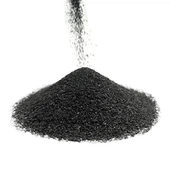
Graphite petroleum coke undergoes high-temperature graphitization treatment above 2800℃, during which internal carbon atoms recombine into flake-like graphite crystals with weak interlayer bonding. When added to molten steel at 1500–1650℃, it is rapidly wetted, dissolved, and diffused by the steel, allowing carbon atoms to stably integrate into the steel matrix with minimal high-temperature oxidation loss.
Industry test data shows that the carbon absorption rate of ordinary calcined petroleum coke is only 75%–85%, and the absorption rate of anthracite carbon raisers is less than 70%; while the carbon absorption rate of standardized graphite petroleum coke can stably reach 92%–95%. Under the same target carbon content, the amount of carbon raiser required is directly reduced by 10%–18%, reducing raw material procurement and smelting losses at the source.
The flake-like graphite structure can simultaneously deoxidize and refine grains, reducing oxidative inclusions in molten steel and preventing continuous carbon consumption due to excessive oxygen content. This further stabilizes the overall carbon balance, eliminating the need for frequent carbon replenishment and shortening the electric arc furnace smelting cycle.
II. Comparison of Losses in the Entire Electric Arc Furnace Process: Significant Cost Advantage per Ton of Steel
Based on production benchmarking data from multiple overseas steel mills, taking a 100,000-ton-per-year electric arc furnace production line as an example:
Traditional post-calcined coke process: Carbon raiser consumption is 12-15 kg per ton of steel, with carbon burn-off exceeding 18%. Frequent replenishment extends the energizing time, resulting in high electricity consumption per ton of steel.
Graphite petroleum coke replacement process: Carbon raiser consumption is reduced to 9-11 kg per ton of steel, carbon burn-off is controlled within 5%, and the target carbon value can be achieved with a single feed. This reduces dust and oxidation losses from repeated feeding, resulting in a 12%-20% reduction in overall carbon material cost per ton of steel.
Meanwhile, the graphite petroleum coke produced by our integrated industrial and trading factory has a fixed carbon content of ≥98.5%, low sulfur content (0.03%–0.05%), low nitrogen content, and low ash content, with impurity content far lower than ordinary carbon materials. These impurities will not react with molten steel to form slag, reducing carbon loss during the slag removal process, decreasing slag volume in the furnace body, reducing furnace lining erosion and loss, extending the service life of electric arc furnace refractory materials, and indirectly reducing equipment operation and maintenance costs.
III. Adaptable to diverse electric arc furnace feeding processes, meeting the needs of various steel production.
Graphite petroleum coke is suitable for all scenarios in electric arc furnaces: one-time bottom charging, mid-melting carbon replenishment, and fine-tuning of carbon content before tapping. In the initial melting stage, it is fed into the furnace simultaneously with scrap steel, quickly compensating for carbon loss caused by scrap oxidation and stabilizing the initial carbon base. In the mid-melting stage, precise fine-tuning is achieved with rapid dissolution; uniform carbon diffusion is completed within 3-5 minutes, eliminating localized carbon segregation. It is suitable for electric arc furnace smelting of various types of steel, including ordinary carbon steel, alloy steel, stainless steel, and special structural steel. It does not introduce harmful impurities such as sulfur and nitrogen, avoiding porosity and cracks in castings and steel, and reducing finished product scrap losses.
To meet the bulk production needs of overseas steel mills, our factory can customize mainstream particle sizes of 1-3mm and 2-5mm, ensuring uniform sieving with no fine powder or dust, reducing raw material waste caused by dust dispersion during the feeding process. We support standard export packaging such as ton bags and waterproof woven bags, with stable FOB Tianjin sea freight delivery. Bulk orders can be accompanied by third-party quality inspection reports to ensure consistent indicators for each batch, avoiding uncontrolled carbon content in smelting due to fluctuations in raw material quality.
IV. Feedback from Export Steel Mills: Long-Term Stable Supply Guarantees Production
In the past year, numerous electric arc furnace smelting companies in Southeast Asia, the Middle East, and Europe have consulted our independent Google website to purchase graphite petroleum coke. After replacing their original carbon-enhancing solutions, they have reported three core improvements:
- Stable carbon recovery rate, eliminating the need for additional reserve carbon materials and reducing raw material inventory turnover pressure;
- Shorter smelting cycle, increased single-furnace production efficiency, and improved electric arc furnace capacity utilization;
- Stable mechanical properties of steel products, reduced defect rate, and overall narrowing of production losses.
As an integrated industrial and trading graphite petroleum coke (PPC) source factory, we have our own complete graphitization production line with ample daily capacity. We can undertake long-term annual framework supply orders from overseas steel mills, providing free sample testing, customized specifications, and one-stop customs clearance and logistics services. We offer customized carbon balance ratio technical guidance for electric arc furnace (EAF) steelmaking customers, helping them maximize the high absorption and low loss advantages of PPC.
Industry Outlook Summary
Amid the global metallurgical low-carbon transformation and increasingly volatile raw material prices, the demand for cost reduction and efficiency improvement in EAF steel mills continues to rise. High-absorption, low-loss PPC is gradually replacing traditional low-end carbon auxiliary materials, becoming a trend in the standardization and upgrading of EAF smelting. In the future, our factory will continue to optimize the graphitization purification process, launching dedicated EAF-grade PPC products with lower sulfur and higher carbon recovery rates, providing stable and cost-effective carbon material solutions for global metallurgical export customers.