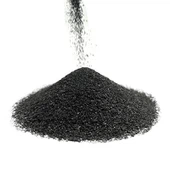
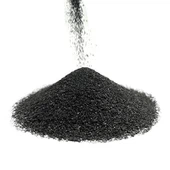
In the steel industry, carbon is not just an element-it's the backbone of steel performance. Its content and distribution directly determine critical properties like strength, hardness, toughness, and longevity. Among the materials used to master carbon control, graphite petroleum coke (GPC) stands out as a game-changer. With its high fixed carbon content, low sulfur, and minimal ash, GPC is revolutionizing how steelmakers achieve precision in carbon regulation, unlocking new levels of steel quality.
Why GPC Reigns Supreme in Carbon Control
Traditional carbon additives often struggle with inconsistent dissolution, leading to uneven carbon distribution in molten steel. GPC solves this with its crystalline structure:
- Uniform Dissolution: Its ordered graphite lattice dissolves steadily in high-temperature steel baths, eliminating hotspots or carbon-deficient zones.
- Precision Targeting: By adjusting the timing and quantity of GPC addition, steelmakers can hit exact carbon targets (e.g., 0.2–0.6% for high-strength structural steel), balancing strength and weldability for applications like skyscrapers and bridges.
- Case Study: A leading construction steel producer reduced carbon deviation by 40% after switching to GPC, cutting rework costs and improving product consistency.
How GPC Boosts Steel Strength and Durability
The magic of GPC lies in its ability to refine steel's microstructure and purity:
- Microstructural Optimization: Controlled carbon levels from GPC promote the formation of pearlite-ferrite matrices-a balanced mix that resists structural deformation. This translates to: 20–30% higher tensile and yield strength. Better resistance to fatigue, even under cyclic loading (e.g., in bridge girders).
- Purity Enhancement:
GPC's low sulfur content (typically <0.5%) minimizes harmful sulfide inclusions, which cause hot shortness (brittleness at high temperatures) and corrosion. As a result, Steel's lifespan increases by 30%+ in harsh environments. Reduced maintenance costs for end-users, from oil rigs to chemical plants.
Techniques for Effective GPC Application
Maximizing GPC's potential requires tailored strategies based on furnace type and steel grade:
|
Furnace Type |
Optimal GPC Usage |
|
Induction Furnace |
- Batch Addition: 30–40% during charging, then 1–2补加 rounds based on real-time carbon analysis. |
|
Converter Furnace |
- Stream Addition: Add GPC with the steel flow during tapping to ensure uniform mixing. |
Future Innovations: GPC for Greener, Smarter Steelmaking
As the steel industry shifts toward sustainability, GPC is evolving too:
- Surface Modification: Coating GPC with catalysts (e.g., silicon) can boost carbon absorption by 5–10%, reducing energy use per ton of steel.
- Circular Economy: Recycled GPC from industrial waste streams is being tested, lowering reliance on virgin materials.
- Digital Integration: AI-powered models are optimizing GPC dosage based on furnace conditions, further reducing emissions and costs.
Conclusion: GPC-Your Partner in Next-Gen Steel
Graphite petroleum coke isn't just an additive; it's a strategic tool for steelmakers aiming to produce stronger, longer-lasting, and more sustainable products. By mastering GPC-based carbon control, manufacturers can meet the demands of modern infrastructure while staying ahead in a competitive market.