Quick Comparison
|
Aspect |
Graphite Granules |
Graphite Fine Powder |
|
Definition |
Granular or coarse powder form |
Ultra-fine powder form |
|
Typical Particle Size |
35 mesh – 325 mesh (~45μm – 500μm) |
200 mesh, 325 mesh and finer; down to nano-scale (20nm – 100nm) |
|
Production Process |
Crushing, grinding, purification, screening to specific mesh sizes |
Additional ultra-fine grinding and classification beyond granule production |
|
Primary Applications |
Carburizer, refractories, foundry, pencil leads, carbon brushes |
Lithium-ion battery anodes, lubricants/coatings, conductive coatings, specialty graphite products |
|
Key Performance |
Provides structural framework or acts as carbon source; purity and specific particle size are critical |
High surface area, good dispersibility, surface activity; maximizes lubrication, conductivity, and sealing properties |
Key Differences Explained
1. Particle Size – The Most Fundamental Difference
This is the most obvious distinction between the two products.
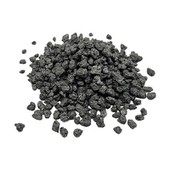
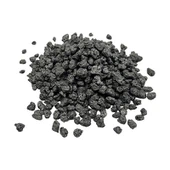
Graphite Granules typically range from 35 mesh to 325 mesh (approximately 45μm – 500μm). In industrial applications, this size range is widely used as a recarburizer/carburizer for steelmaking and foundry operations.
Graphite Fine Powder is significantly finer – generally 325 mesh (about 44μm) and below. Premium grades can reach nano-scale (e.g., 20nm – 100nm). This extreme fineness gives fine powder a massive specific surface area and much higher surface activity.
2. Applications – Different Roles, Different Industries
The particle size difference determines their distinct roles:
Granules serve as "industrial structural materials":
Carburizer/recarburizer – adjusting carbon content in molten steel/iron
Refractory materials – as aggregates in magnesia-carbon bricks, crucibles, and smelting vessels
Carbon brushes and pencil leads – providing structural integrity
Fine powder serves as "functional materials":
Lithium-ion battery anodes – the preferred negative electrode material for EVs and energy storage
Solid lubricants and lubricating coatings – maximizing graphite's natural lubricity
Conductive coatings and composites – for EMI shielding and antistatic applications
Specialty graphite products – high-purity crucibles, heating elements, and seals
3. Performance Priorities
Granules focus on:
Consistent carbon content (≥98% – 99.99%)
Controlled particle size for optimal dissolution rate (when used as carburizer)
Low sulfur, nitrogen, and ash impurities
Structural strength as a refractory aggregate
Fine Powder emphasizes:
Extremely high specific surface area
Excellent dispersibility in liquids and polymers
Superior lubrication and conductivity
Uniform particle size distribution for consistent performance
Which One Should You Choose?
|
Choose Graphite Granules if you need… |
Choose Graphite Fine Powder if… |
|
A carbon additive for steel or iron production |
A lubricant or anti-seize coating |
|
Refractory aggregates for high-temperature linings |
Battery anode materials (lithium-ion) |
|
Structural graphite components (brushes, leads) |
Conductive or antistatic coatings |
|
A material where specific particle size matters |
Applications requiring maximum surface area |
Bottom Line
Graphite Granules and Graphite Fine Powder serve entirely different purposes. Granules provide carbon content and structural framework for heavy industries like steelmaking and refractories. Fine powder delivers functional properties – lubrication, conductivity, and sealing – for advanced applications in batteries, coatings, and specialty manufacturing.
The right choice depends on whether you need a carbon source/structural material or a functional additive that leverages graphite's unique surface and physical properties.