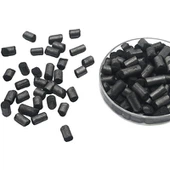
Petroleum coke, or petcoke, is produced as a byproduct of the refining of crude oil. Here's a general overview of the production process:
Crude oil is first refined into various products such as gasoline, diesel, and jet fuel.
The heavy and residual fractions of crude oil that remain after refining are further processed to produce petcoke.
The heavy fractions of crude oil are heated to high temperatures in a coking unit, which breaks down the large hydrocarbon molecules into smaller ones.
As the heavy fractions are heated, some of the carbon and other impurities in the oil are left behind as a solid residue. This residue is petcoke.
The petcoke is then further processed to remove impurities and increase its carbon content. This process is known as calcining, and involves heating the petcoke to high temperatures in a rotary kiln or vertical shaft kiln. During calcining, the volatile matter in the petcoke is removed, which increases its carbon content and makes it more suitable for use as a fuel or carbon source.
The final product is a solid carbon-rich material that can be used in various industrial applications, such as power generation, cement production, and steelmaking.
Overall, the production of petroleum coke involves the refining of crude oil, the coking of heavy fractions, and the calcining of the resulting solid residue to produce a high-carbon material.
The process is energy-intensive and generates large amounts of waste heat and emissions, making it a target for environmental regulation and scrutiny.