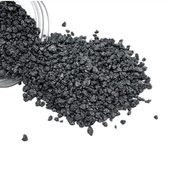
In recent years, the graphitized petroleum coke industry has made significant progress in technological innovation, mainly in improving the conductivity, stability, and purity of products. For example, by optimizing the production process, the graphitization degree has been raised, and the impurity content has been reduced to meet the needs of higher-end applications.
Currently, graphitization processes are mainly divided into two types: batch and continuous. The batch process is dominated by the Acheson graphitization furnace, while the continuous process is represented by the continuous graphitization furnace. In addition, the box-type graphitization furnace, as a new type of furnace, is developing faster and is gradually accepted by the industry. There are significant differences between the Atchison graphitization furnace and the continuous graphitization furnace in terms of environmental protection, which are mainly reflected in the exhaust gas treatment, energy efficiency, and carbon emissions:
Exhaust gas treatment
Atchison Graphitization Furnace: Because the furnace adopts an open smelting environment, it is difficult to collect and centralize the exhaust gas effectively. The production process generates a large amount of volatile organic compounds and hazardous gases, which pollute the environment further.
Continuous Graphitization Furnace: The production process is closed, and the exhaust gas is treated centrally. Through the specialized exhaust gas treatment system, it can effectively reduce exhaust gas emissions, which is more friendly to the environment.
Energy utilization efficiency
Acheson Graphitization Furnace: The heat energy utilization rate is low, only 10-15%. A large amount of electrical energy is used to heat the resistive material, and the heat is transferred to the products through the resistive material, resulting in large energy loss.
Continuous Graphitization Furnace: Significantly higher thermal energy utilization, up to 25%. The production process is continuous, with low heat loss, and does not require large amounts of insulating material, further reducing energy consumption.
Carbon emissions
Atchison Graphitization Furnace: Higher carbon emissions, with higher emissions of carbon dioxide and other greenhouse gases from the production process.
Continuous Graphitization Furnace: Carbon emissions are only 25% of the Acheson method, providing significant environmental advantages.
Other environmental advantages
Acheson Graphitization Furnace: Frequent loading and unloading are required due to the intermittent production process, which increases the emission of dust and particulate matter.
Continuous Graphitization Furnace: The production process is continuous and the intermediate products "do not fall to the ground", which reduces the emission of dust and particles, and at the same time reduces labor and transportation costs.\
In summary, technological advances in the graphitized petroleum coke enabler industry are driving product quality and cost reductions. Acheson's graphitization furnace technology is mature but costly, while the continuous graphitization furnace has significant advantages in terms of energy consumption, environmental protection, and cost, and is expected to become the mainstream technology in the industry in the future.