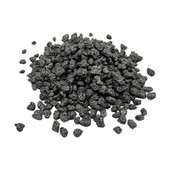
In the high-tech field of special steel smelting, where precision is everything, every process step directly determines the final product's performance. The cooling process is the most critical "dance move" in this intricate "ballet." In recent years, artificial graphite, with its unique thermophysical properties, has emerged as an "invisible master" in special steel cooling processes. It not only enables a qualitative leap in steel performance but also delivers unexpected energy-saving benefits.
Cooling Curves: The "Control Code" for Special Steel Performance
Cooling special steel isn't just about "making it cold." It's a strictly controlled phase transformation process. The cooling curve acts like a key, dictating the transformation path and proportion of austenite to ferrite, pearlite, bainite, or martensite in steel. This directly impacts the steel's strength, toughness, hardness, and wear resistance.
Traditional cooling media like water, oil, or air, while low-cost, often act as a "one-size-fits-all" solution, struggling to precisely control complex cooling curves. This can lead to issues like uneven microstructure, excessive residual stress, and compromised product quality.
Artificial Graphite: A Revolutionary Material for Thermal Management
Artificial graphite is produced by high-temperature graphitization of high-purity carbon materials. It's no ordinary graphite-it boasts a suite of "superpowers":
- High Thermal Conductivity: Acts as a "highway for heat," enabling rapid and uniform heat transfer.
- High-Temperature Stability: Remains structurally intact even under extreme heat, "steady as a rock."
- Low Thermal Expansion Coefficient: Offers exceptional dimensional stability, making "thermal expansion" a non-issue.
- Chemical Inertness: "Keeps to itself," avoiding harmful reactions with molten steel.
- Strong Designability: Can be "tailor-made" with customized porosity and structure to meet specific needs.
Technical Mechanisms for Precise Cooling Curve Control
How does artificial graphite wield its "superpowers" to precisely control cooling curves?
1. Gradient Cooling System: Working Like an "Intelligent Temperature Master"
Engineers fabricate artificial graphite into modular cooling components. Paired with intelligent temperature control systems, this enables variable cooling rates across different stages. This "segmented" cooling capability acts as a "navigation system" for smelting processes, accurately replicating theoretical cooling curves and allowing "custom-made" microstructures for special steel.
2. Micro-Temperature Field Homogenization: Eliminating "Hot-Cold Imbalance"
Artificial graphite's high thermal conductivity acts as a "temperature balancer," rapidly eliminating surface temperature gradients in steel. This prevents thermal stress concentration and uneven microstructure caused by localized rapid cooling-a "lifesaver" for heat treatment of large-section special steel components.
3. Controlled Cooling Under Protective Atmosphere: Wrapping Steel in a "Protective Cloak"
Artificial graphite cooling systems can integrate with protective atmosphere systems, enabling controlled cooling in an oxidation-free, decarburization-free "greenhouse" environment. This preserves the steel's surface quality and chemical composition stability.
Precise Microstructure Regulation: Making Steel "Consistent Inside and Out"
With precise cooling control enabled by artificial graphite, metallurgists gain a "touch of god," allowing them to:
- Customize Phase Transformation Paths: Precisely control residence time in different phase transformation temperature ranges, shaping the desired microstructure at will.
- Refine Grain Size: Achieve finer microstructures by controlling supercooling, enhancing steel's strength and toughness.
- Regulate Precipitation Behavior: Control the size and distribution of secondary phases like carbides and nitrides, optimizing steel performance.
- Reduce Microstructural Defects: Significantly lower the occurrence of defects like banded structures and mixed grains, ensuring "flawless" steel.
Invisible Energy Savings: Delivering Dual Benefits
Artificial graphite not only enhances steel performance but also quietly "saves electricity," delivering dual benefits:
Direct Energy Savings: "Pinching" Efficiency at the Source
- Precise cooling control minimizes process repetition and scrap rates, directly reducing energy waste.
- Efficient heat transfer makes cooling systems "do more with less," cutting their own energy consumption.
- Shorter process cycles lower overall energy usage.
Indirect Energy Savings: "Saving" the Future Across the Product Lifecycle
- Enhanced steel performance extends service life, reducing replacement frequency and indirectly saving resources and energy.
- High-quality steel cuts energy consumption in downstream processing.
- Lightweight design reduces energy use in end-product applications.
Practical Applications and Prospects: From "Lab" to "Production Line"
Today, artificial graphite cooling technology is "making waves" in producing high-strength gear steel, bearing steel, tool steel, and aerospace-grade special steel. As smart manufacturing advances, artificial graphite cooling systems are "teaming up" with IoT and big data analytics to form adaptive intelligent cooling platforms.
Looking ahead, this technology is poised to expand into emerging metallurgical fields like thin strip casting and additive manufacturing, offering more precise, energy-efficient heat treatment solutions for special steel. Artificial graphite is leading a "green revolution" in special steel smelting.
Conclusion
With the support of artificial graphite, the "invisible master," special steel smelting is shifting from experience-dependent "craftsmanship" to precision-controlled "material design." This transformation not only pushes the limits of material performance but also achieves significant energy savings through process optimization-perfectly aligning with the trend toward efficient, green, and intelligent modern metallurgy.
As materials science and engineering progress, the application potential of artificial graphite in metallurgical thermal management will continue to unfold, driving new revolutions in special steel and broader metal processing industries.