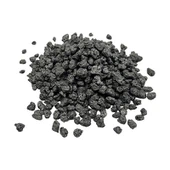
In the global wave of green transformation in the steel industry, Electric Arc Furnace (EAF) steelmaking is gradually becoming a mainstream production process due to its advantages of energy conservation, low carbon emissions, and flexible raw material options. As the proportion of EAF steel in global steel output continues to rise, synthetic graphite carburizers, a key raw material in the process, are facing new performance requirements and market challenges.
The Rise and Development Trends of EAF Steelmaking
Traditional blast furnace-converter long-process steelmaking relies on iron ore and coke, resulting in high energy consumption and large emissions. In contrast, EAF steelmaking uses scrap steel as the main raw material, melting it through electric arc heating and adjusting its composition, which significantly reduces energy consumption and carbon emissions.
Driven by the global "dual carbon" goals, the proportion of EAF steel in China has increased from less than 10% in the past to more than 15%, and it is expected to reach 25% by 2030. In developed regions such as Europe and the United States, the proportion of EAF steel is even more than 50%. This structural transformation not only promotes the recycling of scrap steel resources but also puts forward higher requirements for supporting metallurgical materials.
The Role and Challenges of Synthetic Graphite Carburizers
In the EAF steelmaking process, carburizers are used to adjust the carbon content of molten steel and improve the strength and performance of steel. Synthetic graphite carburizers are the first choice for high-quality steel production due to their high carbon content, low sulfur content, and stable absorption rate. However, as EAF steelmaking develops towards higher efficiency, lower cost, and higher quality, traditional carburizers can no longer fully meet the needs of new processes.
New Demand 1: Higher Purity and Lower Impurities
The short-process EAF steelmaking has a short cycle and limited refining time, so carburizers are required to have extremely low impurity content. Harmful elements such as sulfur, nitrogen, and hydrogen will seriously affect the toughness and welding performance of steel.
The new generation of synthetic graphite carburizers needs to achieve:
- Control the sulfur content below 0.05% through raw material selection and high-temperature purification
- Reduce trace metal impurities to meet the production standards of high-end special steel
- Strictly control the content of nitrogen and hydrogen to avoid porosity and brittleness in the final product
New Demand 2: Better Absorption Efficiency and Particle Size Control
The EAF smelting process is fast, requiring carburizers to dissolve quickly and be absorbed efficiently. The particle size distribution directly affects the carburization effect:
- Too fine particles are easy to burn and have a low utilization rate
- Too coarse particles settle quickly and mix unevenly
Modern EAF processes tend to use a customized particle size range of 0.5-5mm and pursue a narrower particle size distribution band to achieve precise carbon allocation and stable yield. Advanced production technologies can now achieve:
- Customize particle size distribution according to specific furnace types and steel grades
- Enhance the wettability with molten steel through surface modification treatment
- Monitor the absorption rate in real-time during the smelting process
New Demand 3: Enhanced Environmental Protection and Low-Carbon Attributes
Green steel not only involves process emission reduction but also includes the optimization of material carbon footprints. The production of synthetic graphite carburizers itself must also meet strict environmental standards, including:
- Use low-volatile raw materials to reduce emissions
- Adopt energy-saving production processes to reduce power consumption
- Advanced dust removal systems to reduce particulate matter emissions
Leading manufacturers are now launching "low-carbon carburizers" by:
- Optimizing the production process to reduce carbon emissions by 20-30%
- Obtaining third-party carbon footprint certifications (such as PAS 2050)
- Helping steel mills reduce Scope 3 emissions through supply chain collaboration
New Demand 4: Functional Complexity and Process Adaptability
With the expansion of EAF steelmaking varieties, carburizers are no longer just carriers of carbon elements, but also undertake functions such as deoxidation, slag promotion, and improvement of molten steel fluidity.
Key developments include:
- Develop composite carburizers containing alloy elements or fluxing agents to improve comprehensive metallurgical effects
- Customize special formulas for high-carbon steel, stainless steel, and special alloys
- Customized products adapted to different furnace types (Consteel, double-shell furnaces) and smelting processes
New Demand 5: Cost Optimization and Resource Recycling
Although high-end development is a trend, EAF steel mills also pay attention to economic benefits. The industry is focusing on:
- Using graphite electrode scraps and graphitization by-products to produce cost-effective synthetic graphite carburizers
- Develop a circular economy model to reduce waste and reduce raw material costs
- Improve packaging and transportation methods (such as ton bag packaging, pneumatic conveying compatibility) to reduce losses and improve automation levels
Future Outlook
The upgrading of synthetic graphite carburizers is a key part of improving the quality and efficiency of EAF steelmaking. As EAF technology develops towards high efficiency, intelligence, and greenness, the carburizer industry needs to continue to innovate in three key areas:
1. Scientific Material Design
- Combine simulation calculations and experimental research to optimize the microstructure and surface characteristics
- Develop new carbon materials with enhanced performance characteristics
- Explore the application of nanotechnology to improve the reactivity of carburizers
2. Digitalized Production Process
- Realize real-time monitoring and control of particle size, purity, and performance
- Use artificial intelligence and machine learning to optimize production parameters
- Establish a traceability system for raw materials and finished products
3. Collaborative Supply Chain
- Establish data-sharing partnerships with steel mills to develop customized solutions
- Create an integrated service model, including technical support and on-site guidance
- Promote the formulation of industry-wide product quality and environmental performance standards
The transformation from "scrap" to "excellence" not only represents the evolution of EAF steelmaking but also a critical transformation that the synthetic graphite carburizer industry must face. By keeping up with technological progress and continuously improving product performance and service levels, enterprises can seize opportunities in the era of green steel.