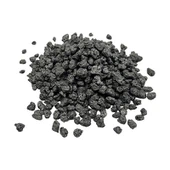
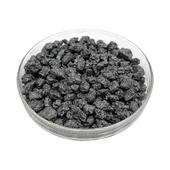
This article will delve into why low sulfur and low nitrogen content have become core standards for measuring the quality of graphite petroleum coke in the global steel metallurgy, casting, and new energy industries.
I. Sulfur Content: A Double-Edged Sword Affecting Quality and Environmental Protection
Sulfur is a harmful impurity in graphite petroleum coke, and its content directly affects the quality and application of the final product.
1. Impact on Metallurgical Quality
In steel smelting and casting processes, graphite petroleum coke is mainly used as a carbon raiser. If the sulfur content of the product is too high, sulfur will be introduced into the molten iron and steel. Sulfur is a strictly limited harmful element in steel materials-it causes "hot brittleness," reducing the toughness and ductility of steel, severely impacting the quality of high-end castings and special steels. Therefore, the production of ductile iron and high-quality special steels requires the use of ultra-low sulfur (≤0.05%) graphite petroleum coke.
2. Strict Environmental Regulations
With the advancement of global "dual carbon" goals, countries are increasingly tightening regulations on industrial emissions. High-sulfur coke releases harmful gases such as sulfur dioxide (SO₂) during use, increasing environmental treatment costs for enterprises. Low-sulfur graphite petroleum coke helps downstream customers reduce the burden of flue gas desulfurization, aligning with the trend of green manufacturing.
3. Data Reference: Sulfur Standards for High-Quality GPC
High-quality graphitized petroleum coke in the industry typically has a sulfur content controlled below 0.03% - 0.05%. For example, high-end GPC products can have a sulfur content as low as 0.03%, with fixed carbon exceeding 99%.
II. Nitrogen Content: The "Hidden Killer" of High-End Manufacturing
Compared to sulfur, the hazards of nitrogen are often overlooked, but in modern metallurgical processes, nitrogen content is becoming a decisive indicator for evaluating the quality of carbon raisers.
1. Culprit of Porosity and Cracks in Castings
Ordinary calcined petroleum coke or products treated at low temperatures may have a nitrogen content as high as 9000 ppm (0.9%). When this high-nitrogen carbon raiser is added to molten steel or iron, the high temperature causes nitrogen to precipitate in gaseous form, forming pinholes, subcutaneous pores, or cracks inside the casting, severely reducing the density and mechanical properties of the casting.
2. The Core Value of Graphitization Process
The key to the "high quality" of high-quality graphitized petroleum coke lies in its high-temperature graphitization treatment at 2800℃-3500℃. During this process, the carbon atoms inside the petroleum coke are reconstructed from a disordered arrangement into an ordered lattice structure, while most of the nitrogen is effectively removed. Graphitized petroleum coke can drastically reduce its nitrogen content to 300ppm-500ppm, with top-grade products even below 200ppm (0.02%).
3. Data Reference: Nitrogen Standards for High-Quality GPC
Ordinary calcined coke: Nitrogen content ≈ 9000ppm
Graphitized petroleum coke: Nitrogen content ≤ 300-500ppm
Ultra-low nitrogen high-quality GPC: Nitrogen content ≤ 200-300ppm
III. Why can low sulfur and low nitrogen define "high-quality"?
In summary, low sulfur and low nitrogen are key indicators because they directly determine the performance of graphite petroleum coke in three core scenarios:
1. Carbon enrichment efficiency and absorption rate
Low-sulfur and low-nitrogen GPC is characterized by high purity and high carbon content (≥98.5%), a denser microstructure, rapid dissolution in molten iron, high absorption rate, and no residue. This helps foundries increase scrap steel usage, reduce pig iron costs, and optimize the "synthetic cast iron" process.
2. Mechanical Properties of the Final Product
In ductile iron production, the use of low-sulfur, low-nitrogen carbon raisers provides a high-quality graphite nucleation substrate, significantly improving the strength, hardness, and tensile properties of castings. In special steel smelting, it is a key raw material for producing ultra-high-power graphite electrodes.
3. Entry Point into Emerging Applications
In the field of lithium-ion battery anode materials, low-sulfur petroleum coke, after graphitization, shows enormous application potential. Studies have shown that the initial coulombic efficiency of graphitized low-sulfur petroleum coke can reach 82.79%, with excellent cycle stability, fully meeting the requirements of commercial batteries. This means that low-sulfur, low-nitrogen GPC is opening the "door" to the new energy market.
Low sulfur and low nitrogen are key indicators for evaluating high-quality graphite petroleum coke because they directly reflect the degree of graphitization and purity of the product. In today's steel industry, which is focused on improving quality and efficiency, and with the rapid development of new energy materials, only GPC with low sulfur and nitrogen content can demonstrate its true "high-quality" value in high-end casting, special smelting, and battery anode fields.