I. Introduction
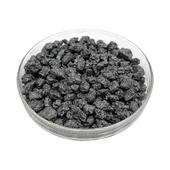
In all categories of metallurgical production, including electric arc furnace steelmaking, medium frequency furnace cast iron, and ferroalloy smelting, carburizing agents are core auxiliary materials that regulate the carbon content of molten metal and determine the mechanical properties of the finished product. There are many types of carburizing agents on the market; coal-based carburizing agents, ordinary calcined petroleum coke, and natural graphite each have their shortcomings. However, graphite petroleum coke that has undergone high-temperature graphitization treatment above 2500℃, with its unique crystal structure, high-purity physicochemical indicators, and stable performance, has become a recognized high-quality carburizing raw material in high-end metallurgical scenarios, widely used in the production of ductile iron, special steel, industrial silicon, and prebaked anodes. This article comprehensively analyzes the core advantages of graphite petroleum coke from five dimensions: crystal structure, impurity indicators, usage efficiency, finished product improvement, and cost and environmental protection.
II. Layered Graphite Crystal Structure: Superior Dissolution Rate and Carbon Absorption
The most fundamental difference between graphite petroleum coke and ordinary carbonaceous recarburizing agents lies in the ordered layered graphite crystal structure reconstructed through high-temperature graphitization.
- 1. Strong Wetting Properties, Easily Integrates into Molten Metal
Coal-based recarburizing agents and ungraphitized calcined coke molecules have an amorphous and disordered structure, making them difficult to wet with molten steel or iron. Most of the floating material is oxidized and burned off at high temperatures. Graphite petroleum coke, with its smooth layered structure, allows molten metal to quickly penetrate into the carbon layer. Combined with electromagnetic stirring in an electric furnace, it completely penetrates deep into the molten pool in a short time, significantly reducing surface burn-off.
- 2. Ultra-High Carbon Absorption Rate, Higher Production Error Tolerance
Under actual operating conditions, the carbon absorption rate of graphite petroleum coke is consistently 85%-95%; the absorption rate of coal-based recarburizing agents is only 60%-75%, and that of ordinary calcined coke is 70%-82%.
- 3. Graphite petroleum coke requires less feed material for the same target carbon content, allowing for precise and controllable carbon levels. This is particularly suitable for products with stringent carbon content tolerances, such as bearing steel and high-end ductile iron, preventing batch scrapping due to excessive or insufficient carbon.
- 4. Fast dissolution speed, shortening the smelting cycle
Graphite carbon diffusion efficiency is far higher than amorphous carbon. After being fed in layers with scrap steel and pig iron, carbon dissolution can be completed within 5-10 minutes, reducing the time required for electric furnace opening and heat preservation, lowering power consumption, and improving single-furnace output efficiency.
Graphite petroleum coke requires less feed material for the same target carbon content, allowing for precise and controllable carbon levels. This is especially suitable for products with stringent carbon content tolerances, such as bearing steel and high-end ductile iron, avoiding batch scrapping caused by excessive or insufficient carbon.
III. High-purity, low-impurity physicochemical indicators, avoiding defects in castings and steel from the source
High-quality metallurgical production is extremely sensitive to impurities such as sulfur, nitrogen, ash, and volatile matter. The high-temperature purification process of graphitization can significantly remove harmful elements from raw materials, resulting in significant advantages in core indicators:
- 1. Fixed carbon content ≥ 98.5%, extremely high effective carbon ratio
Mainstream graphite petroleum coke has a fixed carbon content of 98.5%-99.2%, a high proportion of effective carbon-enhancing components, and an extremely low proportion of inorganic impurities; coal-based carbonizers generally have a fixed carbon content of 90%-95%, and a large amount of ash impurities easily form slag, increasing the need for slag removal.
- 2. Ultra-low sulfur content, eliminating hot brittleness defects in steel
Customized low-sulfur specifications of graphite petroleum coke can control the sulfur content to within 0.03%-0.05%, far lower than the 0.3%-0.5% sulfur index of coal-based carbonizers. Excessive sulfur content can cause hot brittleness in steel and cracks in castings. High-end cast steel and ductile iron must have strictly controlled sulfur content. Graphite petroleum coke can significantly reduce the pressure on the desulfurization process.
- 3. Low-nitrogen specifications solve common problems of porosity and pinholes in castings.
Ultra-low nitrogen graphite petroleum coke can control the nitrogen content to below 300 ppm. Nitrogen is the core cause of subcutaneous porosity and pinholes in castings. The production of automotive chassis parts, hydraulic valve bodies, and precision mold cast iron all require the use of low-nitrogen graphite petroleum coke to ensure dense and defect-free castings.
- 4. Low ash and low volatile matter content, reducing slag and flue gas emissions.
Ash content ≤0.5% and volatile matter <0.5% result in minimal slag production during the smelting process, preventing clogging of the furnace nozzle and adhesion to the furnace lining. Low-temperature volatile matter content also leads to lower smelting flue gas emissions, meeting factory environmental emission requirements.
IV. In addition to its nurturing effect, it comprehensively optimizes the internal metallographic structure of metals.
Graphite petroleum coke is not merely a simple carbon supplement; during the melting process, it acts as a natural graphite nucleus, improving the microstructure of castings and steel. This is an added value that other carbon raisers do not possess:
- 1. Increased graphite spheroidization rate in ductile iron
During molten iron smelting, graphite coke releases tiny graphite nuclei, promoting the uniform precipitation of eutectic graphite. The graphite spheroids are round, small, and evenly distributed, reducing the brittleness caused by flake graphite. The elongation, toughness, and fatigue resistance of castings are significantly improved, making it suitable for ductile iron products such as wind power castings, automotive crankshafts, and pipe fittings.
- 2. Improved fluidity of molten iron and enhanced surface quality of castings in gray cast iron
Sufficient graphite nuclei reduce the shrinkage tendency of molten iron, improve filling fluidity, and reduce the likelihood of cold shuts and material shortages in thin-walled castings. The inner walls of castings are smooth, reducing grinding and rework costs.
- 3. Refined Grain Size in Special Steels, Enhancing Comprehensive Mechanical Properties
In the smelting of alloy steel and die steel, uniformly distributed carbon elements refine the steel grains, improving hardness, wear resistance, and strength. The finished product has a uniform metallographic structure without localized carbon segregation.
V. Strong Adaptability to All Types of Metallurgical Smelting Equipment
Graphite petroleum coke is available in a full range of particle sizes (0-1mm, 1-5mm, 2-8mm, powder type), compatible with various equipment such as medium-frequency induction furnaces, electric arc furnaces, submerged arc furnaces, and cupola furnaces. Its use is simple and flexible:
- 1. Feed it as part of the bottom layer of the furnace charge for the most stable carbon increase;
- 2. Add small batches during the mid-smelting process for precise fine-tuning of carbon content;
- 3. Powdered graphite coke can be used with carbon injection equipment for rapid carbon adjustment in the later stages of electric arc furnace smelting.
Furthermore, the product exhibits extremely high-temperature stability, not decomposing or softening at 2800℃, making it suitable for various high-temperature smelting conditions without the problem of rapid failure after feeding.
VI. Lower Long-Term Overall Production Costs, Suitable for Large-Scale Export-Oriented Metallurgical Plants
Many buyers initially believe that graphite petroleum coke has a higher unit price, but a comprehensive accounting of the entire smelting process reveals that overall production costs are actually lower:
- 1. High absorption rate, reducing the amount of raw materials consumed per unit of finished product for carbon addition by 15%-30%;
- 2. Fewer impurities, reducing consumption of desulfurization and slag removal auxiliary materials, and decreasing labor costs for slag cleaning and furnace lining losses;
- 3. Significantly reduced casting scrap rate, decreasing waste and rework losses;
- 4. Shorter smelting cycle, continuously reducing energy consumption such as electricity and gas;
- 5. Low-sulfur, low-nitrogen formulations can produce high-value-added, high-end castings and special steels, resulting in higher product premiums.
For large overseas foundries, steel mills, and ferroalloy smelting enterprises, long-term bulk purchases of graphite petroleum coke can stabilize product quality, reduce quality control risks, and are a core solution for cost reduction and quality improvement in large-scale metallurgical production.
VII. Outstanding Environmental Advantages, Compliant with Global Metallurgical Emission Reduction Standards
- 1. Low Sulfur and Nitrogen Impurities: Sulfur dioxide and nitrogen oxide emissions in smelting flue gas are significantly lower than those of coal-based carbon raisers, making it easier for factories to pass environmental impact assessments in various countries.
- 2. Low Volatile Matter: Low smelting dust production, resulting in a smaller load on dust removal equipment.
- 3. Free of Heavy Metal Impurities: Smelting waste can be harmlessly treated and recycled, meeting the environmental access requirements of overseas markets such as the EU, Southeast Asia, and the Middle East, making it suitable for export-oriented metallurgical enterprises.
VIII. Conclusion
Graphite petroleum coke has become the preferred high-quality carbon raiser in the metallurgical industry due to its multiple advantages: a layered crystal structure resulting from high-temperature graphitization, ultra-low harmful impurity levels, high carbon absorption rate, and improved metallographic structure. Whether for low-end ordinary cast iron, high-value-added ductile iron castings, special alloy steel, or industrial silicon smelting, graphite petroleum coke can stably control carbon content, reduce product defects, and lower overall smelting costs. With the expansion of global high-end casting and special steel production capacity, and the tightening of environmental protection policies in various countries, the market demand for low-sulfur, low-nitrogen, and high-purity graphite petroleum coke continues to rise. It is also a core choice for metallurgical plants at home and abroad to upgrade raw materials and enhance product competitiveness.