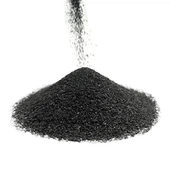
Why Anthracite?
China's anthracite production reached nearly 400 million tons in 2025, compared to only 30–40 million tons of petroleum coke-a tenfold difference. Anthracite offers:
Stable, transparent pricing
Reliable supply with low freight costs
High carbon content ideal for carbon materials
Two Technical Pathways
Anthracite is being developed for two distinct anode applications:
1. Synthetic Graphite Anodes (Lithium-Ion)
Through high-temperature graphitization, anthracite is transformed into a graphite structure. The carbonization-graphitization process is the key breakthrough-after pre-carbonization at 1600°C followed by graphitization, the graphitization degree reaches 94.18%, with a reversible capacity of 351.5 mAh/g.
2. Hard Carbon Anodes (Sodium-Ion & Lithium-Ion)
Controlled carbonization creates a disordered carbon structure with abundant micropores that can store both lithium and sodium ions. The global anthracite-based hard carbon anode market was valued at approximately $102 million in 2025** and is projected to reach **$642 million by 2032, representing a 30% CAGR.
Performance Advantages
Comparable or better performance than petroleum coke-based graphite:
| Parameter | Anthracite-Based Graphite |
|---|---|
| Graphitization degree | Up to 94.18% |
| Reversible capacity | 351.5 mAh/g |
| Capacity retention (400 cycles @ 45°C) | 89.79% |
Boron-doped anthracite graphite achieves even higher performance: 370 mAh/g first discharge capacity with 100% capacity retention after 500 cycles.
Applications
Fast-charging EV batteries: Anthracite-based anodes deliver >350 mAh/g with >80% capacity retention at 5C rates.
Sodium-ion batteries: The disordered carbon structure accommodates larger Na+ ions, achieving 260.6 mAh/g with 89.1% initial efficiency-ideal for grid storage and low-cost EV applications.
Why This Matters for Your Supply Chain
Reduce raw material costs with abundant, affordable feedstock
Diversify supply sources away from volatile petroleum markets
Support sustainability goals through coal value-added utilization
Secure performance comparable to traditional graphite materials