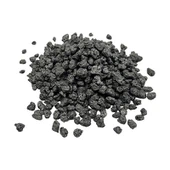
1. Export Controls Reshape Trade Flows
China, which accounts for 90% of global synthetic graphite capacity and 65% of natural graphite production, has significantly tightened export controls since January 2026. High - purity (>99.9%), high - density (>1.73g/cm³), and high-strength graphite materials now require export permits. Enforcement has intensified, with customs authorities publishing over 370 penalties in H1 2026--already exceeding the total for all of 2025.
Concurrently, Mozambique - a rising graphite producer - passed a new Mining Law in July restricting raw ore exports, mandating local processing. These policy shifts are accelerating supply chain diversification, with the US, EU, and India actively developing domestic graphite sources. However, analysts agree that China's dominance will remain unchallenged at least until 2028.
2. Demand Soars, Prices Climb
Anode material shipments from China reached 1.91 million tonnes in H1 2026, a 48% year - on‑year increase, driven by explosive energy storage demand. Battery factory utilisation rates exceeded 80%, with leading producers operating at full capacity.
Synthetic graphite prices have risen steadily. Energy-storage-grade material is now quoted at $2,800 - 3,100/tonne, up 10% from end - 2025. Graphitisation processing fees have climbed to approximately $1,350/tonne (RMB 9,800), approaching three - year highs due to capacity bottlenecks; supporting graphitisation capacity of 4.2 - 4.6 million tonnes falls short of anode finished - product capacity of 4.5 - 5.0 million tonnes.
Natural graphite prices remain stagnant by comparison, as buyers increasingly favour synthetic grades for their consistency and performance in high - end applications.
3. Petroleum Coke Costs Drive Upstream Inflation
The petroleum coke supply crunch continues. Geopolitical tensions and refinery maintenance have pushed low - sulphur petroleum coke to $580 - 650/tonne (RMB 4,118), with prices climbing RMB 200 - 400 per tonne in March alone. For every $1,000/tonne increase in petroleum coke, anode production costs rise by approximately $1,500/tonne, squeezing margins for non-integrated producers.
Needle coke, the premium feedstock for high - performance synthetic graphite, remains in tight supply, further supporting upward price pressure.
4. Technology Shift: Anthracite - Based Anodes Gain Ground
In a bid to reduce dependence on petroleum coke, battery majors are accelerating development of anthracite - based anode technology. With China's petroleum coke output at only 30 - 40 million tonnes annually versus nearly 400 million tonnes of anthracite, and anthracite priced at roughly $140/tonne, the cost advantage is substantial. Performance has now reached medium - to - low - end energy storage requirements.
Industry forecasts predict anthracite - based anode shipments will exceed 10,000 tonnes/month by 2027, potentially becoming a mainstream alternative and driving anode costs below $1,400/tonne.
5. Market Outlook: Balanced Supply by 2027
In the short term, supply - demand tightness will persist through H2 2026, with prices expected to continue climbing. However, over 1.0 - 1.5 million tonnes of new effective capacity for both anode finished products and graphitisation are projected to come online by 2027, likely bringing the market into a balanced state.
Long - term, the global graphite market is forecast to grow from $18.2 billion in 2026 to $28.3 billion by 2032 (7.6% CAGR), according to Benchmark Mineral Intelligence.