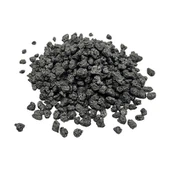
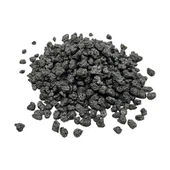
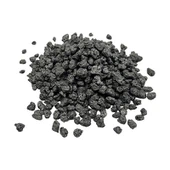
Against the backdrop of the continuous expansion of the global steel, aluminum electrolysis, and new energy industries, the selection of carbon additives is becoming a crucial factor in determining product quality, cost control, and process efficiency. As two major industrial carbon materials-calcined petroleum coke (CPC) and graphite petroleum coke (GPC)-despite sharing the same raw materials, they differ significantly in production processes, performance indicators, and application scenarios. How can you make the optimal choice for your application? This article provides an in-depth analysis from multiple perspectives.
Same Raw Material, Different Processes
Calcined petroleum coke is a carbon material obtained by calcining petroleum coke at approximately 1300℃. It is widely used in graphite electrodes, aluminum electrolysis anode paste, and the metallurgical industry. Its preparation is typically carried out in a rotary kiln or pot furnace at 1200℃ to 1500℃, a process that removes volatiles, increases fixed carbon content, and improves structural crystallinity.
Graphite petroleum coke, on the other hand, involves further graphitizing calcined petroleum coke in an ultra-high temperature environment above 3000℃. This process rearranges carbon atoms into a highly ordered graphite crystal structure, significantly reducing sulfur and nitrogen content and enhancing conductivity and thermal shock resistance. From refining residue to high-value-added materials, graphitized petroleum coke is undergoing a remarkable "comeback."
Application Scenarios: Each with its Own Strengths
CPC applications are primarily concentrated in traditional heavy industries. It is the core raw material for carbon anodes in aluminum electrolysis, with aluminum smelting being its primary consumption area. In addition, CPC has wide applications in the production of ordinary power graphite electrodes, steel carbonization, and as fuel in the cement and power industries.
GPC applications span both traditional and emerging sectors. In the steel industry, GPC is a key raw material for ultra-high power graphite electrodes and the preferred carbonizer in the smelting of ductile iron and low-sulfur special steels. In the emerging new energy industry, GPC, with its ultra-low sulfur, high purity, and excellent conductivity, has become a key precursor for lithium-ion battery anode materials. Simultaneously, GPC also occupies an irreplaceable position in high-end applications such as aluminum electrolysis cathodes, carbon brushes, and nuclear graphite.
Choosing the Right Product: Matching Needs and Understanding the Overall Cost
Product selection decisions require comprehensive consideration of three dimensions: product quality requirements, process conditions, and cost structure.
- Graphite Petroleum Coke (GPC) is suitable for:
Producing high-end metallurgical products such as ultra-high power graphite electrodes, ductile iron, and low-sulfur special steel;
Lithium-ion battery anode materials and applications in the new energy field;
Scenery applications with strict environmental or quality requirements for sulfur content and impurity control;
Applications seeking higher carbon uptake rates to shorten smelting time and improve overall efficiency.
- Calcinated Petroleum Coke (CPC) is suitable for:
Traditional fields such as ordinary power graphite electrodes and aluminum electrolysis carbon anodes;
Cost-sensitive steel carbon uptake and casting production with moderate quality requirements;
Scenery applications with high fixed carbon content requirements but relatively relaxed tolerance for impurities such as sulfur and nitrogen.
It should be noted that although the unit price of GPC is usually higher than that of CPC, from the perspective of overall usage cost, its higher uptake rate, shorter smelting time, and more stable product quality often result in better long-term economics. This is also a key reason why many foundry and steelmaking companies have gradually shifted towards graphitized carbon additives in recent years. Companies should comprehensively weigh their own process characteristics, product positioning, and cost targets to make the optimal choice.
In the global wave of greening and upgrading in manufacturing, the choice of carbon additives is no longer just a matter of cost, but also of quality, efficiency, and competitiveness. Understanding the fundamental differences between calcined petroleum coke and graphitized petroleum coke is crucial to gaining a competitive edge in the increasingly fierce market competition.