I. Preliminary Appearance and Physical Inspection: Quickly Screen for Obvious Defects
The first step in quality inspection is a simple appearance and physical inspection. No specialized equipment is needed to quickly screen products with obvious quality problems. This is suitable for on-site inspection during factory visits or sample confirmation.
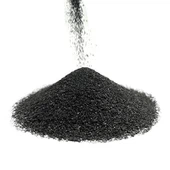
- Appearance Observation: High-quality graphite petroleum coke has a uniform black luster, a smooth surface, and no obvious impurities, cracks, or white spots. Inferior products usually have a dull surface, uneven color, and may contain visible pores, lumps, or foreign objects (such as metal particles). Special attention should be paid to the fact that white spots on the surface usually indicate excessive impurity content, which will affect the product's performance in high-temperature applications.
- Hand feel and hardness test: Take a small sample and rub it between your fingers. High-quality graphite petroleum coke has a fine texture, no obvious gritty feel, and will not leave excessive black powder on your hands. Its hardness can also be assessed through a simple scratch test: Scratch the sample surface with a reference material of known hardness (such as a copper sheet). High-quality graphite petroleum coke has moderate hardness, is not easily broken or pulverized, and can maintain its shape stability during transportation and processing.
- Particle size check: Check the uniformity of the sample particle size according to your specific application requirements (e.g., 0-1 mm, 1-4 mm, 4-7 mm). Sieve the sample using a standard sieve: Stack sieves of different mesh sizes from largest to smallest, place the sample on the top sieve, shake evenly, and weigh the sample remaining on each sieve. High-quality graphite petroleum coke has a uniform particle size distribution, without excessive fine powder or oversized particles, ensuring stable performance during subsequent mixing and reaction processes.
II. Chemical Composition Analysis: Core Indicator Testing
Chemical composition is the core of graphite petroleum coke quality, directly determining its applicability in different industries. Key indicators include fixed carbon content, sulfur content, ash content, volatile matter, and trace metal elements.
- Fixed Carbon Content: As the most important quality indicator of graphite petroleum coke, fixed carbon content reflects product purity. Higher fixed carbon content indicates fewer impurities and better conductivity and heat resistance. Typically, high-quality graphite petroleum coke has a fixed carbon content between 98% and 99.5%, making it highly sought after in fields with high requirements for purity and conductivity (such as electrode manufacturing and aluminum smelting). Testing can be performed using combustion analysis or elemental analysis.
- Sulfur Content: Sulfur is a harmful impurity in graphite petroleum coke. Excessive sulfur content releases sulfur dioxide gas during use, polluting the environment and corroding equipment. In the steelmaking industry, high sulfur content reduces the ductility and toughness of steel, leading to product defects. Therefore, the sulfur content of high-quality graphite petroleum coke should be ≤0.5%, and even as low as 0.03% in high-end applications. Common detection methods include infrared absorption and gravimetric analysis.
- Ash Content: Ash is the inorganic residue remaining after the combustion of graphite petroleum coke, mainly composed of metal oxides and other non-carbon substances. Excessive ash content reduces product purity and affects its performance in high-temperature environments. High-quality graphite petroleum coke has an ash content ≤0.5%. The detection method involves placing the sample in a muffle furnace and heating it at 800-900℃ until the carbon is completely burned, weighing the remaining ash, and calculating the ash content ratio.
- Volatile Matter: Volatile matter refers to substances that volatilize when graphite petroleum coke is heated. Excessive volatile matter content leads to excessive smoke during use, causing carbon loss and posing safety hazards. High-quality graphite petroleum coke has a low volatile matter content (usually ≤0.8%), ensuring stable performance during the melting process.
- Trace Metal Elements: Elements such as silicon, vanadium, iron, calcium, and nickel in graphite petroleum coke can affect product quality and application performance. For example, excessive iron and silicon content can reduce electrode purity. According to ASTM D5600-22 standard, inductively coupled plasma atomic emission spectrometry (ICP-AES) can be used to accurately determine the content of various trace metal elements.
III. Physical Property Testing: Ensuring Applicability and Stability
In addition to chemical composition, the physical properties of graphite petroleum coke also need to be tested to ensure its suitability for specific production processes and working environments. Key physical indicators include true density, bulk density, and thermal conductivity.
- True Density: The true density of calcined graphite petroleum coke directly affects the physicochemical properties of the final carbon graphite product. According to ASTM D2638-10 standard, the true density of high-quality calcined graphite petroleum coke is not less than 2.05 g/cm³ (after calcination at 1300℃ for 5 hours). Testing is performed using a helium hydrometer, utilizing the permeability of helium gas to accurately measure the sample density.
- Bulk Density: Bulk density refers to the mass per unit volume of graphite petroleum coke in a loose, uncompacted state, affecting the handling, storage, and mixing performance of the product. The testing method involves pouring the sample into a calibration container of known volume (without compaction) until overflowing, scraping off the excess sample, weighing, and calculating the bulk density. Consistent bulk density indicates a uniform product texture.
- Thermal Conductivity: For applications requiring high-temperature heat transfer (such as high-temperature furnaces and electrodes), thermal conductivity is a key indicator. High-quality graphite petroleum coke possesses excellent thermal conductivity, ensuring efficient heat transfer and reducing energy consumption. Testing requires specialized equipment such as a thermal conductivity meter.
IV. Supplier Verification: Indirect Guarantee of Quality
In addition to directly testing the product, verifying the supplier's strength and reputation is also a crucial aspect of quality control. For overseas buyers, this step effectively avoids cooperating with unqualified suppliers, reducing procurement risks.
- Verify Supplier Qualifications: Require suppliers to provide relevant certifications and production licenses to confirm that their production processes comply with international standards. Simultaneously, understand the supplier's production scale, production equipment, and quality control system to ensure their ability to stably supply high-quality graphite petroleum coke.
- Require Sample Testing: Before placing large orders, require suppliers to provide samples for professional testing to ensure the authenticity and accuracy of the test results. - On-site Inspection (if possible): If conditions permit, conduct an on-site inspection of the supplier's factory, focusing on the raw material storage area, production workshop, and testing laboratory. Check whether the production environment is clean and orderly, whether the production process is standardized, and whether the quality control measures are in place. Randomly select samples from the warehouse for testing to avoid suppliers providing unrepresentative "display samples."
- Understand After-Sales Service: Reliable suppliers will provide comprehensive after-sales service, such as accepting quality complaints and providing re-inspection services. Clarify after-sales terms before cooperation to ensure solutions for quality issues.
V. Key Considerations for Quality Testing
- Sample Representativeness: When sampling, ensure that samples are randomly selected from different batches and different locations of goods, and that the quantity is sufficient to avoid biased test results due to unrepresentative samples.
- Compliance with Testing Standards: Select appropriate testing standards based on the application field of graphite petroleum coke. For example, for ordinary petroleum coke, refer to NB/SH/T 0527-2019 standard; for needle coke, refer to GB/T 37308-2019 standard; and for trace metal testing, refer to ASTM D5600-22 standard. Compliance with standards ensures the authority and comparability of test results.
- Comprehensive Evaluation: Do not judge the quality of graphite petroleum coke based on a single indicator. For example, a product with high fixed carbon content but excessive sulfur content is still unqualified for steelmaking applications. A comprehensive evaluation of various indicators is necessary, taking into account actual application requirements.
In conclusion, conducting quality testing of graphite petroleum coke before procurement is a crucial step in mitigating procurement risks and ensuring stable production. By combining preliminary visual inspection, professional chemical composition analysis, physical performance testing, and supplier verification, overseas buyers can effectively screen for high-quality products. As a professional foreign trade company specializing in graphite petroleum coke, we have established a strict quality control system. From raw material selection to production and testing, we rigorously control the entire process to ensure that every batch of products meets international standards. If you have any questions about the quality testing or procurement of graphite petroleum coke, please feel free to contact us. We will provide you with professional technical support and high-quality product services.