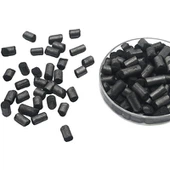
Carbide is a compound composed of carbon and metal elements. In ductile iron, carbide mainly refers to iron carbide (such as Fe₃C). It is added with spheroidizing agents (such as magnesium, rare earth elements, calcium, sulfur, etc.) during the casting process to change the graphite form from flake to spherical. During the solidification process, carbon combines with the elements in the spheroidizing agent to form carbide.
Carbides are divided into two categories: eutectic carbides and other carbides. Eutectic carbides are produced due to rapid cooling, improper chemical composition or inoculation. Other carbides are such as anti-chill, and their morphology and causes may be related to graphite flotation, casting geometry or segregation of trace elements (such as hydrogen).
The formation of carbides in ductile iron is a complex process. Many factors are involved: The cooling rate of the casting. Rapid cooling can lead to the formation of eutectic carbides, usually in thin-walled sections. Improper chemical composition can lead to the formation of eutectic carbides. Graphite flotation can lead to "chill" in thin or medium-walled areas, which is also a manifestation of carbide formation. Chill can also be caused by the segregation of trace elements (possibly including hydrogen), which affects the distribution of carbides. Or improper inoculation can also lead to the formation of eutectic carbides. Insufficient inoculation will result in insufficient conversion of carbon in the molten iron into graphite, resulting in the formation of carbides.
Effect of carbides on mechanical properties of ductile iron: The strength of ductile iron decreases, because the interface between carbides and the matrix is prone to cracks, resulting in internal stress accumulation. Too much carbide will reduce the elongation at break of ductile iron, thereby affecting its impact resistance and fatigue resistance. A certain amount of carbide can improve the toughness of ductile iron, but too much carbide will make ductile iron brittle and cause a sudden drop in toughness. The presence of carbides will reduce the plasticity of ductile iron, causing the ductility and formability of ductile iron to decrease.
We can control the carbides in ductile iron according to the following methods. 1. Control the production process: optimize the casting process, adjust the casting temperature and cooling rate, ensure the uniform structure of the casting, and avoid the formation of eutectic carbides caused by rapid cooling. 2. Scientifically select materials: When selecting raw materials, pay special attention to the impurity content in the raw materials, select high-purity materials, and avoid excessive carbon and other impurities (sulfur, phosphorus) from entering the ductile iron. 3. Strengthen the inoculation treatment: ensure that the amount and type of inoculant are appropriate to promote the formation of graphite and inhibit the formation of carbides. 4. Adjust the chemical composition: Rationally adjust the chemical composition of the molten iron to reduce the content of elements that are prone to increase white cast iron, thereby reducing the tendency of carbide formation. 5. Strict quality inspection: timely discover and solve carbide problems by strengthening quality monitoring and inspection. For example, strict non-destructive testing methods are used to conduct comprehensive quality inspections on castings.