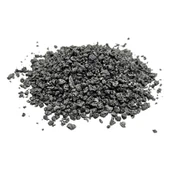
The stability of the molten iron composition in contemporary casting production is directly determined by the quality of carbon-enhancing raw materials, which has a significant impact on the microstructure, mechanical characteristics, and final product yield of castings. Numerous foundries both domestically and abroad use graphite petroleum coke, which has become the standard carbon-enhancing material for gray cast iron, ductile iron, and high-precision castings due to its many benefits, including high fixed carbon, high graphitization degree, fast dissolution rate, and controllable impurities.
Unstable carbon absorption, slow dissolution, and localized component segregation are common problems with ordinary carbon-enhancing materials. These issues can easily result in disordered graphite morphology and inconsistent grain size in castings, which can lead to defects like white cast iron, shrinkage porosity, and gas porosity, which directly raise the scrap rate. On the other hand, an ordered layered crystal structure of carbon atoms is formed by graphite petroleum coke that has undergone high-temperature graphitization treatment. It may swiftly dissolve and diffuse in molten iron when introduced to electric arc or medium-frequency furnaces for melting, resulting in a more equal distribution of carbon elements and less variation in the composition of molten iron.
In addition to precisely adjusting the carbon equivalent of molten iron, graphite petroleum coke, a highly effective carbon-enhancing raw material, can also function as a heterogeneous nucleation core, promoting uniform graphite precipitation, optimizing graphite morphology, improving the internal microstructure of castings, lowering supercooling tendency, preventing the formation of white iron structure, and increasing the consistency of grain size in various casting sections. In addition to improving machinability and lowering quality issues like cracking and leaking brought on by microstructure inhomogeneity, a more homogeneous microstructure reduces variations in the casting's tensile strength, elongation, wear resistance, and other mechanical characteristics.
The carbon absorption rate of molten iron stays at a high level, the compositional deviation between furnace batches is decreased, and defects like shrinkage porosity, gas porosity, and grain inhomogeneity in castings are significantly reduced after casting companies use high-quality graphite petroleum coke as a carbon enhancer, according to actual production feedback. This effectively improves the overall yield. Simultaneously, it lowers overall production costs, increases the production turnover efficiency of electric furnaces, and shortens the smelting time caused by repetitive carbon adjustments.
It is important to remember that controlling the quantity of impurities like sulfur, nitrogen, and ash is just as important as concentrating only on the fixed carbon index in order to fully benefit from the performance advantages of graphite petroleum coke. Defects like porosity and irregular graphite can still be caused by excessive impurities, negating the material's natural quality improvements. From raw material selection and high-temperature graphitization to particle size separation, integrated industrial and trading producers of graphite petroleum coke guaranty quality control throughout the whole process. They may adapt to various manufacturing scenarios, including ductile iron, gray iron, wind power castings, and construction machinery castings, by customizing appropriate particle sizes and technical specifications based on client smelting circumstances.
In order to stabilize the quality of molten iron, improve the internal structure of castings, decrease scrap, and increase yield, foundries must choose the right graphite petroleum coke for carbon enrichment. With the continuous development in demand for high-end castings, high-purity, stable-indicator graphite petroleum coke will play an increasingly important role in the worldwide foundry supply chain.